


Checking shopping cart quality before bulk purchase is important because a small defect in sample stage may become a large maintenance problem after shipment. For supermarket projects, quality should be reviewed from material, structure, wheels, coating, packing, and export compliance, not only from appearance or price.
-
2026-07-10
-
2026-07-09Customizing shopping carts for supermarket projects should begin with real store requirements, not only appearance. Cart size, load capacity, wheel movement, handle design, logo position, surface treatment, nesting space, and packing method all affect daily operation and long-term replacement cost.
-
2026-07-08Choosing between metal shopping carts and plastic shopping carts depends on store format, product weight, maintenance cost, export requirements, and long-term replacement planning. Both materials can work well, but the right choice should match the actual retail environment instead of only comparing unit price.
-
2026-07-07Selecting the right shopping trolley size is a practical decision for retail store planning. A trolley that is too large may block aisles and reduce traffic flow, while a trolley that is too small may limit basket value and create a poor shopping experience.
-
2026-07-06Choosing the right shopping cart for supermarkets is not only about basket size or price. For store projects, the cart affects customer movement, product loading, aisle efficiency, maintenance cost, and long-term replacement planning.
-
2026-04-20WOCHANG states on its website that it is a manufacturer of shopping carts, shopping baskets, and laundry products with more than 20 years of experience, and that it has BSCI and SCAN certifications. For warehouse trolley sourcing, that matters because product consistency depends on how closely the supplier controls the real manufacturing process.
-
2026-04-17WOCHANG’s own published guide gives a practical reference: a typical metal shopping cart usually weighs 25 to 40 kg, while heavier warehouse or industrial models can reach 45 kg or more. In the same guide, small supermarket carts are listed at 25 to 28 kg, medium retail carts at 30 to 34 kg, and large warehouse carts at 35 to 40 kg.
-
2026-04-16A metal shopping cart can sometimes give a small shock, but in most cases this is static electricity, not an electrical fault in the cart itself. NASA defines electrostatic discharge as the sudden transfer of electrical charge between objects at different potentials, and its safety guidance explains that the familiar static shock happens when electrons flow between objects that come close together or touch.
-
2026-04-15Based on WOCHANG’s own published industry guide, a standard steel shopping cart in bulk is commonly priced at 70 to 120 US dollars per unit. Plastic or hybrid models usually cost more when molded parts, color matching, or mixed-material structures are added.
-
2026-04-14WOCHANG’s own published guidance gives a practical industry range: a typical metal shopping cart usually weighs 25 to 40 kg, while heavier warehouse or industrial models can reach 45 kg or more. In the same guide, small supermarket carts are listed at 25 to 28 kg, medium retail carts at 30 to 34 kg, and large warehouse carts at 35 to 40 kg.
-
2026-04-13WOCHANG’s own published cost guide gives a practical benchmark for the market: a standard steel shopping cart is usually priced at 70 to 120 US dollars per unit in bulk orders, while more specialized versions can move higher depending on materials and added functions.
-
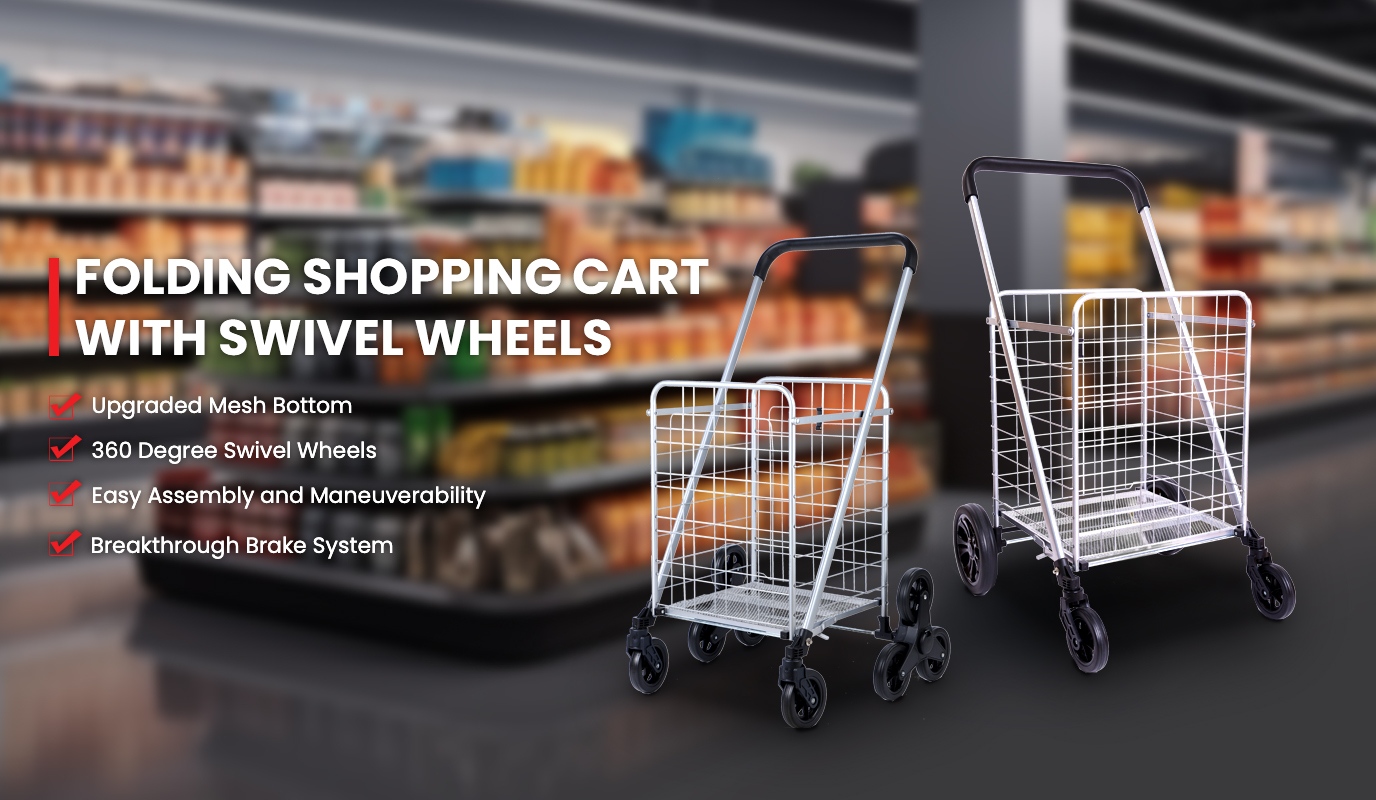
2026-04-10WOCHANG’s own product content shows this clearly. Its foldable shopping cart uses bottom beams and triangular braces to distribute concentrated loads, reaching a static load capacity of 90 kg and a dynamic load capacity of 60 kg.