


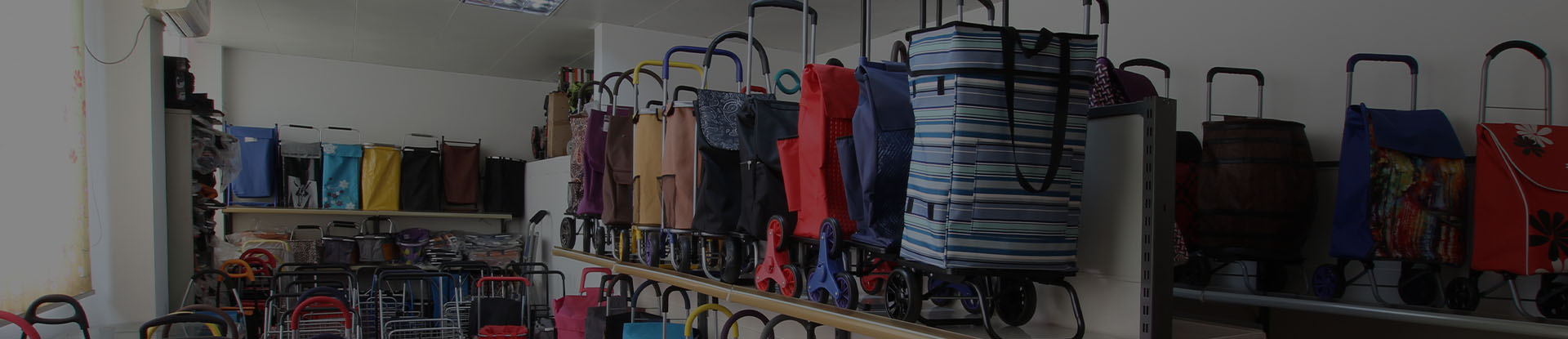
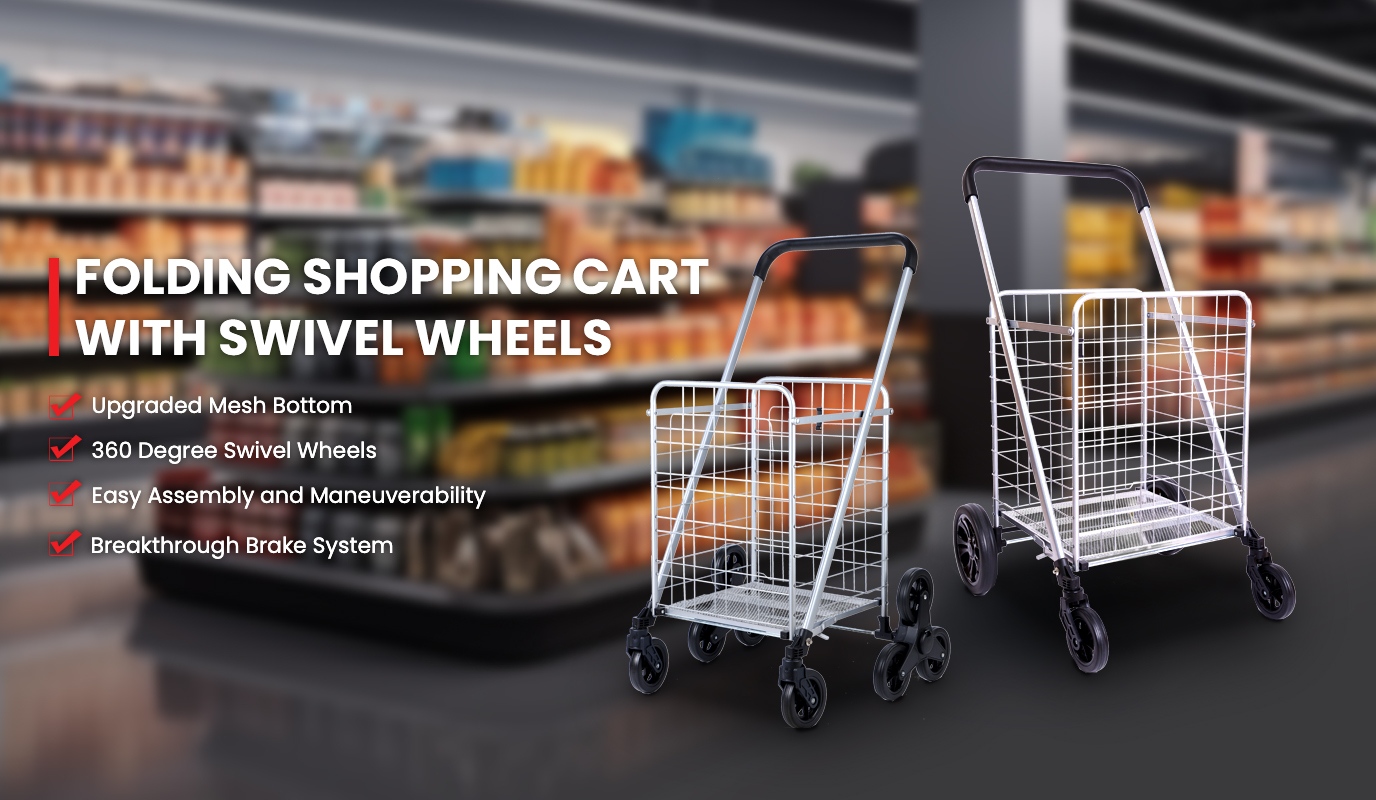
What Makes a Folding Shopping Trolley Easy to Carry and Store
A folding shopping trolley should do more than carry products. For modern users, easy carrying and convenient storage are two important factors that determine whether a trolley fits daily life, especially in urban environments where storage space is limited.
A well-designed folding shopping trolley needs to achieve a balance between:
Lightweight structure
Strong load capacity
Smooth folding operation
Compact storage size
Comfortable handling
As a professional shopping trolley manufacturer, WOCHANG has more than 20 years of experience producing Shopping Carts, foldable trolleys, shopping baskets, and laundry carts. The company exports products to more than 30 countries and focuses on product design improvement, manufacturing quality, and customized solutions. (WOCHANG)
Lightweight Materials Improve Carrying Comfort
The first factor affecting portability is material selection.
A folding shopping trolley should be strong enough to carry daily items while remaining comfortable to move.
Common materials include:
| Material | Advantages |
|---|---|
| Aluminum alloy | Lightweight, corrosion resistant, strong |
| Steel | Higher strength and durability |
| Polyester fabric | Flexible and easy to carry |
| PP plastic | Lightweight and impact resistant |
| EVA | Improves wheel comfort and shock absorption |
Aluminum alloy is widely used in lightweight trolley designs because it offers a good strength-to-weight balance. WOCHANG aluminum shopping trolley models combine aluminum alloy frames with PP, EVA, and polyester components, achieving a lightweight structure while maintaining a 25kg load capacity. (WOCHANG)
The right material combination allows users to pull the trolley easily without reducing product reliability.
Optimize The Folding Structure
The folding mechanism is the key feature that makes a trolley easy to store.
A good folding design should provide:
Quick opening and closing
Secure locking after unfolding
Minimal storage space
Stable performance after repeated use
Important structural elements include:
| Component | Design Purpose |
|---|---|
| Folding joints | Allow smooth movement |
| Locking system | Prevent accidental folding |
| Frame connection points | Improve stability |
| Handle structure | Enhance carrying comfort |
For home users, compact folding is especially important because the trolley may need to be stored in:
Apartments
Closets
Car trunks
Small storage areas
WOCHANG develops folding shopping carts with compact structures designed for convenient storage and transportation. Some foldable models can reduce storage volume significantly after folding, helping improve logistics efficiency and daily storage convenience. (WOCHANG)
Reduce Overall Size Without Sacrificing Capacity
A common challenge in folding trolley design is maintaining carrying ability while reducing size.
A professional manufacturer needs to optimize:
Frame dimensions
Bag capacity
Wheel position
Folding direction
Handle height
| Design Feature | User Benefit |
|---|---|
| Compact frame | Easier storage |
| Large-capacity bag | Holds more items |
| Adjustable handle | Better comfort |
| Foldable wheels | Reduces occupied space |
The goal is not simply making the trolley smaller. The goal is creating a practical product that remains functional before and after folding.
Wheel Design Affects Carrying Experience
Although wheels do not directly affect storage size, they strongly influence whether a trolley feels easy to carry.
A good wheel system improves:
Pulling smoothness
Direction control
Stability
Noise reduction
Important wheel factors include:
| Wheel Feature | Performance Impact |
|---|---|
| Larger diameter | Better obstacle handling |
| Durable material | Longer service life |
| Strong bearings | Smoother movement |
| Proper installation | Better stability |
For example, WOCHANG aluminum shopping trolley products use 5.5-inch wheels designed to improve movement stability on different surfaces, including supermarkets, outdoor markets, and daily shopping environments. (WOCHANG)
Manufacturing Process Overview
Easy carrying and storage depend on accurate manufacturing processes.
A reliable folding shopping trolley manufacturer should control each production stage.
Material Preparation
Factories inspect:
Material thickness
Surface quality
Strength performance
Color consistency
Frame Production
The process usually includes:
Tube cutting
Bending
Welding
Surface treatment
Folding Mechanism Assembly
Quality control focuses on:
Joint accuracy
Locking performance
Folding smoothness
Final Product Testing
| Testing Item | Quality Objective |
|---|---|
| Folding test | Ensure repeated operation |
| Load test | Verify carrying capacity |
| Wheel test | Check movement performance |
| Stability test | Reduce shaking |
| Appearance inspection | Maintain consistency |
A complete manufacturing process helps ensure every production batch maintains the same performance.
OEM And ODM Process For Folding Shopping Trolleys
Different markets may require different trolley designs.
A professional OEM and ODM process includes:
Requirement Analysis
Manufacturers evaluate:
Usage environment
Storage requirements
Load expectations
Material preferences
Product Development
Customization may include:
Frame structure
Bag size
Wheel system
Handle design
Color options
Sample Testing
Samples should be evaluated for:
Folding performance
Carrying comfort
Structural stability
Packaging efficiency
Mass Production
Factories control:
Material consistency
Production efficiency
Quality standards
WOCHANG supports customized shopping trolley development with manufacturing experience and product improvement capabilities. (WOCHANG)
Manufacturer Vs Trader: Why Production Experience Matters
When developing folding shopping trolleys, manufacturer capability directly affects product performance.
A manufacturer can control:
Material selection
Structural optimization
Production processes
Quality inspection
Design improvements
A trader usually depends on external suppliers, which may limit flexibility in:
Product modifications
Material adjustments
Manufacturing improvements
Quality tracking
Direct cooperation with a manufacturer provides better support for customized projects and long-term product improvement.
WOCHANG focuses on manufacturing shopping carts, baskets, and laundry carts, with more than 20 years of production experience and continuous design improvement. (WOCHANG)
Quality Control Checkpoints For Folding Trolleys
A folding trolley must remain stable after repeated use.
Important inspection points include:
| Quality Check | Purpose |
|---|---|
| Frame strength | Prevent deformation |
| Folding joints | Ensure durability |
| Handle connection | Improve safety |
| Wheel assembly | Maintain smooth movement |
| Bag attachment | Support daily loading |
Quality control should begin from raw materials and continue through production assembly.
Bulk Supply Considerations
For large-volume projects, product consistency is essential.
Important factors include:
| Evaluation Factor | Importance |
|---|---|
| Production capacity | Ensures delivery stability |
| Material control | Maintains product quality |
| Testing system | Reduces defects |
| Packaging design | Improves transportation efficiency |
| Export experience | Supports international supply |
A supplier with strong manufacturing capability can provide stable quality across repeated orders.
Export Market Compliance
Different markets may have different requirements for:
Product safety
Material standards
Packaging
Documentation
Manufacturing responsibility
WOCHANG holds BSCI and SCAN certifications and supplies products to international markets, especially North America, Europe, and Southeast Asia. (WOCHANG)
Project Sourcing Checklist
Before selecting a folding shopping trolley supplier, consider:
| Checklist | Key Question |
|---|---|
| Weight | Is the trolley comfortable to carry? |
| Folding system | Is storage space minimized? |
| Materials | Are they suitable for long-term use? |
| Wheels | Can they provide smooth movement? |
| Structure | Is stability maintained after folding? |
| Manufacturing | Can quality remain consistent? |
| Customization | Can OEM requirements be supported? |