


What Should Retailers Know Before Buying Shopping Trolleys?
Buying shopping trolleys is not only about selecting a product model and comparing prices. For retail environments, shopping trolleys directly influence customer experience, store operation efficiency, maintenance costs, and long-term replacement planning.
A suitable shopping trolley should provide:
Strong structural durability
Smooth movement
Comfortable operation
Suitable capacity
Reliable materials
Stable supply capability
As a professional shopping trolley manufacturer, WOCHANG has more than 20 years of manufacturing experience in Shopping Carts, Shopping Baskets, Laundry Carts, and related products. The company exports products to more than 30 countries and focuses on continuous product improvement, customized development, and stable production management. (WOCHANG)
Choose The Right Shopping Trolley Type For Retail Application
Different retail environments require different trolley structures. Before purchasing, retailers should first identify the actual usage scenario.
Common shopping trolley types include:
| Type | Suitable Application |
|---|---|
| Metal shopping trolley | Supermarkets and large retail stores |
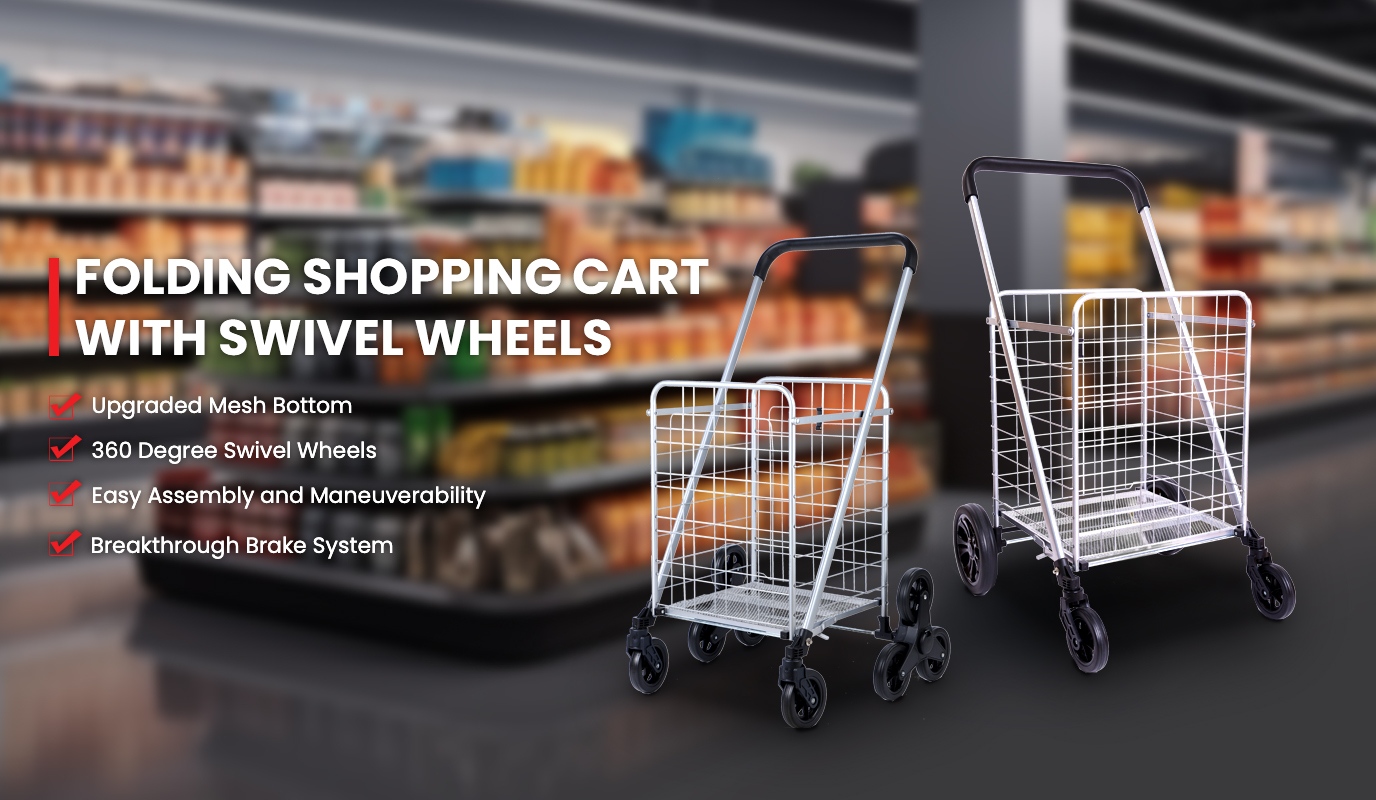
| Foldable shopping trolley | Small stores, urban shopping, household use |
| Shopping trolley with bag | Daily shopping and portable transportation |
| Shopping basket trolley | Convenience stores and small purchases |
| Heavy-duty trolley | High-load transportation environments |
A trolley that is too large may reduce aisle efficiency, while a trolley that is too small may limit customer purchasing capacity.
The right product should match:
Store size
Customer shopping habits
Product categories
Storage space
Operating environment
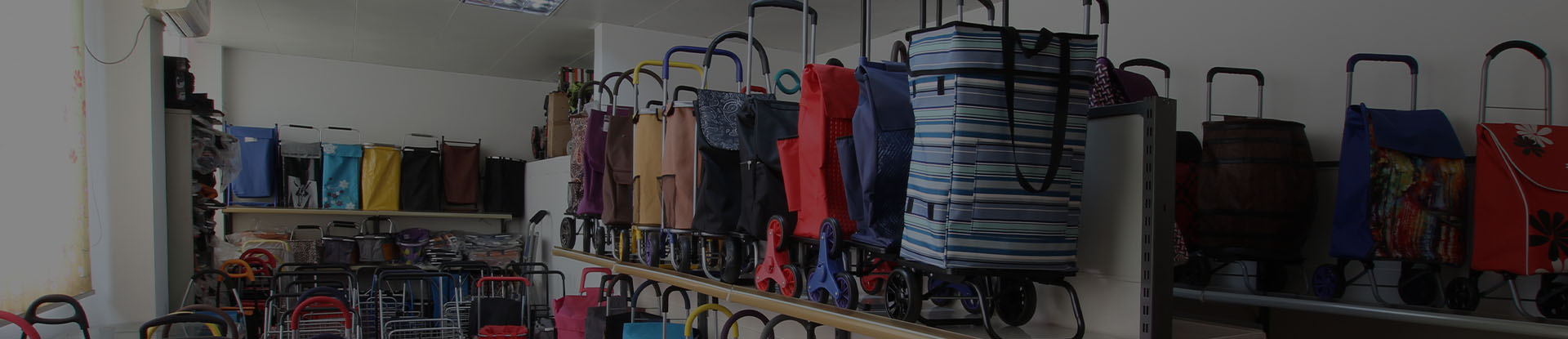
WOCHANG provides different shopping trolley solutions including shopping carts with bags, foldable shopping carts, metal rolling shopping carts, and portable trolley designs. (WOCHANG)
Frame Structure Determines Long-Term Durability
The frame is the core component of a shopping trolley.
Retailers should pay attention to:
| Frame Factor | Why It Matters |
|---|---|
| Material thickness | Determines structural strength |
| Welding quality | Affects stability |
| Surface treatment | Improves corrosion resistance |
| Connection design | Prevents deformation |
Commercial shopping trolleys often experience repeated pushing, loading, and unloading every day. Poor frame quality may lead to:
Loose joints
Uneven movement
Reduced service life
Higher replacement costs
A professional manufacturer should control the complete frame production process, including material preparation, cutting, bending, welding, and surface treatment.
Wheel Performance Affects Customer Experience
Shopping trolley wheels are one of the most important components affecting daily operation.
A good wheel system should provide:
Smooth movement
Low noise
Easy steering
Strong load support
Long wear resistance
Retailers should evaluate:
| Wheel Feature | Performance Impact |
|---|---|
| Wheel size | Affects obstacle handling |
| Wheel material | Influences durability and noise |
| Bearing quality | Determines smooth rotation |
| Installation structure | Affects stability |
Different environments require different wheel solutions.
For example:
Supermarkets need quiet and flexible wheels
Outdoor stores need stronger wheels
Heavy-duty applications need higher load capacity
WOCHANG uses different material combinations including EVA, PP, and other components according to product requirements to improve trolley performance. (WOCHANG)
Material Selection Should Match Usage Requirements
Shopping trolley performance depends heavily on material selection.
Common materials include:
| Material | Application | Advantages |
|---|---|---|
| Steel | Main trolley frame | Strong and durable |
| Aluminum alloy | Lightweight trolley frame | Low weight and corrosion resistance |
| PP plastic | Basket components | Impact resistance |
| Polyester fabric | Shopping bags | Wear resistance |
| EVA | Wheel components | Shock absorption |
For example, aluminum shopping trolleys combine aluminum alloy frames with PP, EVA, and polyester components to achieve lightweight structure and practical carrying performance. (WOCHANG)
Retailers should consider whether the material matches:
Indoor or outdoor use
Expected load
Cleaning requirements
Storage conditions
Manufacturing Process Quality Matters More Than Appearance
A professional shopping trolley manufacturer should have a complete production system.
The manufacturing process generally includes:
1. Material Inspection
Before production begins, factories should check:
Material specifications
Thickness consistency
Surface condition
2. Frame Production
Main processes include:
Tube cutting
Bending
Welding
Surface treatment
3. Component Assembly
Including:
Wheel installation
Handle assembly
Basket connection
Folding mechanism adjustment
4. Final Inspection
Quality checks include:
| Inspection Stage | Quality Focus |
|---|---|
| Material inspection | Confirm specifications |
| Welding inspection | Ensure frame strength |
| Wheel testing | Verify movement |
| Assembly inspection | Confirm structure |
| Final inspection | Ensure shipment quality |
A stable manufacturing process helps ensure every trolley performs consistently.
Manufacturer Vs Trader: What Retailers Should Understand
When purchasing shopping trolleys, the supplier type directly affects product control.
A manufacturer can directly manage:
Material selection
Product development
Production schedule
Quality inspection
Customization
A trader usually depends on external factories, which may limit control over:
Design modification
Material adjustment
Production changes
Quality consistency
For long-term retail projects, working with a manufacturer provides better support for:
Customized trolley designs
Stable production
Continuous product improvement
Supply planning
WOCHANG specializes in manufacturing shopping carts, shopping baskets, laundry carts, and related products rather than only distributing standard models. (WOCHANG)
OEM And ODM Options For Retail Shopping Trolleys
Retail markets often require customized trolley solutions.
A professional OEM and ODM process includes:
Requirement Analysis
Manufacturers evaluate:
Store application
Product capacity
Material requirements
Design preferences
Product Development
Possible customization includes:
Frame structure
Wheel system
Handle design
Basket size
Folding mechanism
Logo printing
Sample Testing
Before mass production, manufacturers should verify:
Function performance
Load capability
Appearance
Packaging suitability
Mass Production
The factory maintains:
Consistent specifications
Stable quality
Reliable delivery
WOCHANG supports customized trolley development according to different market applications and product requirements. (WOCHANG)
Bulk Supply Considerations Before Ordering
For retail projects, bulk supply requires more than confirming product quantity.
Important factors include:
| Evaluation Item | Why It Matters |
|---|---|
| Production capacity | Supports delivery schedules |
| Quality system | Maintains consistency |
| Material control | Prevents variation |
| Packaging design | Protects products |
| Export experience | Reduces shipping risks |
Retailers should confirm:
Production lead time
Inspection standards
Packaging method
Spare parts availability
After-sales support
A reliable factory should provide predictable supply rather than only competitive pricing.
Export Market Compliance And Documentation
Shopping trolley products supplied to international markets need to consider different regional requirements.
Important considerations include:
Product safety expectations
Packaging standards
Material requirements
Transportation protection
Documentation preparation
WOCHANG holds BSCI and SCAN certifications and has experience serving international markets, especially North America, Europe, and Southeast Asia. (WOCHANG)
Retail Shopping Trolley Buying Checklist
Before selecting a shopping trolley manufacturer, retailers should review:
| Checklist | Key Question |
|---|---|
| Product type | Does it match store usage? |
| Frame structure | Is it durable enough? |
| Wheel system | Can it support daily operation? |
| Materials | Are specifications clear? |
| Quality control | Are inspection processes available? |
| Customization | Can OEM requirements be supported? |
| Export ability | Can international delivery be handled? |
A detailed evaluation helps avoid problems after large-volume delivery.