


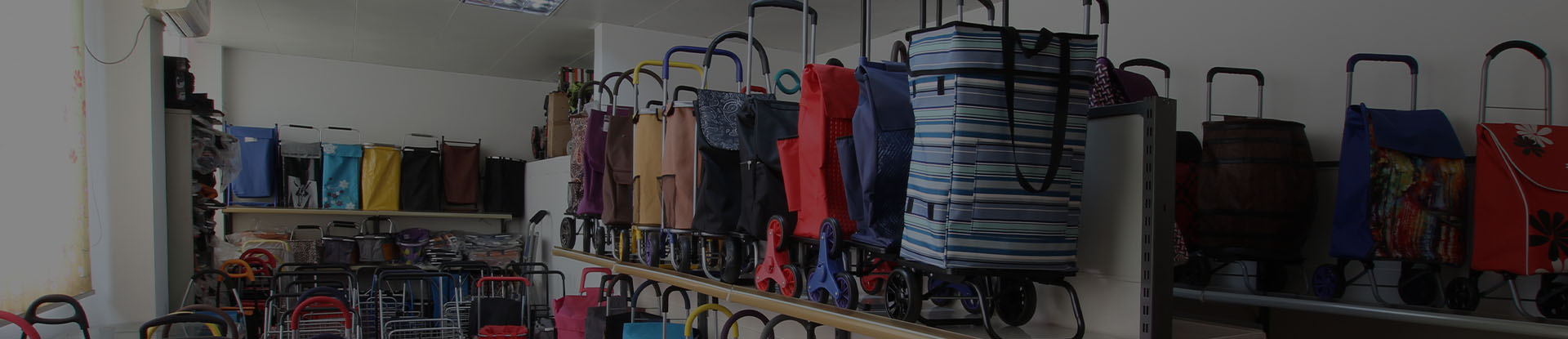
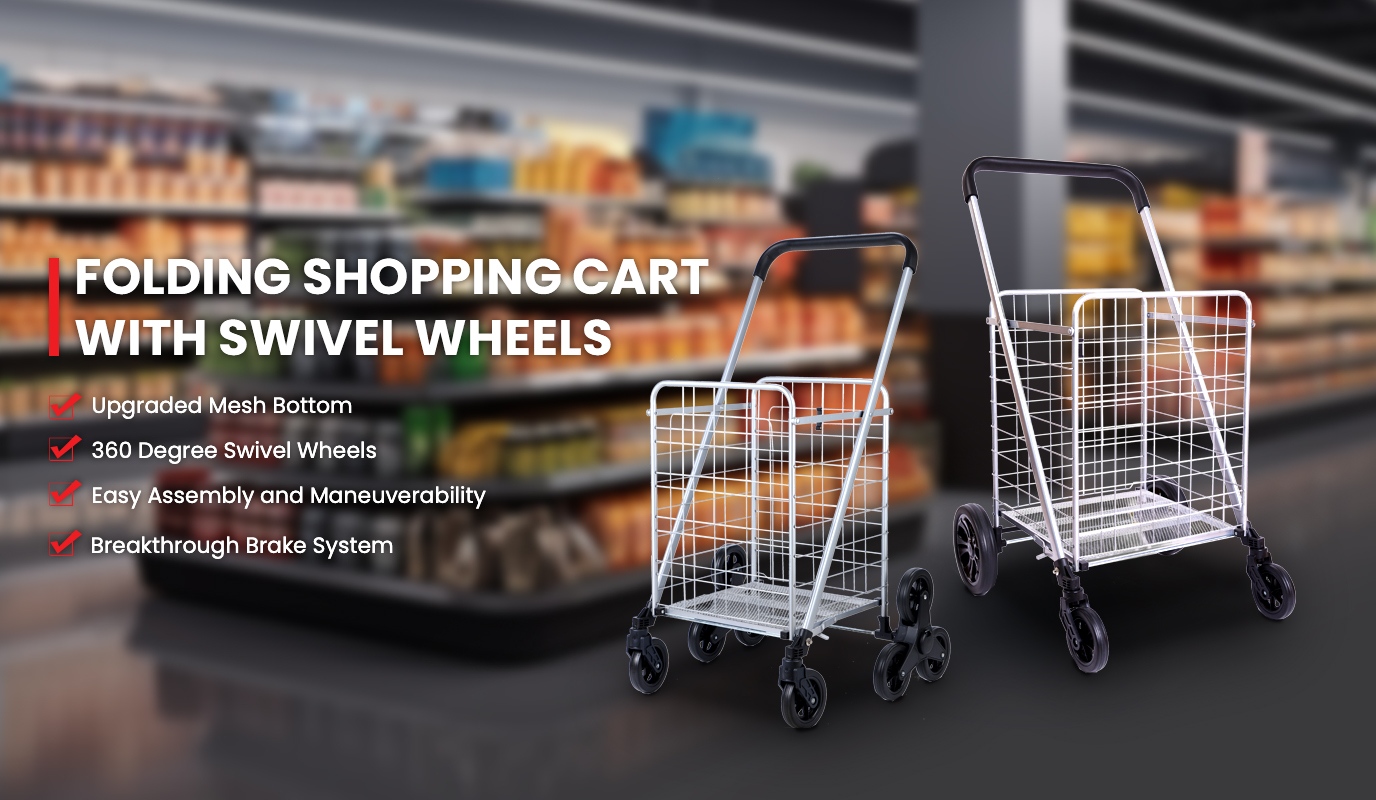
Foldable trolleys and shopping carts are both designed to improve transportation efficiency, but they serve different purposes. Although they share similar functions such as carrying goods and reducing manual effort, their structures, applications, load capacity, and user requirements are different.
-
2026-08-17
-
2026-08-12Selecting lightweight shopping trolleys for export markets requires careful consideration of product structure, material performance, transportation efficiency, and market requirements. A lightweight trolley should not simply reduce weight. It must maintain durability, load capacity, user comfort, and long-term reliability during daily use.
-
2026-08-10Choosing the right foldable shopping trolley requires more than selecting a compact design. For retail applications, the trolley must balance durability, carrying capacity, user convenience, storage efficiency, and production reliability.
-
2026-08-07Buying shopping trolleys is not only about selecting a product model and comparing prices. For retail environments, shopping trolleys directly influence customer experience, store operation efficiency, maintenance costs, and long-term replacement planning.
-
2026-08-06A foldable shopping trolley is designed to make transportation easier by combining carrying capacity, mobility, and space-saving storage. Unlike traditional shopping bags or fixed carts, a foldable shopping trolley provides a practical solution for moving groceries, household items, laundry, and outdoor supplies while allowing users to store the cart conveniently when not in use.