


What Is the Difference Between Foldable Trolley and Shopping Cart
Foldable trolleys and Shopping Carts are both designed to improve transportation efficiency, but they serve different purposes. Although they share similar functions such as carrying goods and reducing manual effort, their structures, applications, load capacity, and user requirements are different.
Understanding the difference between a foldable trolley and a shopping cart helps manufacturers, retailers, and project planners select the right product according to market demand.
As a professional shopping trolley manufacturer, WOCHANG has more than 20 years of experience producing shopping carts, foldable trolleys, shopping baskets, laundry carts, and related products. The company exports products to more than 30 countries and focuses on product design improvement, quality control, and customized manufacturing solutions. (WOCHANG)
Basic Difference Between Foldable Trolley And Shopping Cart
The main difference is the intended usage.
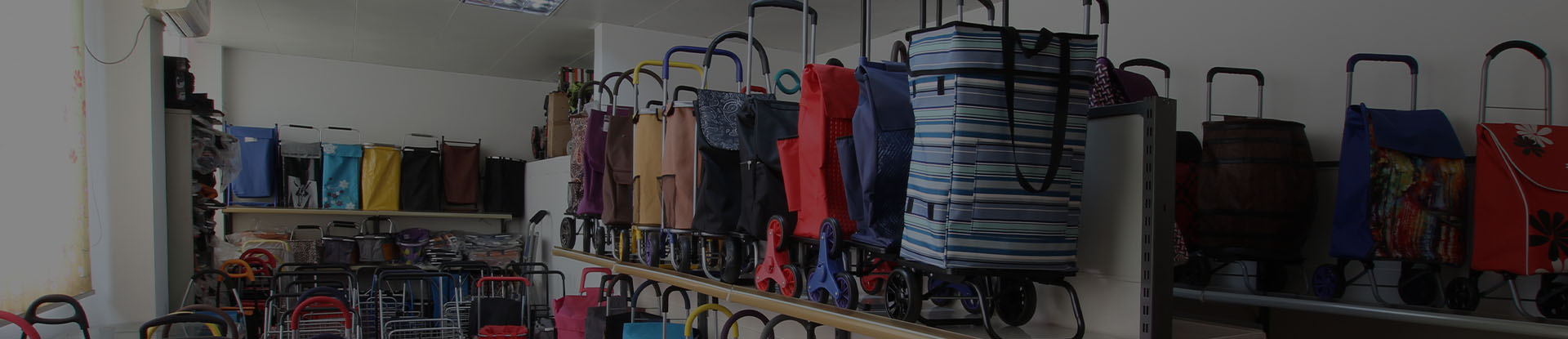
A foldable trolley is usually designed for personal transportation, daily shopping, outdoor activities, and household carrying. It focuses on portability, lightweight structure, and easy storage.
A shopping cart is generally designed for supermarkets, retail stores, and commercial environments. It focuses more on larger capacity, stronger structure, and frequent daily operation.
| Comparison | Foldable Trolley | Shopping Cart |
|---|---|---|
| Main purpose | Personal carrying and daily transportation | Retail and commercial shopping |
| Structure | Lightweight and foldable | Stronger fixed structure |
| Storage | Compact after folding | Requires more space |
| Load capacity | Medium load applications | Higher commercial loads |
| Mobility | Easy to carry and store | Designed for repeated pushing |
| Common users | Households and individuals | Supermarkets and stores |
Foldable Trolley Features And Applications
Foldable trolleys are popular because they combine mobility and convenience.
Their main advantages include:
Lightweight construction
Easy folding design
Compact storage
Flexible usage scenarios
Simple transportation
Typical applications include:
Grocery shopping
Farmers markets
Outdoor activities
Laundry transportation
Household storage movement
For example, aluminum shopping trolleys combine aluminum alloy frames with PP, EVA, and polyester components to achieve lightweight handling while maintaining practical carrying performance. WOCHANG aluminum shopping trolley models provide a 25kg load capacity and are designed for kitchen, outdoor, market, and picnic applications. (WOCHANG)
Foldable designs are especially suitable for markets where users need to store products in limited spaces such as apartments, vehicles, or storage rooms.
Shopping Cart Features And Commercial Applications
Shopping carts are mainly designed for retail environments where durability and efficiency are more important.
Common applications include:
Supermarkets
Grocery stores
Retail chains
Shopping centers
Commercial stores
Important features include:
| Feature | Benefit |
|---|---|
| Strong frame | Supports repeated daily use |
| Larger basket capacity | Holds more products |
| Durable wheels | Improves movement efficiency |
| Stable structure | Reduces maintenance needs |
| Ergonomic handle | Improves customer experience |
Commercial shopping carts must handle repeated pushing, loading, and unloading every day. Therefore, manufacturers need to focus on frame strength, wheel performance, and production consistency.
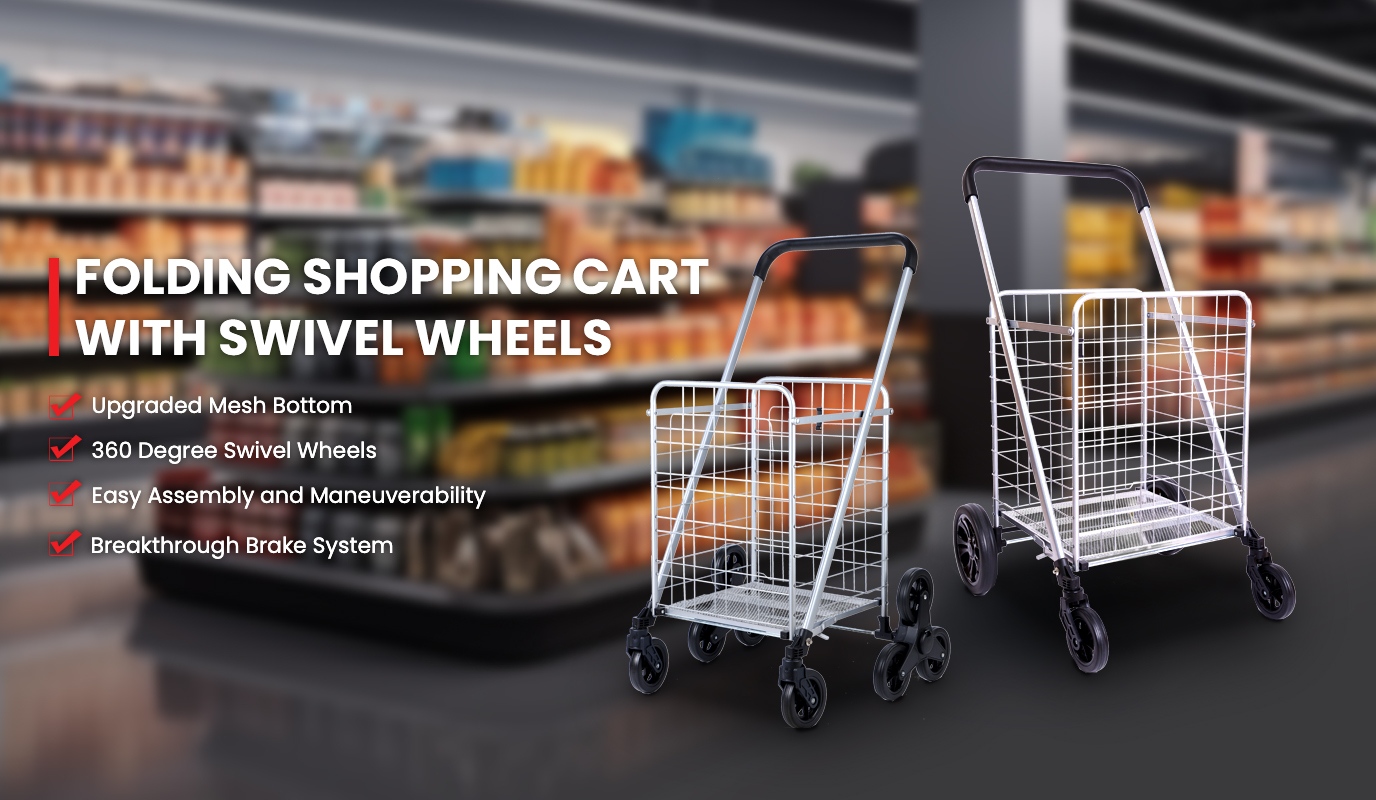
WOCHANG provides different shopping cart categories including metal rolling shopping carts, foldable shopping carts, shopping carts with bags, and heavy-duty trolley solutions. (WOCHANG)
Material Differences Between Foldable Trolleys And Shopping Carts
Material selection is one of the biggest differences between the two product types.
| Product Type | Common Materials | Main Advantages |
|---|---|---|
| Foldable trolley | Aluminum alloy, polyester, PP, EVA | Lightweight and portable |
| Shopping cart | Steel, plastic, reinforced components | Stronger and more durable |
Foldable trolleys often prioritize:
Reduced weight
Easy handling
Compact design
Shopping carts usually prioritize:
Structural strength
High-frequency usage
Larger loading capacity
A professional manufacturer should select materials according to the application instead of using one structure for every market.
Manufacturing Process Differences
Although both products require similar manufacturing knowledge, the production focus is different.
Foldable Trolley Manufacturing
The main focus includes:
Folding mechanism
Lightweight frame design
Bag attachment
Compact structure
Wheel flexibility
Production steps include:
Material preparation
Frame cutting and bending
Welding or assembly
Folding mechanism adjustment
Wheel installation
Performance testing
shopping cart manufacturing
Commercial shopping carts require more attention to:
Frame strength
Basket structure
Load stability
Long-term durability
Production steps include:
Metal frame production
Surface treatment
Basket installation
Wheel assembly
Load testing
Final inspection
Quality Control Checkpoints
Different products require different quality standards.
| Inspection Item | Foldable Trolley Focus | Shopping Cart Focus |
|---|---|---|
| Frame | Folding durability | Structural strength |
| Wheels | Smooth movement | Heavy-duty performance |
| Connection points | Folding stability | Long-term operation |
| Materials | Lightweight performance | Durability |
| Final testing | Function check | Commercial reliability |
A reliable factory should control quality throughout the production process, including material inspection, assembly inspection, and finished product testing.
Manufacturer Vs Trader: Why Production Capability Matters
The difference between a manufacturer and a trader becomes important when developing customized products.
A manufacturer can directly control:
Material selection
Product engineering
Production processes
Quality inspection
Product improvement
A trader usually relies on external factories, which may reduce flexibility in:
Design changes
Material adjustments
Production optimization
Quality control
Direct cooperation with a manufacturer provides stronger support for:
OEM projects
ODM development
Customized specifications
Long-term supply planning
WOCHANG specializes in manufacturing shopping carts, shopping baskets, laundry carts, and related products with more than 20 years of production experience. (WOCHANG)
OEM And ODM Process For Different Market Needs
Different markets may require different solutions.
A professional OEM and ODM process includes:
Requirement Analysis
Manufacturers evaluate:
Product application
Target market
Load requirements
Material preferences
Product Development
Possible customization includes:
Frame structure
Wheel system
Folding design
Bag size
Product appearance
Sample Testing
Products should be tested for:
Stability
Durability
User operation
Packaging suitability
Mass Production
Factories maintain:
Consistent specifications
Stable quality
Reliable delivery
Bulk Supply Considerations
For large-volume orders, selecting the right product type is important.
Before purchasing, consider:
| Evaluation Factor | Key Question |
|---|---|
| Usage environment | Is it personal or commercial use? |
| Load requirement | How much weight is needed? |
| Storage space | Is folding necessary? |
| Material choice | Is lightweight or heavy-duty preferred? |
| Quality control | Are inspection systems available? |
| Production capacity | Can delivery remain stable? |
Choosing the wrong product structure may increase maintenance costs or reduce user satisfaction.
Export Market Compliance
Export markets often have different requirements for:
Product safety
Material standards
Packaging
Documentation
Manufacturing responsibility
WOCHANG holds BSCI and SCAN certifications and has experience supplying products to international markets, especially North America, Europe, and Southeast Asia. (WOCHANG)
Project Sourcing Checklist
Before selecting a foldable trolley or shopping cart manufacturer, consider:
| Checklist | Important Question |
|---|---|
| Application | Is the product designed for the right environment? |
| Structure | Does it match expected usage frequency? |
| Materials | Are specifications clearly controlled? |
| Load capacity | Can it support required weight? |
| Customization | Can OEM requirements be supported? |
| Export experience | Can international requirements be handled? |