


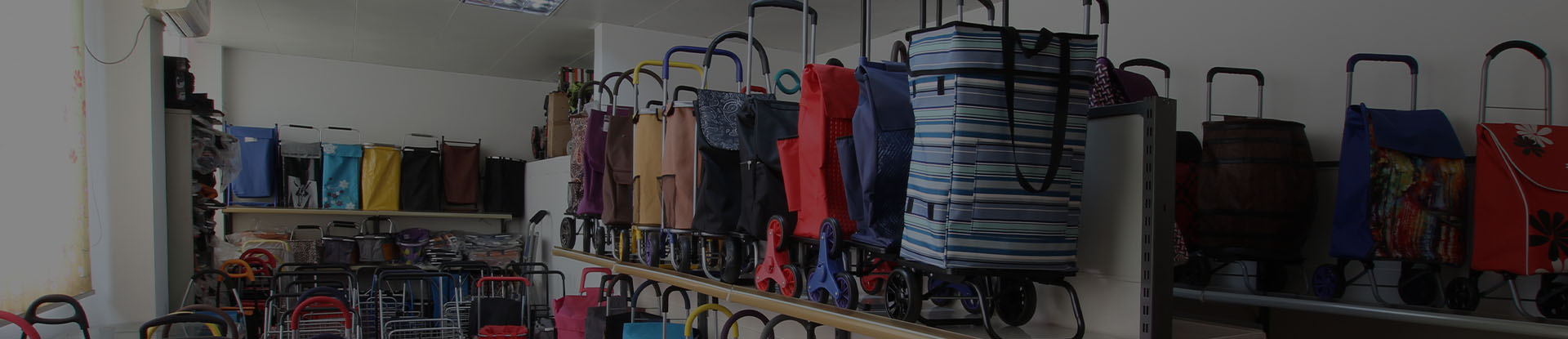
How to Choose Shopping Trolley Bags for Different Market Needs
Choosing the right shopping trolley bag requires understanding different market applications, user habits, and product requirements. A trolley bag used for daily shopping has different needs compared with one designed for outdoor transportation, premium retail products, or large-volume commercial applications.
A suitable shopping trolley bag should provide:
Appropriate capacity
Durable materials
Comfortable handling
Reliable attachment structure
Easy maintenance
Long service life
For manufacturers and project sourcing, the bag is not only a storage component. It is an important part of the complete trolley solution, affecting product appearance, usability, and customer experience.
WOCHANG has more than 20 years of experience manufacturing Shopping Carts, Shopping Baskets, Laundry Carts, and shopping trolley bags. The company exports products to more than 30 countries and focuses on product design improvement, material control, and customized manufacturing solutions. (WOCHANG)
Understand Different Market Applications First
Before selecting a shopping trolley bag, it is important to understand the target application.
Different markets usually require different product features.
| Market Need | Recommended Shopping Trolley Bag Features |
|---|---|
| Daily grocery shopping | Lightweight, practical capacity, easy cleaning |
| Supermarket use | Strong structure and durable materials |
| Outdoor markets | Waterproof fabric and stronger support |
| Urban users | Foldable design and compact storage |
| Premium retail | Customized appearance and branding options |
For example, users in urban environments may prioritize lightweight structures because products need to be stored in apartments or transported through public spaces. Outdoor users may focus more on weather resistance and durability.
A professional manufacturer should evaluate the application before recommending materials and structures.
Choose Materials According To Usage Conditions
Material selection directly affects the performance of shopping trolley bags.
Common materials include:
| Material | Advantages |
|---|---|
| Polyester fabric | Lightweight, durable, and widely used |
| Oxford fabric | Strong abrasion resistance |
| Waterproof coated fabric | Protects products from moisture |
| Reinforced fabric | Suitable for heavier loads |
The right material should balance:
Strength
Weight
Appearance
Cleaning convenience
Production consistency
Reusable shopping trolley bags are increasingly valued because they provide longer service life compared with disposable carrying solutions. Industry discussions on sustainable shopping products also highlight the growing use of durable and recyclable materials to reduce waste. WOCHANG develops shopping trolley bags using different fabric solutions according to product applications, including durability-focused designs for daily shopping and transportation needs. (Wochang Trolley)
Consider Capacity And Internal Structure
Different markets have different expectations for storage capacity.
A shopping trolley bag for elderly daily shopping may require easy access and moderate capacity, while outdoor or family-use products may need larger storage space.
Important design factors include:
| Design Feature | Application Benefit |
|---|---|
| Large opening | Easier product placement |
| Reinforced bottom | Supports heavier items |
| Multiple compartments | Better organization |
| Zipper closure | Improves security |
| Waterproof layer | Protects contents |
The connection between the bag and trolley frame is also important. A well-designed attachment system improves stability and prevents deformation during transportation.
Customize Appearance For Different Markets
Shopping trolley bags often represent the overall appearance of the product.
Customization options may include:
Fabric color
Logo printing
Pattern design
Handle style
Pocket structure
Packaging design
For retail-oriented markets, appearance customization can help products match different customer preferences.
A professional OEM manufacturer should provide support from design concept to final production.
OEM And ODM Process For Shopping Trolley Bags
Customization requires a structured development process.
A complete OEM and ODM process usually includes:
Requirement Analysis
The manufacturer evaluates:
Target market
Product usage
Capacity requirements
Material preference
Design expectations
Product Design
Engineers optimize:
Bag dimensions
Fabric structure
Stitching method
Frame connection
Folding compatibility
Sample Development
Samples should be checked for:
Appearance
Function
Strength
User experience
Mass Production
Production focuses on:
Material consistency
Stable dimensions
Manufacturing efficiency
Quality control
WOCHANG supports customized trolley solutions by combining product development experience with manufacturing capability. (WOCHANG)
Manufacturing Process Overview
A reliable shopping trolley bag manufacturer should control every production stage.
Material Inspection
Before production, factories check:
Fabric quality
Color consistency
Thickness
Surface condition
Cutting Process
Fabric is cut according to product specifications.
Important factors include:
Accurate dimensions
Reduced material waste
Consistent parts
Sewing And Assembly
Quality focuses on:
Stitch strength
Seam accuracy
Handle attachment
Zipper installation
Final Inspection
| Inspection Point | Quality Control Purpose |
|---|---|
| Fabric inspection | Confirm material standards |
| Sewing inspection | Ensure durability |
| Size checking | Maintain product consistency |
| Load testing | Verify practical performance |
| Packaging inspection | Protect products during shipping |
Manufacturer Vs Trader: Why Production Capability Matters
When sourcing shopping trolley bags, supplier type affects customization ability and quality control.
A manufacturer can directly manage:
Material selection
Production process
Design improvement
Quality inspection
Packaging requirements
A trader usually depends on external suppliers and may have limited control over:
Manufacturing changes
Material adjustments
Production scheduling
Product consistency
Direct cooperation with a manufacturer provides better support for:
Customized projects
Product improvements
Long-term supply planning
WOCHANG specializes in manufacturing shopping carts, shopping baskets, laundry carts, and shopping trolley bags, with direct production experience and product development capabilities. (WOCHANG)
Quality Control Checkpoints For Bulk Orders
Large-volume orders require stable quality between production batches.
Important inspection points include:
| Quality Item | Inspection Focus |
|---|---|
| Fabric strength | Prevent tearing |
| Stitching quality | Improve durability |
| Color accuracy | Maintain appearance |
| Bag dimensions | Ensure fitting accuracy |
| Attachment points | Improve safety |
A professional factory should control quality during production instead of relying only on final inspection.
Material Standards And Export Market Requirements
Different markets may have different expectations for shopping trolley bags.
Important considerations include:
Fabric requirements
Product labeling
Packaging standards
Transportation protection
Quality documentation
For export markets, manufacturers need experience handling different regional expectations.
WOCHANG has BSCI and SCAN certifications and supplies products to international markets, especially North America, Europe, and Southeast Asia. (WOCHANG)
Bulk Supply Considerations
For wholesale projects, production capability is as important as product design.
Before cooperation, consider:
| Evaluation Factor | Importance |
|---|---|
| Production capacity | Ensures stable delivery |
| Material supply | Prevents delays |
| Quality system | Maintains consistency |
| Custom ability | Supports different markets |
| Export experience | Reduces supply risks |
A reliable manufacturer should provide stable production support for repeat orders and customized requirements.
Project Sourcing Checklist
Before selecting a shopping trolley bag supplier, evaluate:
| Checklist | Key Question |
|---|---|
| Material | Is it suitable for the target market? |
| Structure | Does it match the trolley frame? |
| Design | Can customization be supported? |
| Quality control | Are inspection systems available? |
| Production | Can bulk orders be completed reliably? |
| Export | Does the factory understand international requirements? |
A complete evaluation helps reduce product risks and improves long-term cooperation.