

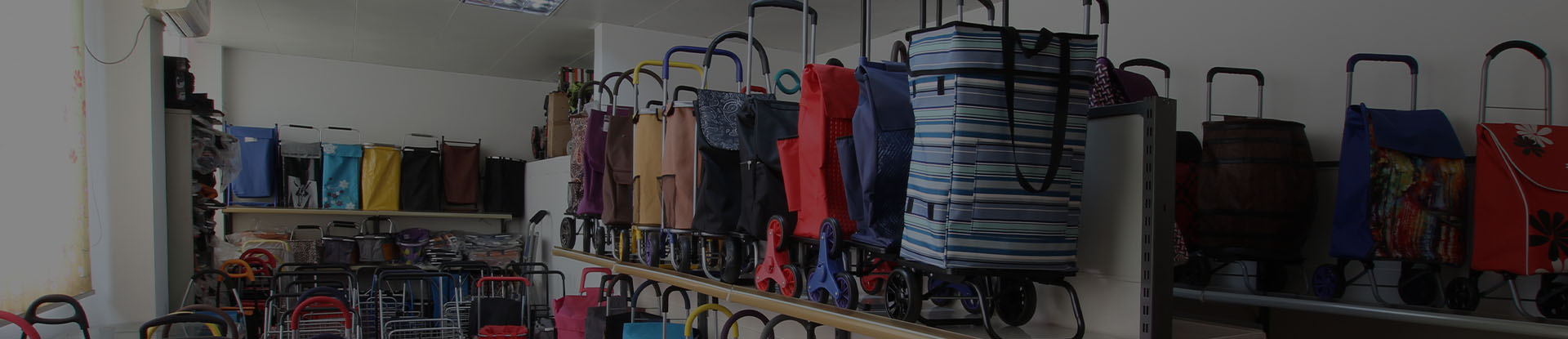
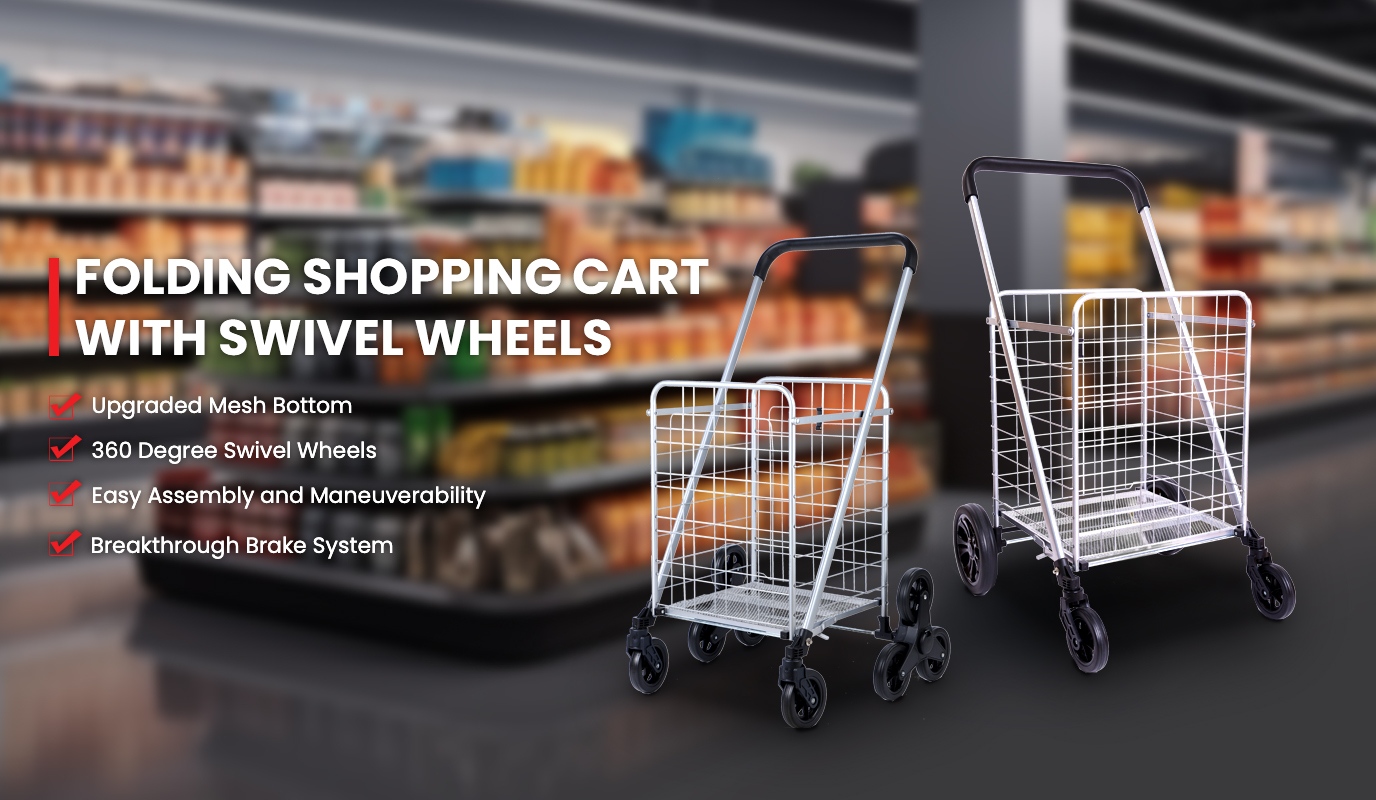
Shopping cart wheels directly affect store movement, customer comfort, floor protection, and maintenance cost. A cart with poor wheels may shake, make noise, damage floors, or become difficult to push in crowded aisles. For supermarket projects, wheel selection should be reviewed together with cart size, load capacity, store flooring, and expected daily use.
-
2026-07-13
-
2026-07-10Checking shopping cart quality before bulk purchase is important because a small defect in sample stage may become a large maintenance problem after shipment. For supermarket projects, quality should be reviewed from material, structure, wheels, coating, packing, and export compliance, not only from appearance or price.
-
2026-07-09Customizing shopping carts for supermarket projects should begin with real store requirements, not only appearance. Cart size, load capacity, wheel movement, handle design, logo position, surface treatment, nesting space, and packing method all affect daily operation and long-term replacement cost.
-
2026-07-08Choosing between metal shopping carts and plastic shopping carts depends on store format, product weight, maintenance cost, export requirements, and long-term replacement planning. Both materials can work well, but the right choice should match the actual retail environment instead of only comparing unit price.
-
2026-07-07Selecting the right shopping trolley size is a practical decision for retail store planning. A trolley that is too large may block aisles and reduce traffic flow, while a trolley that is too small may limit basket value and create a poor shopping experience.
-
2026-07-06Choosing the right shopping cart for supermarkets is not only about basket size or price. For store projects, the cart affects customer movement, product loading, aisle efficiency, maintenance cost, and long-term replacement planning.
-
2026-06-30Production lead time for warehouse trolleys is a key factor in supply chain planning, especially for export projects and large scale distribution systems. In industrial manufacturing practice, lead time is influenced by product complexity, tooling readiness, raw material availability, order volume, and surface treatment requirements.
-
2026-06-30Minimum order quantity is an important factor in warehouse trolley procurement because it directly affects tooling cost distribution, production efficiency, and customization feasibility. In industrial manufacturing practice, MOQ levels are influenced by material type, structure complexity, wheel configuration, and surface finishing requirements.
-
2026-06-30Selecting the correct trolley size is a key factor in warehouse efficiency, safety, and material flow optimization. In logistics layout design studies widely used in industrial planning, aisle width typically ranges from 1.2 meters to 3 meters depending on forklift and manual handling systems.
-
2026-06-30Wheel selection is one of the most important factors in warehouse trolley performance. It directly affects load stability, noise level, floor protection, and long term durability. In industrial material handling design, wheel resistance can account for up to 50 percent of total pushing force depending on surface conditions and load weight, according to logistics ergonomics research used in warehouse planning systems.
-
2026-06-30Warehouse trolleys are essential handling tools in logistics, retail storage, and industrial distribution systems. Material selection directly affects load capacity, corrosion resistance, cost efficiency, and service life. In material engineering references commonly used in industrial design, steel density is around 7.85 g/cm³ while aluminum is approximately 2.70 g/cm³, which creates significant performance differences in real warehouse environments.
-
2026-06-26A standard trolley is usually based on existing factory sizes, load capacity, wheel options and packing methods. It is suitable for regular warehouse movement, retail storage, laundry handling and simple logistics tasks.