



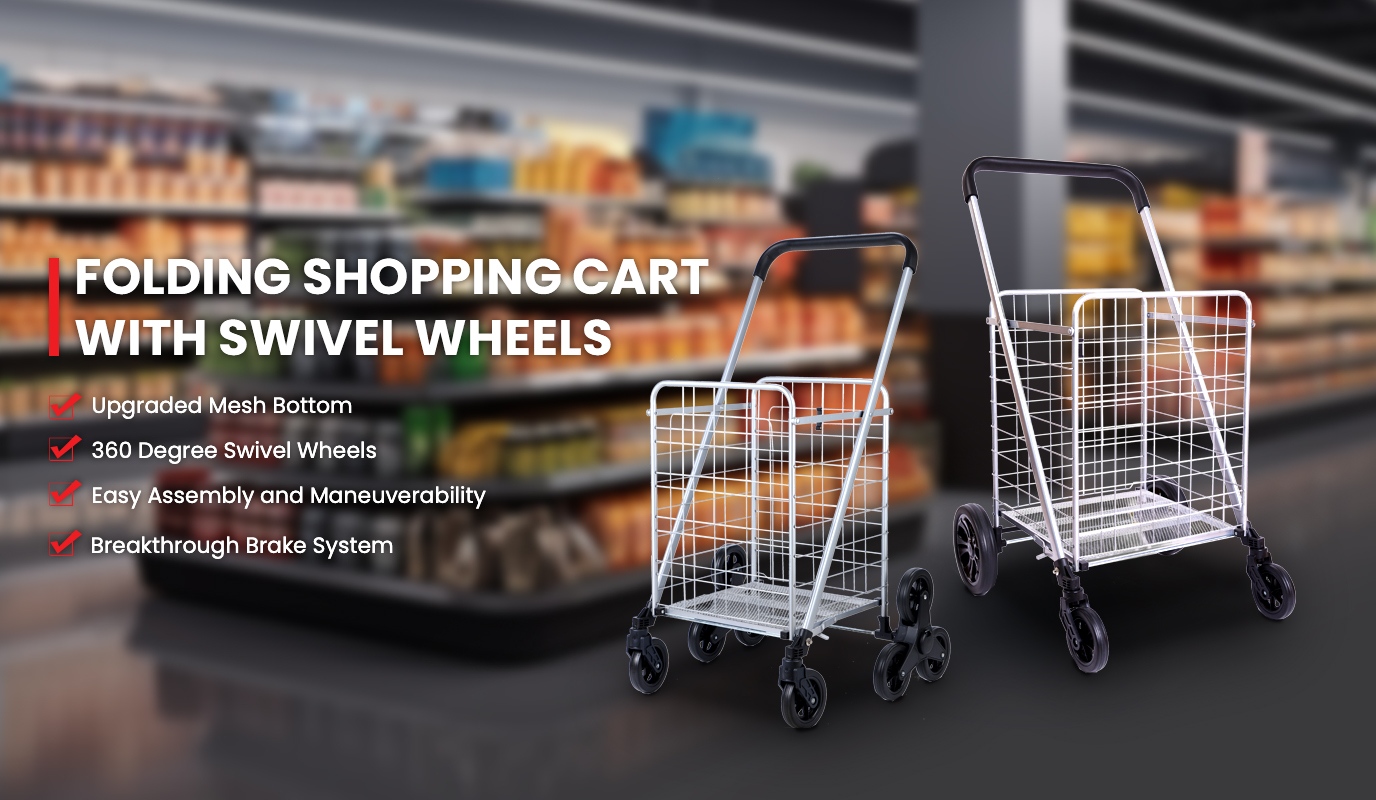
Foldable trolleys are generally better for urban retail when storage space, vehicle transportation, and flexible deployment are limited. Fixed trolleys are better for stores with continuous daily handling where structural simplicity and frequent use are the priority.
-
2026-10-27
-
2026-10-26Foldable shopping carts generally save more storage space because the frame can collapse when the cart is not in use. Traditional fixed-frame shopping carts require more floor and stacking space, but they usually provide stronger structural stability for continuous high-volume retail use.
-
2026-10-23Steel warehouse carts generally offer a longer service life under heavy loads, frequent use, and demanding industrial conditions, while plastic carts can provide excellent durability in wet, corrosive, or lightweight applications. The better material depends on load, environment, impact, and usage frequency.
-
2026-10-22Heavy duty warehouse carts generally support higher loads because they use reinforced frames, stronger platforms, and higher-capacity wheels. Commercial carts are better suited to routine retail or business handling where extreme load capacity is not required.
-
2026-10-21Low profile platform carts are better when easy loading, low clearance, and compact handling matter, while standard platform carts provide more general-purpose capacity and flexibility. The right choice depends on cargo height, loading method, workplace layout, and daily handling needs.
-
2026-10-20Manual platform carts are generally better for short-distance, moderate-load daily handling, while electric platform carts become more practical for heavier loads, longer routes, frequent transportation, or reduced operator effort. The right choice depends on workload, distance, floor conditions, and operating frequency.
-
2026-10-19Warehouse carts are generally designed for routine goods movement, while industrial trolleys are built around more demanding loads, longer operating cycles, and specialized handling conditions. The right choice depends on load, route, frequency, and working environment.
-
2026-10-16Flat platform carts provide stronger and more consistent support for routine material handling, while folding platform carts offer greater storage and transportation flexibility. The better choice depends on load requirements, available space, handling frequency, and portability needs.
-
2026-10-15A 2 wheel hand truck is more efficient for moving tall, narrow, or individually stacked loads, while a 4 wheel platform cart is better for heavier, wider, or multiple-item loads. The right choice depends on cargo shape, weight, route, and handling method.
-
2026-10-14Steel platform carts generally provide higher strength and better performance for heavy commercial loads, while aluminum platform carts reduce overall weight and offer strong corrosion resistance. The better material depends on load, mobility, environment, and usage frequency.
-
2026-10-13Heavy duty platform carts are better for industrial applications involving high loads, frequent movement, or demanding floor conditions, while light duty carts are more suitable for lighter materials, shorter routes, and less intensive use.
-
2026-10-12Platform carts are generally better for commercial material handling because their open deck, stronger frame, and load-focused design support boxes, equipment, and supplies. Shopping carts are better suited to customer-facing retail transport.