


How to Plan Shopping Cart Quantities for a New Supermarket
Planning Shopping Cart quantities for a new supermarket should be based on store size, aisle width, customer flow, parking space, and checkout layout. Ordering too few carts may affect shopping experience during peak hours, while ordering too many carts may increase storage pressure and unnecessary investment.
Start with Store Layout and Customer Flow
The first step is to estimate how many customers may shop at the same time during busy periods. A supermarket with wide aisles, large basket value, and family shopping habits usually needs more carts than a small store with quick purchases. ADA accessibility guidance often uses 36 inches, or 915 mm, as a continuous clear width reference, so aisle planning should leave enough space for cart movement and customer passing.
| Store Area | Cart Planning Focus |
|---|---|
| Small retail store | Compact carts and Shopping Baskets |
| Medium supermarket | Standard carts plus basket options |
| Large supermarket | Higher cart quantity and nesting area |
| Wholesale store | Heavy-duty carts and wider storage zone |
Manufacturer vs Trader: Why Quantity Planning Is Easier with a Factory
A direct shopping cart manufacturer can help calculate product mix, packing volume, MOQ, lead time, spare parts, and repeat order planning. Compared with a trader, a manufacturer can also adjust OEM and ODM details such as cart size, wheel type, handle logo, frame color, basket capacity, and carton packing before production.
WOCHANG has more than 20 years of manufacturing experience in shopping carts, shopping baskets, Laundry Carts, and related trolley products. With BSCI and SCAN certification, our factory supports stable production management, supplier audit needs, and export order consistency.
Bulk Supply Considerations
For a new supermarket project, cart quantity planning should include initial opening stock, replacement reserve, and future replenishment. Buyers should also consider how many carts can be stored near the entrance, checkout area, and cart return zone.
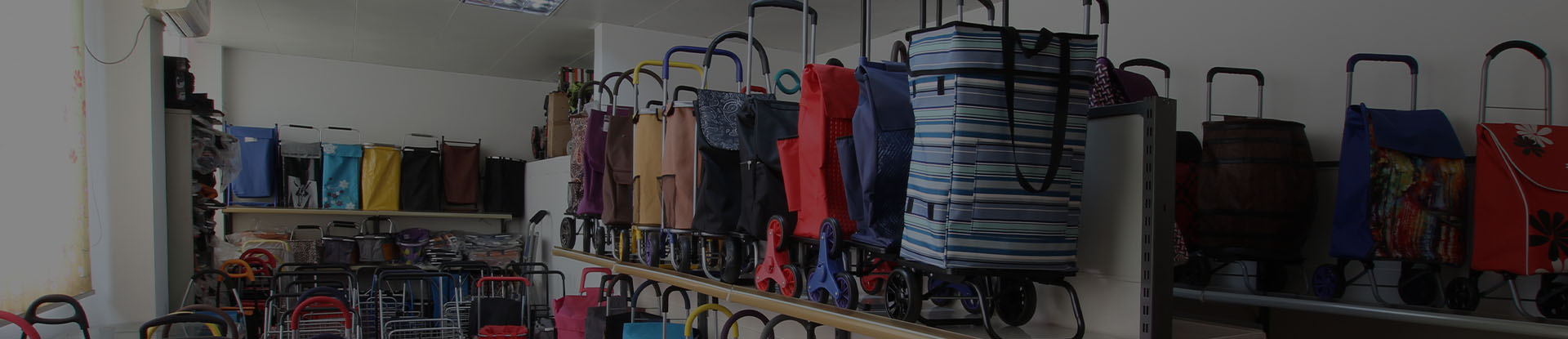
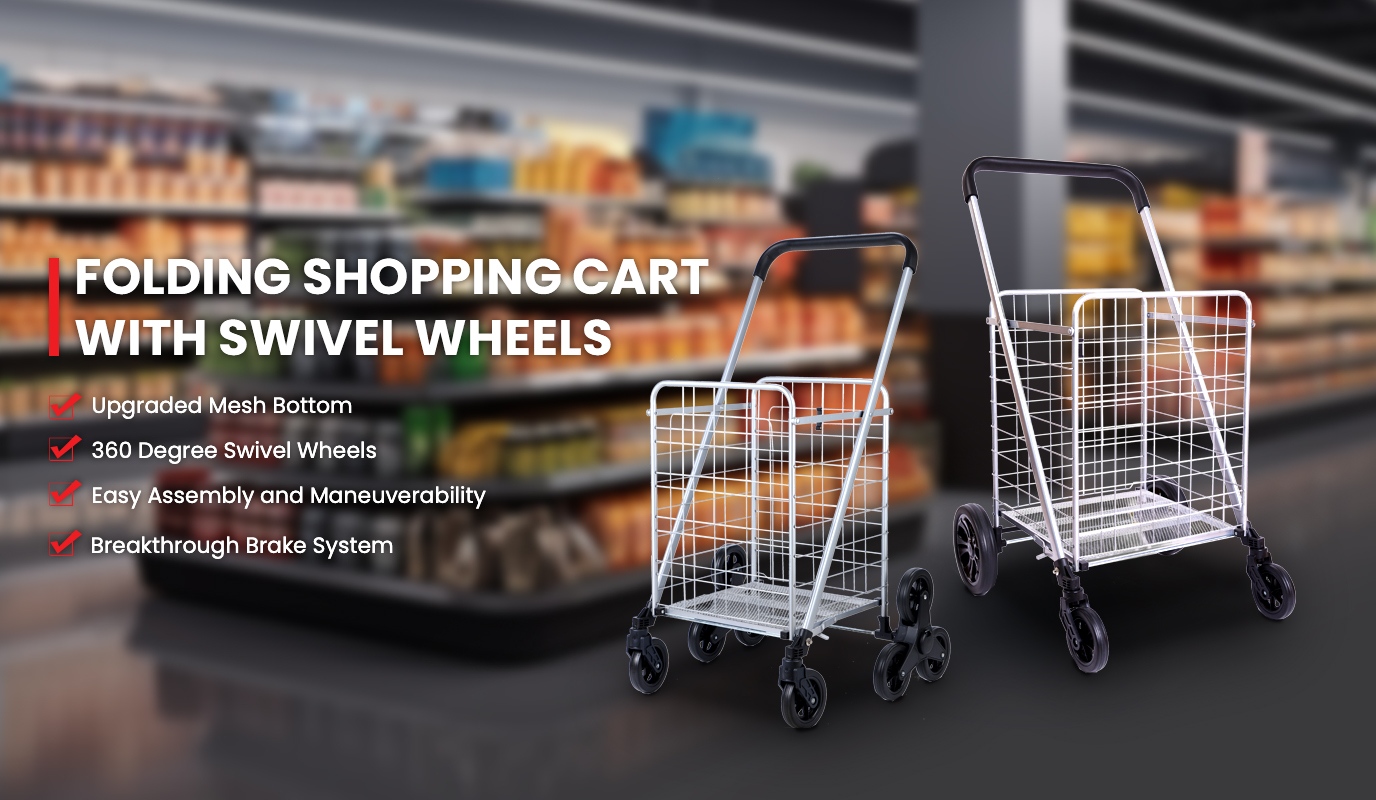
For compact cart projects, this Stylish Shopping Trolley can be used as a reference when discussing folding structure, cart capacity, wheel design, MOQ, color options, and packing details.
Project Sourcing Checklist
Before placing a bulk order, confirm:
Store size and estimated peak traffic
Main cart size and basket capacity
Quantity split between carts and baskets
Nesting distance and entrance storage space
Wheel material and floor condition
MOQ, lead time, carton size, and spare parts
Inspection standard and export documents
Manufacturing Process and Quality Control
A standard shopping cart production process includes material preparation, cutting, bending, welding, surface treatment, plastic part assembly, wheel installation, cleaning, inspection, and packing. During quality control, we check frame balance, welding points, coating coverage, wheel rotation, handle fixing, load performance, nesting accuracy, and carton protection.
For export markets, EN 1929 is often referenced for shopping trolley construction, performance, testing, and safety requirements. This helps make bulk shopping cart supply more consistent and easier to inspect before shipment.
Final Planning Advice
The right shopping cart quantity should support opening demand, peak shopping periods, cart storage, and future replacement. Working with a direct manufacturer helps make quantity planning, OEM and ODM customization, quality inspection, packing, and export delivery more predictable from sample approval to bulk shipment.