


What Innovations Are Shaping Modern Warehouse Trolley Design
Modern warehouse trolley design is no longer limited to a simple frame with wheels. Warehouses, retail storage areas, supermarket backrooms, and packing zones now need trolleys that improve movement efficiency, reduce handling pressure, protect goods, and support flexible space planning.
Smarter Structural Design for Daily Handling
One important innovation is modular and foldable structure. A warehouse trolley with a foldable frame can save storage space when it is not in use, while a reinforced frame supports heavier goods during frequent movement. Multi-layer or detachable basket designs also help separate items during picking, sorting, and restocking.
| Design Innovation | Operation Value |
|---|---|
| Foldable frame | Saves storage space and improves mobility |
| Larger wheels | Helps movement on uneven floors |
| Detachable basket | Supports sorting and category handling |
| Reinforced coating | Reduces rust and surface wear |
| Ergonomic handle | Improves pushing comfort and control |
Manufacturer vs Trader: Why Innovation Needs Factory Control
A direct warehouse trolley manufacturer can control material sourcing, cutting, bending, welding, surface treatment, wheel matching, assembly, inspection, and packing. Compared with a trader, a manufacturer can support OEM and ODM development based on load weight, aisle width, floor condition, product size, storage method, and target market.
WOCHANG has more than 20 years of manufacturing experience in Shopping Carts, Shopping Baskets, Laundry Carts, Outdoor Carts, and material handling products. With BSCI and SCAN certification, our factory supports supplier audit needs, export-oriented production management, and repeat order consistency.
Material and Wheel Innovations
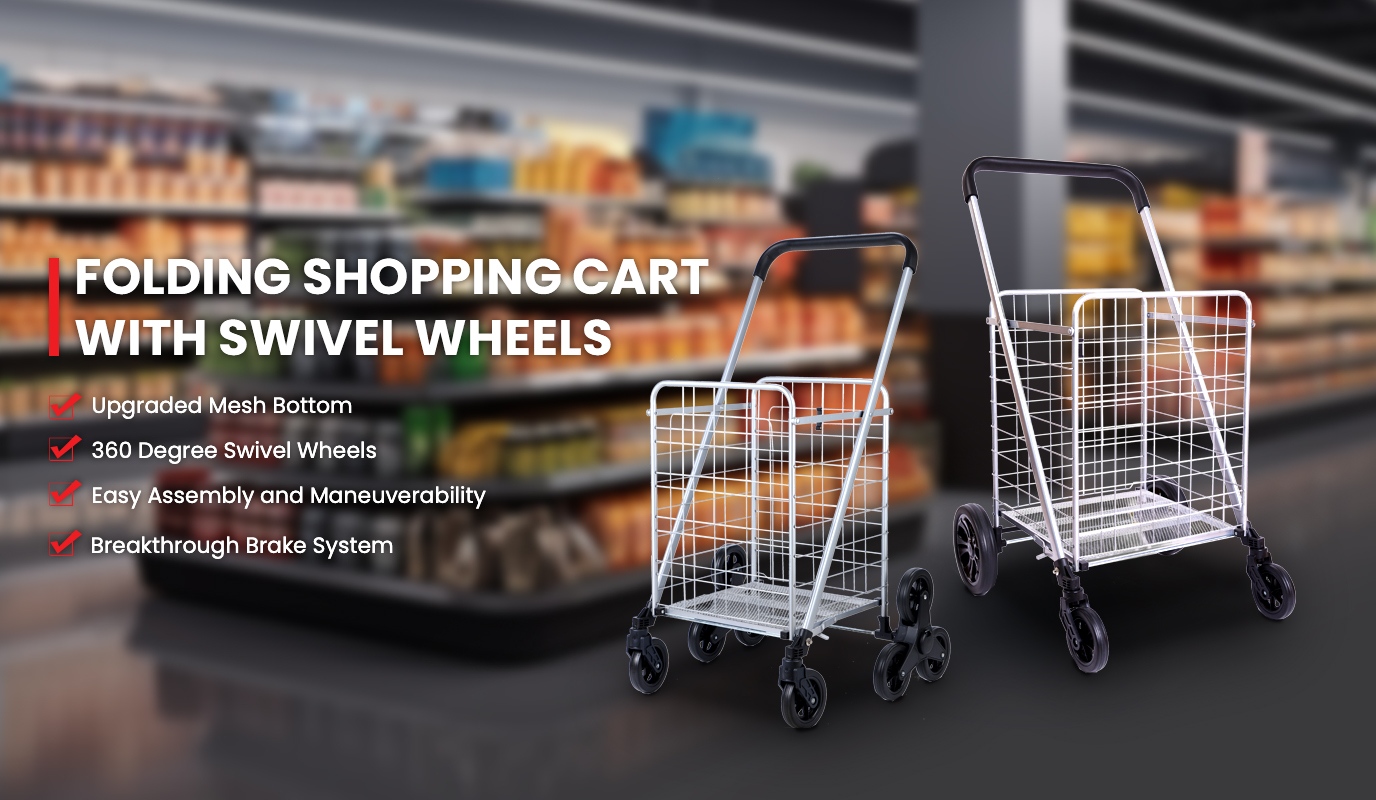
Modern warehouse trolleys often use iron or steel frames for strength, PP baskets for impact resistance, and EVA or rubber wheels for smoother movement. For example, this Metal Shop Cart uses galvanized anti-rust iron pipe, a PP impact-resistant basket, EVA wear-resistant wheel cover, 360-degree front wheel rotation, and 40KG load capacity. It is designed for supermarket replenishment, warehouse turnover, and flexible cargo movement.
OEM and ODM Process Overview
A practical OEM or ODM process starts with application analysis. Buyers should confirm load capacity, cart size, wheel type, handle height, basket layout, coating color, logo position, folding requirement, carton size, MOQ, and lead time. After sample approval, production moves through material preparation, cutting, bending, welding, surface treatment, assembly, inspection, cleaning, and packing.
Quality Control and Export Compliance
Quality control should check frame balance, welding strength, coating coverage, rust resistance, wheel rotation, basket fixing, load performance, folding function, carton protection, and spare parts support. OSHA ergonomics guidance notes that heavy loads, awkward posture, and repetitive handling can increase workplace injury risks, so trolley design should support safer and smoother movement. For batch inspection, ISO 2859-1 AQL sampling is widely used to define sample size and acceptance rules.
Final Thoughts
Modern warehouse trolley innovation is mainly shaped by stronger structures, smoother wheels, foldable storage, modular baskets, better coating, and more controlled production. Working with a direct manufacturer helps make customization, bulk supply, quality inspection, packing, and export delivery more predictable from sample to repeat orders.