


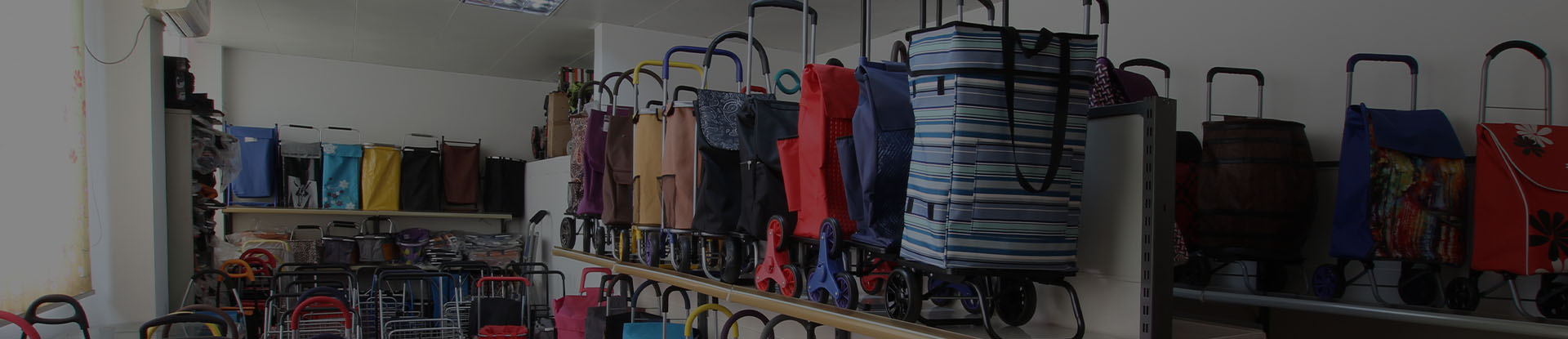
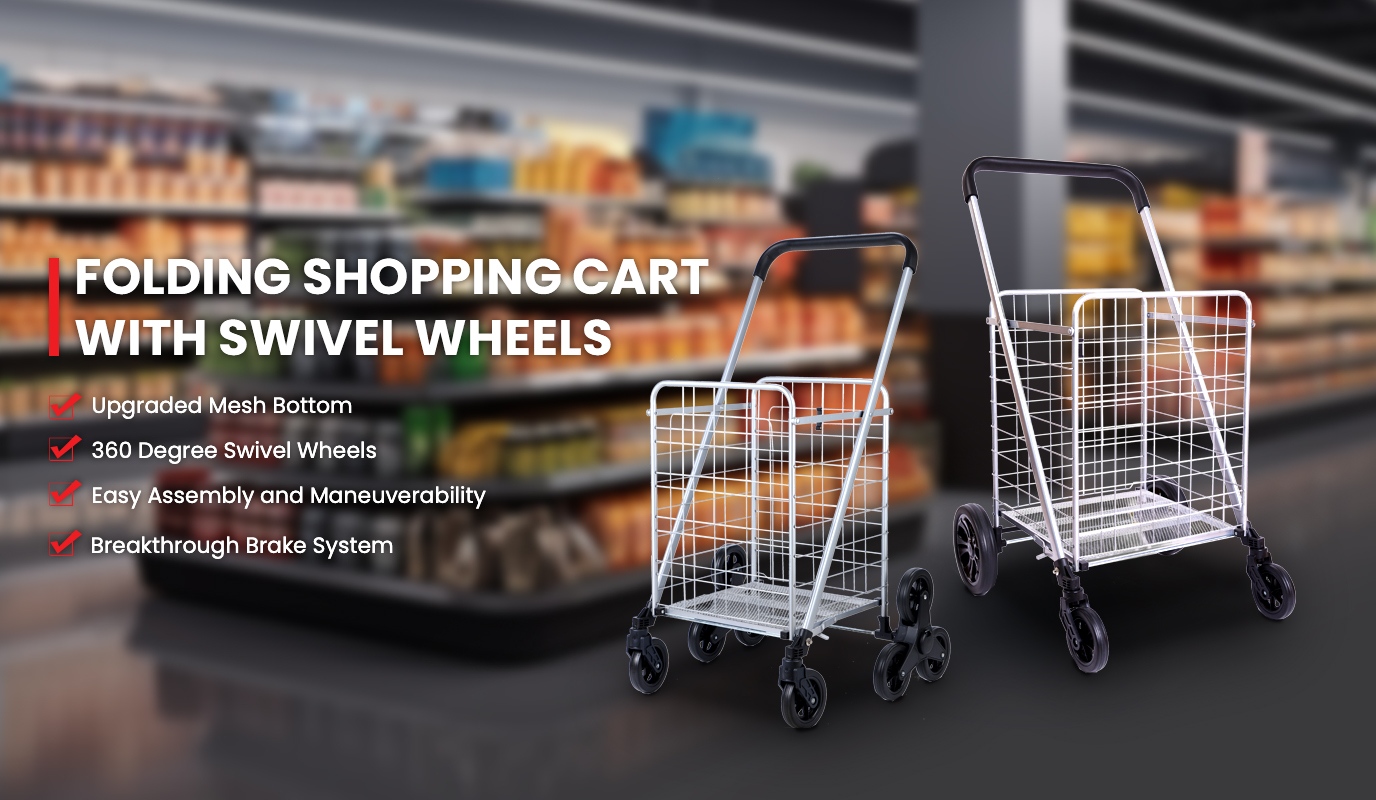
Shopping cart and shopping trolley often refer to similar retail equipment, but the wording, structure, and market preference may differ by region and application.
-
2026-07-24
-
2026-07-23Smart warehouses integrate trolley systems by connecting manual handling tools with storage layout, picking routes, replenishment tasks, packing areas, and inventory flow. Although automation is growing quickly, trolleys still play an important role in flexible movement, short-distance transfer, and daily warehouse support.
-
2026-07-22Modern warehouse trolley design is no longer limited to a simple frame with wheels. Warehouses, retail storage areas, supermarket backrooms, and packing zones now need trolleys that improve movement efficiency, reduce handling pressure, protect goods, and support flexible space planning.
-
2026-07-21Modular trolley designs support flexible operations by making one trolley structure easier to adapt for different retail, storage, transport, and outdoor scenarios. Instead of using a fixed single-purpose design, modular thinking allows the frame, wheels, bag, handle, seat, basket, and accessories to be adjusted according to real project needs.
-
2026-07-21Manual and electric trolleys serve different retail and logistics needs. For supermarkets, retail stores, warehouses, and daily transport tasks, the right choice depends on load capacity, moving distance, floor condition, labor intensity, maintenance cost, and export compliance.
-
2026-07-20A better shopping trolley can improve customer movement, product loading, store image, and checkout efficiency. In daily retail use, shoppers notice whether a trolley rolls smoothly, turns easily, stays stable, and feels clean.
-
2026-07-07Selecting the right shopping trolley size is a practical decision for retail store planning. A trolley that is too large may block aisles and reduce traffic flow, while a trolley that is too small may limit basket value and create a poor shopping experience.