


How To Select Shopping Trolley Sizes for Different Retail Stores
Selecting the right shopping trolley size is a practical decision for retail store planning. A trolley that is too large may block aisles and reduce traffic flow, while a trolley that is too small may limit basket value and create a poor shopping experience. Before bulk ordering, buyers should match trolley size with store area, aisle width, product category, customer flow, and checkout space.
Start from Store Format and Aisle Width
Different stores need different trolley capacities. According to ADA accessibility guidance, a continuous clear route of 36 inches, or 915 mm, is commonly used as a minimum accessibility reference. In supermarket planning, wider aisles are often required when two trolleys need to pass smoothly.
| Retail Store Type | Suggested Trolley Direction |
|---|---|
| Convenience store | Compact trolley or basket trolley |
| Medium grocery store | Standard capacity with easy nesting |
| Large supermarket | Larger basket, stable frame, smooth wheels |
| Wholesale store | Heavy-duty frame and stronger load capacity |
Manufacturer vs Trader: Why Size Control Matters
Working directly with a shopping trolley manufacturer helps keep size, structure, material, and packing consistent across repeat orders. A trader may offer many models, but a manufacturer can adjust frame size, basket depth, handle height, wheel type, color, logo, and carton packing through OEM or ODM development.
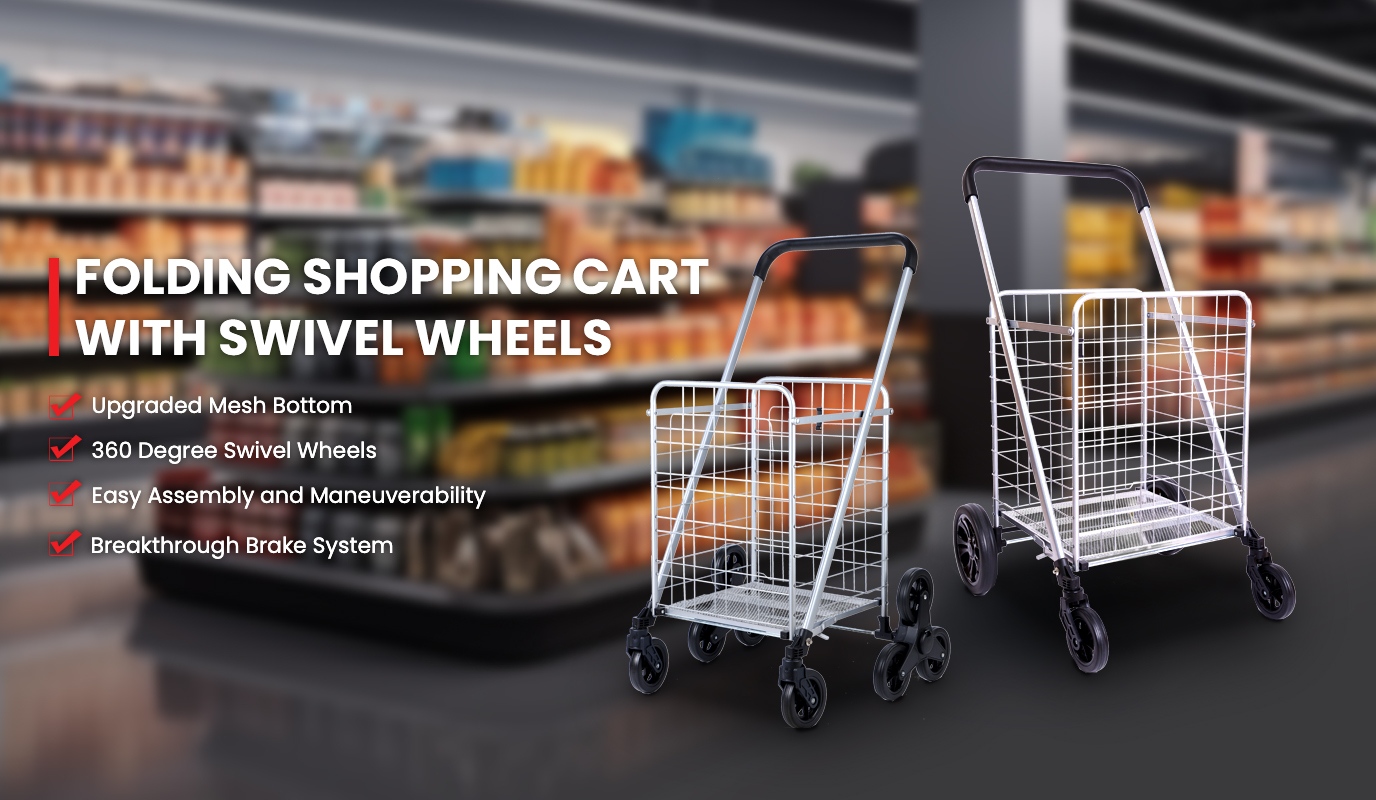
For example, this Metal Foldable Shopping Cart shows clear size data, including a 56×60×100 cm frame, 43×40×52 cm basket, 40 kg load capacity, and foldable structure. Such information helps buyers compare storage space, load performance, and packing efficiency before placing an order.
Bulk Supply and Project Sourcing Checklist
For bulk trolley supply, size selection should not only focus on capacity. A useful sourcing checklist should include:
Store aisle width and entrance space
Basket size and load capacity
Nesting distance and storage area
Wheel diameter and turning flexibility
Surface coating and rust resistance
MOQ, sample approval, carton size, and lead time
WOCHANG has more than 20 years of manufacturing experience in Shopping Carts, Shopping Baskets, Laundry Carts, and related trolley products. With BSCI and SCAN certification, our factory supports buyers who need more stable production management, supplier audit support, and export order consistency.
Manufacturing Process and Quality Control
A standard trolley manufacturing process includes material cutting, bending, welding, surface treatment, wheel assembly, handle fixing, inspection, cleaning, and packing. During quality control, we check frame balance, welding points, coating coverage, wheel rotation, load performance, folding function, nesting accuracy, and carton protection.
Material Standards and Export Compliance
Steel or iron frames are commonly used because they provide strength and load stability. PP, TPE, EVA, and polyester parts are selected according to wheel, handle, seat, and bag requirements. For export markets, EN 1929 is often referenced for shopping trolley construction, performance, testing, and safety requirements.
Final Advice
The right shopping trolley size should improve store movement, reduce maintenance pressure, and support long-term repeat orders. By working with a direct manufacturer, buyers can control size selection, OEM and ODM details, quality checkpoints, packing, and export delivery from sample confirmation to bulk shipment.