


How To Choose The Right Shopping Cart for Supermarkets
Choosing the right Shopping Cart for supermarkets is not only about basket size or price. For store projects, the cart affects customer movement, product loading, aisle efficiency, maintenance cost, and long-term replacement planning. A reliable shopping cart manufacturer should help match the product structure with store layout, customer habits, and export market requirements.
Manufacturer vs Trader: Why Direct Factory Supply Matters
The first point is to confirm whether the supplier is a manufacturer or a trader. A manufacturer can control material sourcing, wire forming, welding, surface treatment, wheel assembly, inspection, packing, and bulk delivery in one production system.
This makes communication easier when the order involves OEM or ODM requirements such as logo handles, basket color, wheel type, child seat design, nesting distance, or carton packing.
How to Select the Right Cart for Different Store Types
Supermarket cart selection can start from capacity and application:
| Store Type | Suggested Cart Focus |
|---|---|
| Convenience store | Compact size, easy nesting, light structure |
| Standard supermarket | Balanced basket volume, smooth wheels, stable frame |
| Hypermarket | Larger capacity, reinforced bottom frame, durable coating |
| Export wholesale | Stackable packing, consistent finish, replaceable parts |
Material Standards and Export Market Compliance
Material is another key factor. Steel wire with anti-rust coating is widely used because it offers strength, load stability, and long service life. Plastic parts should be checked for impact resistance, color consistency, and safe edges.
Wheels should roll smoothly, turn flexibly, and resist noise during daily use. In the European market, shopping trolley design is often evaluated with reference to EN 1929, which covers important areas such as basket structure, corrosion resistance, safety, and durability.
Bulk Supply Considerations Before Ordering
For bulk supply, buyers should not only ask for price. A practical project sourcing checklist should include sample approval, material thickness, welding quality, surface coating, load test, wheel test, carton strength, spare parts support, MOQ, lead time, and export documents.
WOCHANG has more than 20 years of manufacturing experience in shopping carts, Shopping Baskets, Laundry Carts, and related trolley products, with BSCI and SCAN certifications supporting factory audit and supply chain compliance.
Manufacturing Process Overview
Our manufacturing process generally includes material preparation, cutting and bending, welding, surface treatment, plastic part assembly, wheel installation, function checking, cleaning, and packing.
During quality control, we focus on frame balance, coating coverage, handle fixing, wheel rotation, loading performance, nesting accuracy, and carton protection before shipment.
Custom Shopping Cart Solutions for Supermarket Projects
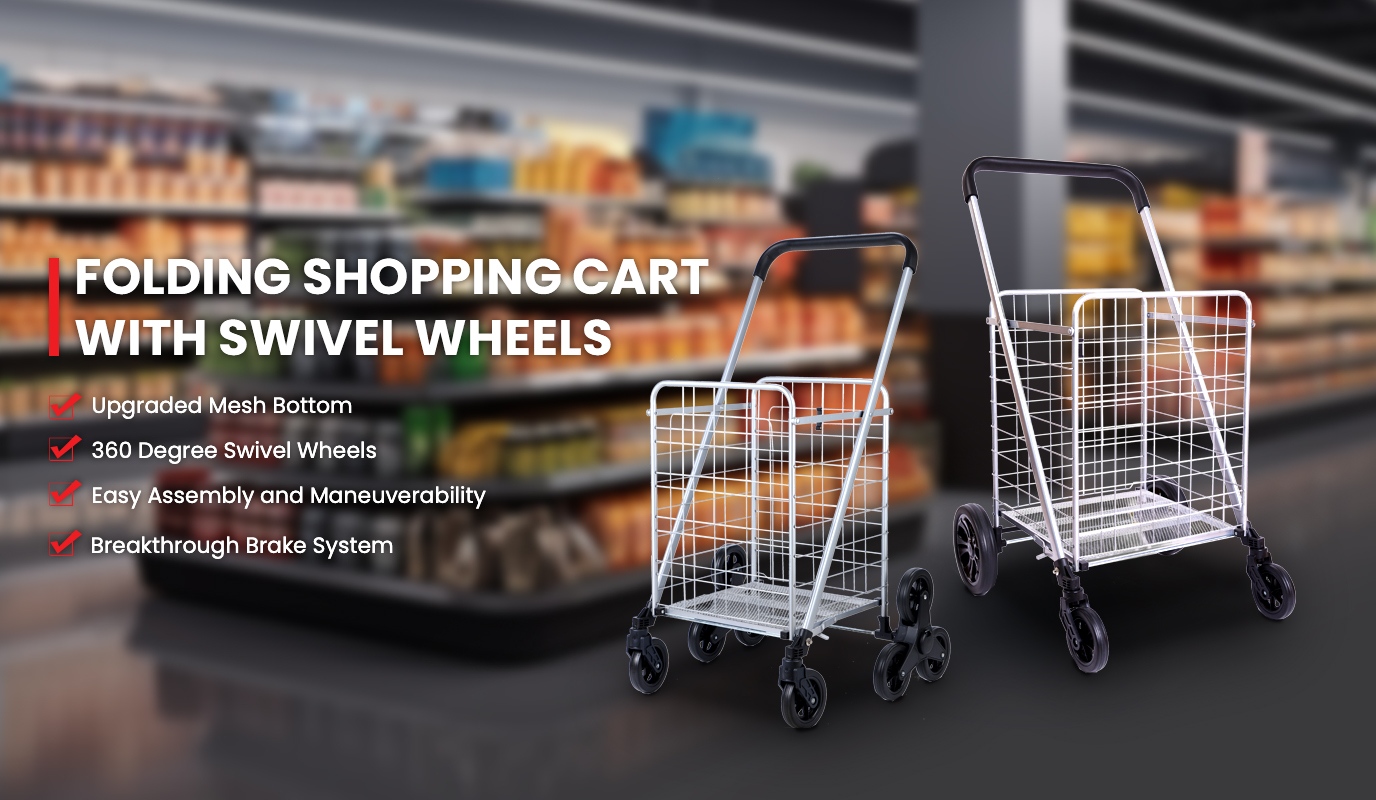
For projects that require compact and flexible cart solutions, this Foldable Shopping Cart can be used as a reference when discussing structure, load capacity, wheel design, colors, MOQ, and packing details.
Final Thoughts
The right supermarket shopping cart should support daily store operation, reduce maintenance problems, and keep product quality stable across repeat orders. Working directly with a manufacturer helps make customization, bulk production, inspection, and export delivery more predictable from sample to shipment.