


How to Compare Metal Shopping Carts and Plastic Shopping Carts
Choosing between metal Shopping Carts and plastic shopping carts depends on store format, product weight, maintenance cost, export requirements, and long-term replacement planning. Both materials can work well, but the right choice should match the actual retail environment instead of only comparing unit price.
Metal Shopping Carts vs Plastic Shopping Carts
Metal shopping carts are widely used in supermarkets because steel wire frames offer strong load capacity, stable structure, and good nesting performance. With proper surface treatment, metal carts can support long-term daily use in grocery stores, hypermarkets, and warehouse-style retail spaces.
Plastic shopping carts are often selected for lighter retail environments where quiet movement, modern appearance, and color matching are important. However, plastic structure, wheel fixing, impact resistance, and mold consistency must be checked carefully before bulk ordering.
| Item | Metal Shopping Cart | Plastic Shopping Cart |
|---|---|---|
| Strength | Better for heavy goods | Better for light to medium goods |
| Appearance | Classic supermarket style | Modern color options |
| Maintenance | Check coating and wheels | Check cracks and plastic aging |
| Customization | Handle, coating, wheels, logo | Color, mold, logo, basket design |
| Bulk Supply Focus | Welding, surface finish, nesting | Mold quality, material stability |
Manufacturer vs Trader: Why It Affects Material Choice
A direct shopping cart manufacturer can explain how material selection affects welding, coating, assembly, packing, and export delivery. A trader may only compare ready-made models, while a manufacturer can support OEM and ODM adjustments such as cart size, handle color, logo plate, wheel type, basket depth, and carton packing.
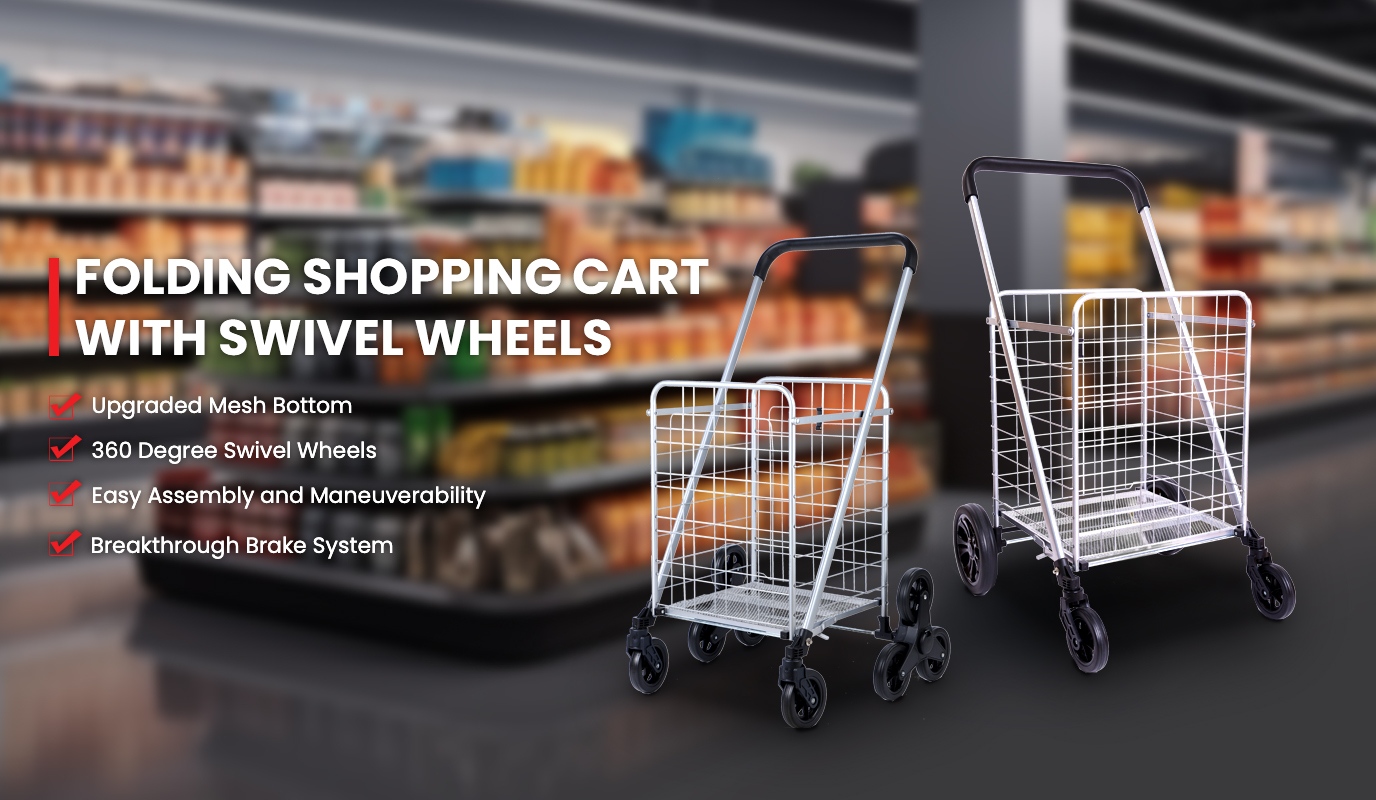
For metal cart projects, this Metal Foldable Shopping Cart can be used as a reference when checking foldable structure, load capacity, wheel design, material details, MOQ, and packing requirements.
OEM and ODM Process for Shopping Cart Projects
The OEM and ODM process should begin with drawings, target capacity, store use, logo requirements, color references, packing method, and expected order quantity. After sample confirmation, the factory can move into material preparation, bending, welding, surface treatment, plastic part assembly, wheel installation, inspection, and packing.
WOCHANG has more than 20 years of manufacturing experience in shopping carts, Shopping Baskets, Laundry Carts, and related trolley products. Our factory also holds BSCI and SCAN certifications, which helps support supplier audit needs and export market compliance.
Quality Control Checkpoints Before Bulk Supply
For metal shopping carts, quality control should focus on wire thickness, welding strength, surface coating, rust resistance, frame balance, nesting accuracy, handle fixing, wheel rotation, and carton protection. For plastic shopping carts, buyers should check material grade, wall thickness, color consistency, impact resistance, edge smoothness, wheel connection, and stacking performance.
EN 1929 is often referenced in the shopping trolley industry because it covers construction, performance, testing, and safety requirements for self-service basket trolleys. This is useful for export orders where safety, durability, and repeatable quality matter.
Project Sourcing Checklist
Before placing a bulk order, buyers should confirm:
Target store type and shopping cart capacity
Metal or plastic material preference
Load requirement and wheel performance
OEM logo and color customization
Sample approval and inspection standard
MOQ, lead time, packing, and export documents
Practical Summary
Metal shopping carts are usually better for heavy-duty supermarket use, while plastic shopping carts are suitable for lighter retail spaces that need color flexibility and quiet movement. A clear comparison of material, structure, quality control, and export compliance helps make bulk sourcing more stable from sample approval to repeat shipment.