


How to Customize Shopping Carts for Supermarket Projects
Customizing Shopping Carts for supermarket projects should begin with real store requirements, not only appearance. Cart size, load capacity, wheel movement, handle design, logo position, surface treatment, nesting space, and packing method all affect daily operation and long-term replacement cost.
Manufacturer vs Trader: Why Factory Customization Matters
A direct shopping cart manufacturer can control the full process from material preparation to bulk packing. Compared with a trader, a manufacturer can adjust product structure, confirm drawings, test samples, improve details, and keep repeat orders consistent.
For supermarket projects, OEM and ODM customization usually includes basket size, frame color, handle logo, wheel type, child seat structure, plastic accessories, anti-rust coating, and carton packing. These details should be confirmed before mass production to avoid size mismatch, unstable loading, or higher maintenance cost.
OEM and ODM Process for Custom Shopping Carts
A clear customization process helps make the project easier to manage:
| Step | Main Focus |
|---|---|
| Requirement confirmation | Store type, cart size, capacity, color, logo |
| Drawing and sample | Structure, material, wheel, packing details |
| Sample testing | Load, movement, balance, coating, nesting |
| Bulk production | Cutting, bending, welding, treatment, assembly |
| Final inspection | Function check, carton check, shipment documents |
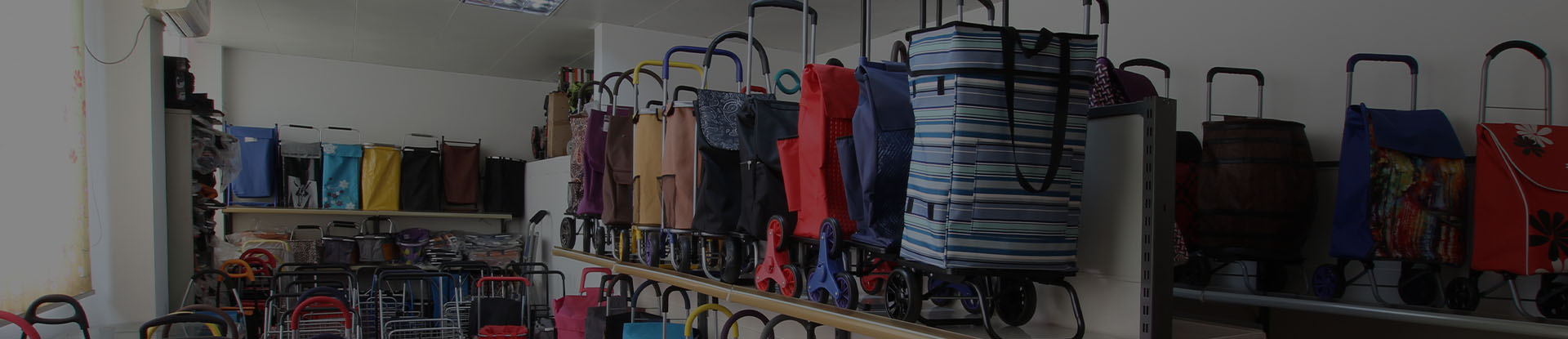
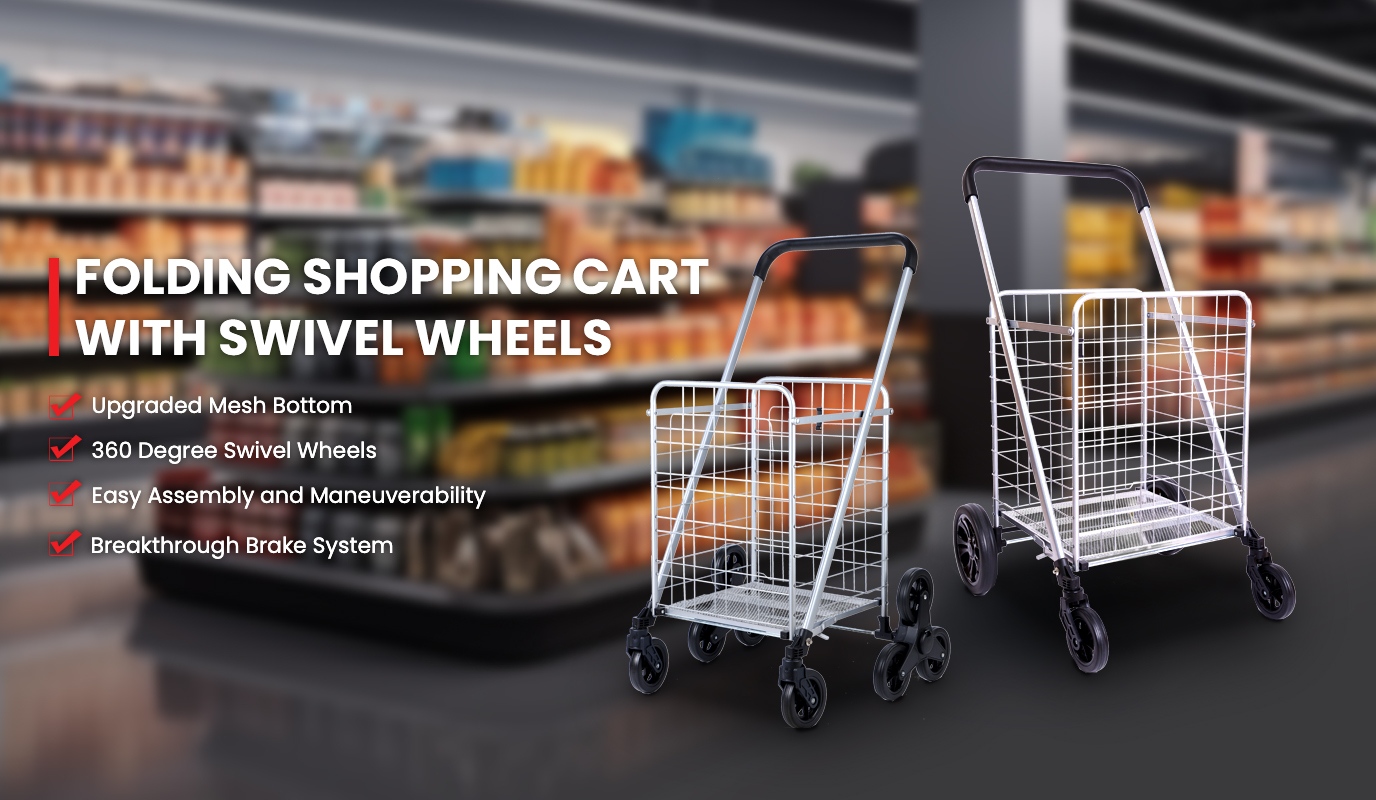
For compact retail and supermarket shopping solutions, this Trolley Bag Cart can be used as a reference for discussing customized logo, folding structure, wheel design, storage space, and packing requirements.
Bulk Supply Considerations
Before placing a bulk order, buyers should prepare a project sourcing checklist. Important points include MOQ, lead time, sample approval, material thickness, welding quality, coating finish, wheel durability, nesting distance, carton strength, spare parts support, and export documents.
WOCHANG has more than 20 years of manufacturing experience in shopping carts, Shopping Baskets, Laundry Carts, and related trolley products. With BSCI and SCAN certification, our factory supports more stable production management, supplier audit needs, and export order control.
Manufacturing Process Overview
The manufacturing process generally includes steel wire or tube preparation, cutting, bending, welding, polishing, surface treatment, plastic part assembly, wheel installation, cleaning, inspection, and packing. For folding or bag-style shopping carts, fabric cutting, sewing, logo printing, and bag assembly are also important production steps.
Quality Control and Material Standards
Quality control should focus on frame balance, welding points, coating coverage, rust resistance, wheel rotation, handle fixing, load performance, folding function, nesting accuracy, and packing protection. For export markets, EN 1929 is often used as a reference for shopping trolley construction, performance, testing, and safety requirements.
Practical Summary
A customized shopping cart should fit the store layout, improve customer movement, reduce maintenance problems, and support repeat purchasing. Working with a direct manufacturer makes OEM and ODM development, bulk production, quality inspection, and export delivery more predictable from sample to shipment.