


How Do Smart Warehouses Integrate Trolley Systems
Smart warehouses integrate trolley systems by connecting manual handling tools with storage layout, picking routes, replenishment tasks, packing areas, and inventory flow. Although automation is growing quickly, trolleys still play an important role in flexible movement, short-distance transfer, and daily warehouse support.
Why Trolleys Still Matter in Smart Warehouses
Market research estimates that the smart warehousing market will grow from USD 31.21 billion in 2025 to USD 46.42 billion by 2030. This growth is driven by automation, inventory visibility, and faster fulfillment. However, not every movement inside a warehouse needs a robot or conveyor. Trolleys remain useful for replenishment, order picking support, returns handling, sample movement, and temporary storage.
| Warehouse Area | Trolley System Function |
|---|---|
| Picking zone | Moves goods between shelves and packing areas |
| Replenishment zone | Supports shelf refilling and stock transfer |
| Packing area | Holds cartons, tools, and sorted products |
| Returns area | Separates goods for checking and restocking |
| Maintenance area | Moves parts, tools, and supplies |
Manufacturer vs Trader: Why Integration Needs Product Control
A direct trolley manufacturer can adjust trolley size, basket layout, wheel type, frame height, handle position, coating, logo, and packing according to warehouse workflow. Compared with a trader, a manufacturer can support OEM and ODM changes before bulk production, making the trolley easier to match with storage racks, aisle width, and handling habits.
WOCHANG has more than 20 years of manufacturing experience in Shopping Carts, Shopping Baskets, Laundry Carts, Outdoor Carts, and related trolley products. With BSCI and SCAN certification, our factory supports supplier audit needs, stable production management, and export order consistency.
Product Structure for Smart Warehouse Use
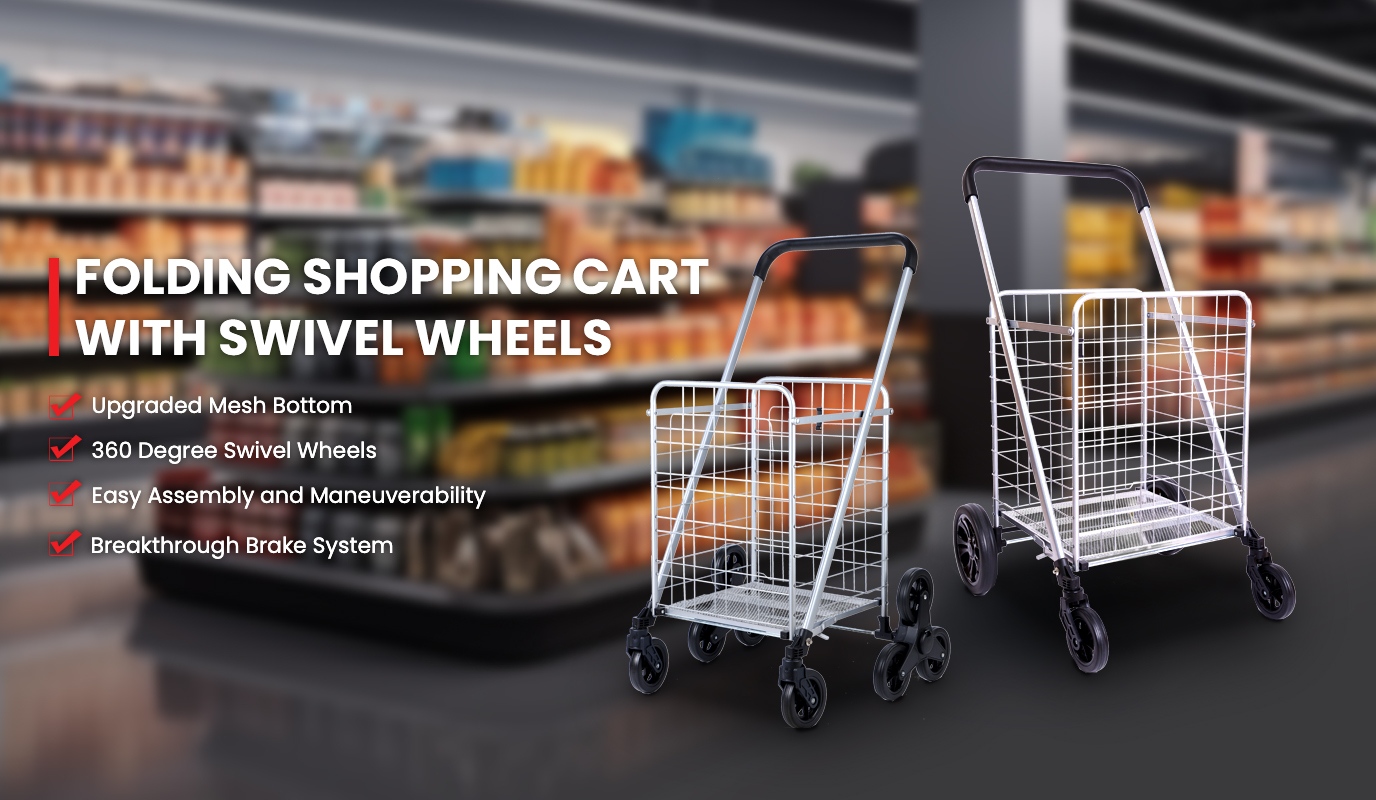
For warehouse and retail backroom movement, trolley systems should focus on load stability, smooth wheels, easy turning, rust resistance, and compact storage. This Metal Shop Cart can be used as a reference because it features an iron frame, PP basket, EVA wheel cover, 360-degree front wheel rotation, and 40KG load capacity for supermarket replenishment and warehouse turnover.
Manufacturing Process Overview
A standard trolley production process includes material preparation, cutting, bending, welding, surface treatment, basket assembly, wheel installation, function checking, cleaning, and packing. For customized warehouse trolley systems, the factory should also confirm load requirements, aisle conditions, basket depth, wheel performance, carton size, spare parts, and export documents.
Quality Control Checkpoints
Before bulk supply, quality control should check frame balance, welding strength, coating coverage, rust resistance, wheel rotation, basket fixing, load performance, handle stability, carton protection, and repeat order consistency. ISO 2859-1 AQL sampling is widely used for batch inspection, while export projects may also require factory audit documents and material records.
Final Thoughts
Smart warehouses integrate trolley systems by using them as flexible support tools between storage, picking, packing, replenishment, and returns. Working with a direct manufacturer helps make trolley design, OEM and ODM customization, quality inspection, packing, and export delivery more predictable from sample approval to bulk shipment.