



What Size Shopping Cart Is Suitable for Grocery Stores
Choosing a suitable Shopping Cart size for grocery stores depends on store area, aisle width, product category, customer flow, and storage space near the entrance. A cart that is too large may affect movement in narrow aisles, while a cart that is too small may limit purchase volume and reduce shopping convenience.
Start with Grocery Store Layout
Grocery stores usually need carts that balance basket capacity and easy movement. ADA accessibility guidance commonly uses 36 inches, or 915 mm, as a minimum clear route reference. For retail planning, wider aisles are often preferred because customers, shelves, carts, and staff movement may share the same space.
| Grocery Store Type | Suggested Cart Focus |
|---|---|
| Small grocery store | Compact cart, easy nesting, light frame |
| Medium grocery store | Standard basket size, smooth wheels |
| Fresh food store | Stable frame and easy-clean surface |
| Large grocery store | Larger capacity and stronger load support |
Manufacturer vs Trader: Why Size Matching Matters
A direct shopping cart manufacturer can help adjust frame size, basket depth, handle height, wheel type, coating color, logo position, and packing method according to store requirements. Compared with a trader, a manufacturer can support OEM and ODM development from sample confirmation to bulk production, making size control more stable across repeat orders.
WOCHANG has more than 20 years of manufacturing experience in shopping carts, Shopping Baskets, Laundry Carts, and related trolley products. With BSCI and SCAN certification, our factory supports supplier audit needs, export order management, and consistent production.
Product Size Reference for Grocery Use
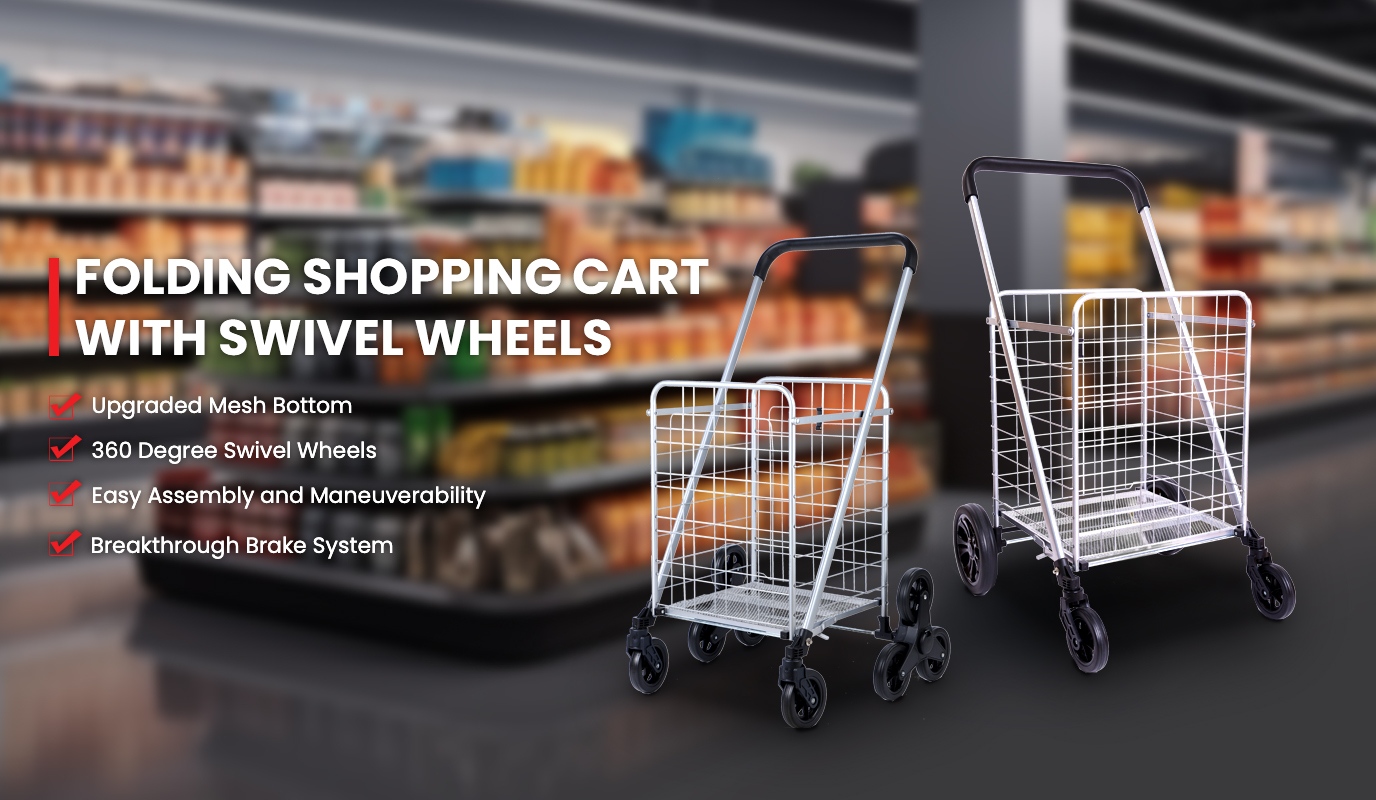
For compact grocery and market use, this Metal Foldable Shopping Cart can be used as a reference. It features a 19L basket, 56×60×100 cm frame size, 43×40×52 cm basket size, 40 kg load capacity, iron structure, PP and TPE wheels, and MOQ of 500–800PCS.
Bulk Supply Considerations
Before placing a bulk order, buyers should confirm cart size, basket capacity, aisle width, nesting distance, wheel movement, carton size, MOQ, lead time, spare parts, inspection standard, and export documents. These details help reduce storage problems, shipment disputes, and after-sales pressure.
Manufacturing Process and Quality Control
A standard shopping cart process includes material preparation, cutting, bending, welding, surface treatment, plastic part assembly, wheel installation, cleaning, inspection, and packing. Quality control should focus on frame balance, welding strength, coating coverage, wheel rotation, handle fixing, load performance, nesting accuracy, and carton protection.
For export markets, EN 1929 is often referenced for shopping trolley construction, performance, testing, and safety requirements.
Practical Summary
The suitable shopping cart size for grocery stores should support smooth aisle movement, enough basket capacity, easy storage, and stable long-term use. Working with a direct manufacturer helps make size selection, OEM and ODM customization, quality inspection, packing, and export delivery more predictable.