



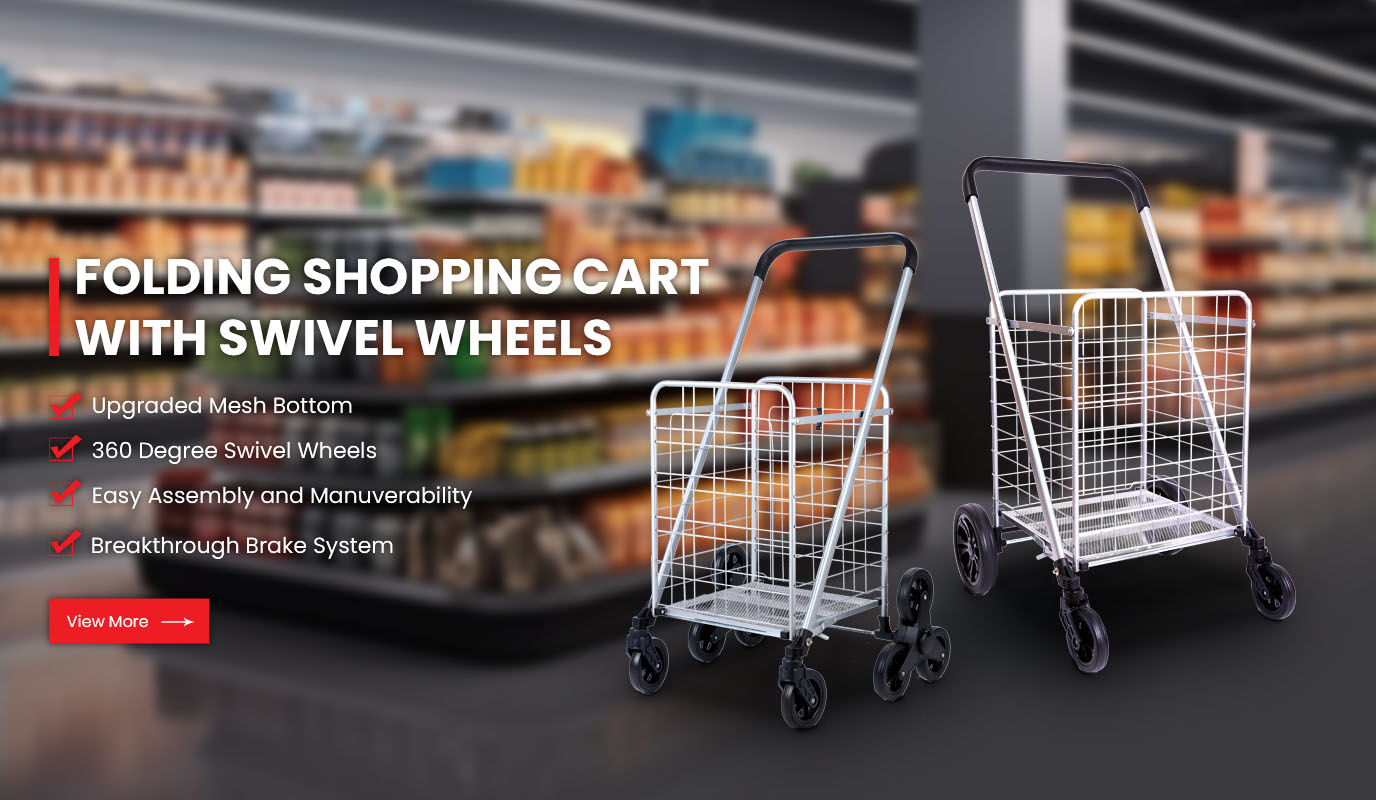
4 Wheel Shopping Cart vs 6 Wheel Shopping Cart: Which Provides Better Mobility and Stability?
Four-wheel Shopping Carts provide simple and flexible movement, while six-wheel shopping carts offer improved stability and load support. The better choice depends on store layout, customer flow, cart capacity, and mobility requirements.
What Is the Difference Between 4 Wheel and 6 Wheel Shopping Carts?
The main difference between 4 wheel and 6 wheel shopping carts is the wheel structure and how it affects movement performance.
A 4 wheel shopping cart uses a traditional four-caster system designed for everyday retail shopping.
A 6 wheel shopping cart adds additional wheel support, improving balance and stability when carrying heavier loads or operating in larger retail environments.
The wheel configuration influences:
Steering flexibility
Stability during movement
Load distribution
Customer comfort
Store operation efficiency
Choosing the right wheel system helps retailers provide a better shopping experience.
What Are the Advantages of 4 Wheel Shopping Carts?
Four-wheel shopping carts are widely used because of their simple structure and flexible operation.
Easy Steering and Maneuverability
The four-wheel design allows customers to change direction easily.
Benefits include:
Quick turning
Smooth movement in narrow aisles
Simple operation
Good flexibility
This makes 4 wheel carts suitable for stores where customers frequently move through smaller spaces.
Compact Design
Four-wheel shopping carts usually have a simpler structure.
Advantages include:
Easier storage
Lower maintenance requirements
Efficient store management
They are commonly used in:
Convenience stores
Small supermarkets
Grocery shops
Retail environments with limited space
What Are the Advantages of 6 Wheel Shopping Carts?
Six-wheel shopping carts are designed to improve stability and transportation performance.
Better Weight Distribution
Additional wheels help distribute the cart load more evenly.
Benefits include:
Improved balance
Reduced pressure on individual wheels
Better stability with heavier loads
Enhanced Movement Stability
Six-wheel designs can provide smoother movement when carts carry more products.
They are suitable for:
Large supermarkets
Hypermarkets
High customer traffic environments
Better Support for Larger Cart Structures
Larger shopping carts often require additional wheel support to maintain stable operation.
Six-wheel configurations help improve handling performance for bigger capacity models.
How Do 4 Wheel and 6 Wheel Shopping Carts Compare in Mobility?
Mobility depends on both wheel design and store environment.
| Feature | 4 Wheel Shopping Cart | 6 Wheel Shopping Cart |
|---|---|---|
| Steering Flexibility | Excellent | Good |
| Stability | Standard | Higher |
| Load Distribution | Normal | Improved |
| Narrow Aisle Performance | Better | Suitable with enough space |
| Heavy Load Support | Moderate | Better |
Four-wheel carts provide more direct maneuverability, while six-wheel carts provide stronger stability.
Which Wheel Design Is Better for Small retail stores?
Small retail stores usually have limited aisle space.
Four-wheel shopping carts are often more suitable because they provide:
Easier turning
Better space efficiency
Simple operation
Flexible movement
For convenience stores and small supermarkets, maneuverability is usually more important than maximum stability.
Which Wheel Design Is Better for Large Supermarkets?
Large supermarkets often require carts that can handle:
Higher customer traffic
Larger shopping volumes
Longer transportation distances
Six-wheel shopping carts can provide advantages through:
Better stability
Improved load distribution
More comfortable movement with larger loads
They are suitable for large retail environments where customers commonly purchase multiple products.
How Does Store Layout Affect Wheel Selection?
Store layout plays an important role in choosing between 4 wheel and 6 wheel carts.
Narrow Aisles
Four-wheel carts usually perform better because they require less space for turning.
Wide Aisles
Six-wheel carts can operate effectively because customers have more room to maneuver.
Large Shopping Areas
Six-wheel designs may provide better comfort during longer shopping trips.
The ideal wheel configuration should match the physical environment of the store.
How Does load capacity Affect Wheel Configuration?
Cart capacity and wheel design are closely related.
Higher capacity carts require stronger support systems.
Four-wheel carts are generally suitable for:
Daily grocery shopping
Medium product loads
Compact retail applications
Six-wheel carts are often suitable for:
Large purchases
Heavy product categories
High-volume supermarkets
Selecting the correct wheel system improves both safety and service life.
How Do Wheel Systems Affect Maintenance Requirements?
Both wheel systems require regular maintenance.
Important maintenance areas include:
Wheel Inspection
Check:
Rotation performance
Wear condition
Wheel attachment
Frame Stability
Ensure that the additional load does not affect structural performance.
Cleaning
Remove debris that may affect wheel movement.
High-quality caster systems help reduce maintenance frequency.
Can 4 Wheel and 6 Wheel Shopping Carts Be Customized?
Both designs can be customized based on retail requirements.
Customization options include:
Cart size
Basket capacity
Wheel configuration
Material selection
Color design
Logo printing
Child seat options
Professional manufacturers can recommend suitable wheel systems based on store conditions and product requirements.
How Should Retailers Choose Between 4 Wheel and 6 Wheel Shopping Carts?
Retailers should consider:
Store Size
Small stores usually benefit from flexible 4 wheel designs.
Large supermarkets may prefer stable 6 wheel solutions.
Customer Shopping Volume
Higher purchase volumes may require stronger support.
Aisle Layout
Narrow spaces require better maneuverability.
Long-Term Operation
Consider durability, maintenance, and customer experience.
What Should Buyers Check Before Ordering Shopping Carts?
Before purchasing, buyers should evaluate:
Wheel system design
Choose based on mobility and stability requirements.
Cart capacity
Match the structure with expected shopping loads.
Store environment
Consider aisle width and customer flow.
Component quality
Check wheels, frames, and basket durability.
Manufacturer capability
Select suppliers with reliable production and customization experience.
Why Is Choosing the Right Wheel System Important?
The wheel system directly affects shopping cart mobility, stability, and customer experience.
Four-wheel shopping carts provide excellent flexibility for compact retail environments, while six-wheel shopping carts provide improved stability for larger stores and heavier loads.
By selecting the correct wheel configuration, retailers can improve shopping convenience, optimize store operations, and achieve better long-term value.