



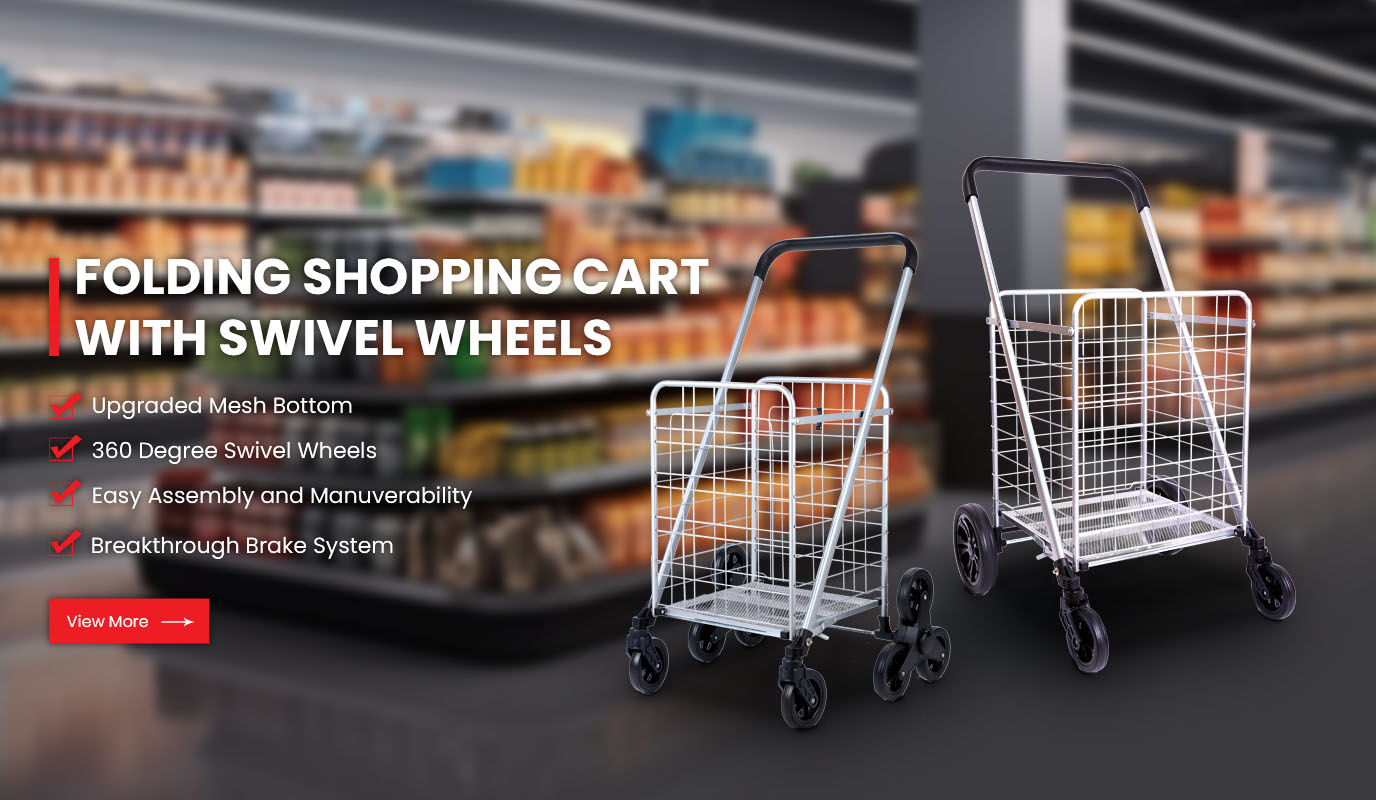
Small Shopping Cart vs Large Shopping Cart: Which Capacity Meets Store Requirements Better?
Small Shopping Carts are suitable for compact stores and quick purchases, while large shopping carts support higher product volumes in supermarkets and large retail environments. The right capacity depends on store size, customer behavior, and product categories.
What Is the Difference Between Small and Large Shopping Carts?
The main difference between small and large shopping carts is their storage capacity and application purpose.
Small shopping carts are designed for customers who purchase fewer items and for stores with limited space.
Large shopping carts are designed for higher-volume shopping and retail environments where customers need to carry more products.
The capacity choice affects:
Customer shopping experience
Store space utilization
Cart management efficiency
Transportation requirements
Purchasing cost
Retailers should select cart capacity based on actual store operations rather than simply choosing the largest available option.
What Are the Advantages of Small Shopping Carts?
Small shopping carts provide flexibility for compact retail environments.
Better Space Efficiency
Small carts require less space for:
Store aisles
Cart storage areas
Customer movement
They are suitable for:
Convenience stores
Mini supermarkets
Neighborhood grocery shops
Small retail stores
Easier Customer Handling
A smaller cart is easier to push and control, especially in stores with narrow aisles.
Benefits include:
Faster movement
Easier turning
Better accessibility
Comfortable use for short shopping trips
Suitable for Quick Shopping
Many customers in smaller stores purchase only a limited number of products.
Small carts provide enough capacity without creating unnecessary bulk.
What Are the Advantages of Large Shopping Carts?
Large shopping carts are designed for stores with higher shopping volumes.
Higher Product Capacity
Large carts allow customers to carry more items during one shopping trip.
They are suitable for:
Supermarkets
Hypermarkets
Warehouse retail stores
Large shopping centers
Better for Family Shopping
Customers purchasing household products, beverages, and bulk goods often need larger storage space.
Large shopping carts improve convenience by reducing the need for multiple baskets or repeated trips.
Supports Higher Sales Volume
Larger cart capacity can encourage customers to purchase more products because additional space is available.
How Do Small and Large Shopping Carts Compare in Capacity?
Capacity is the most visible difference between the two designs.
| Feature | Small Shopping Cart | Large Shopping Cart |
|---|---|---|
| Storage Capacity | Limited to medium purchases | Suitable for large purchases |
| Store Space Requirement | Lower | Higher |
| Maneuverability | Easier in narrow areas | Requires wider aisles |
| Customer Type | Quick shoppers | Family and bulk shoppers |
| Suitable Locations | Small stores | Large retail environments |
The ideal capacity depends on the relationship between store layout and customer purchasing habits.
Which Shopping Cart Size Is Better for Small Stores?
Small stores usually benefit from compact shopping carts.
Reasons include:
Limited aisle width
Smaller storage areas
Shorter customer shopping time
Lower average purchase volume
A smaller cart helps maintain smooth customer movement while providing enough carrying capacity.
For convenience stores and local grocery shops, space efficiency is often more important than maximum capacity.
Which Shopping Cart Size Is Better for Supermarkets?
Large supermarkets typically require larger shopping carts.
They are suitable because:
Customers buy more products
Product categories are wider
Shopping trips take longer
Bulk purchases are more common
Large carts support better customer convenience and improve the overall shopping experience.
How Does Store Layout Affect Shopping Cart Capacity Selection?
Store layout is a critical factor when selecting shopping cart size.
Narrow Aisles
Small shopping carts perform better because they provide:
Easier turning
Better traffic flow
Improved customer comfort
Wide Aisles
Large shopping carts can operate effectively because customers have more maneuvering space.
Limited Storage Areas
Smaller carts reduce the space required for cart collection and storage.
Retailers should consider both customer needs and physical store conditions.
How Does Customer Shopping Behavior Influence Cart Selection?
Customer purchasing habits directly affect the ideal cart capacity.
Small Purchase Behavior
Small carts are suitable when customers usually buy:
Daily groceries
Snacks
Convenience products
Small quantities
Large Purchase Behavior
Large carts are better when customers commonly purchase:
Household supplies
Beverages
Bulk products
Multiple product categories
Understanding customer behavior helps retailers avoid choosing carts that are either too small or unnecessarily large.
What Materials Are Suitable for Different Shopping Cart Sizes?
Both small and large shopping carts can use different materials depending on requirements.
Common options include:
| Material | Benefits |
|---|---|
| Plastic | Lightweight and corrosion resistant |
| Steel | Strong and suitable for heavy use |
| Stainless Steel | Durable and easy to maintain |
Large shopping carts often require stronger structures because they are expected to carry heavier loads.
Small carts may prioritize lightweight design and easy handling.
Can Shopping Cart Capacity Be Customized?
Professional manufacturers can customize shopping carts according to store requirements.
Customization options may include:
Basket size
Cart dimensions
Frame structure
Wheel configuration
Child seat design
Color and branding
Customized capacity solutions help retailers match products with their specific market environment.
How Should Retailers Choose Between Small and Large Shopping Carts?
Retailers should evaluate:
Store Size
Small stores usually need compact solutions, while large stores can support higher-capacity carts.
Customer Purchasing Patterns
Select capacity based on average shopping volume.
Product Categories
Stores selling bulk goods may require larger carts.
operational efficiency
Consider storage, maintenance, and customer movement.
The right shopping cart size balances customer convenience and store management efficiency.
What Should Buyers Check Before Ordering Shopping Carts?
Before purchasing, buyers should confirm:
Cart capacity requirements
Match the cart size with customer purchasing habits.
Store space limitations
Check aisle width and storage conditions.
Material and structure quality
Ensure long-term durability.
Wheel performance
Verify smooth movement and stability.
Supplier manufacturing ability
Choose a manufacturer that supports consistent production and customization.
Why Is Choosing the Right Shopping Cart Capacity Important?
Shopping cart capacity affects both customer experience and store efficiency.
Small carts provide flexibility and space savings, while large carts support higher-volume shopping and larger retail operations.
By matching cart size with store requirements, retailers can improve customer convenience, optimize space usage, and achieve better long-term operational value.