


Foldable Shopping Cart vs Fixed Frame Shopping Cart: Which Is More Practical for Retail Use?
Foldable Shopping Carts provide space-saving flexibility, while fixed frame shopping carts offer stronger structure and durability for frequent retail operations. The better choice depends on store space, usage frequency, and transportation requirements.
What Is the Difference Between Foldable and Fixed Frame Shopping Carts?
The main difference between foldable and fixed frame shopping carts is their structural design.
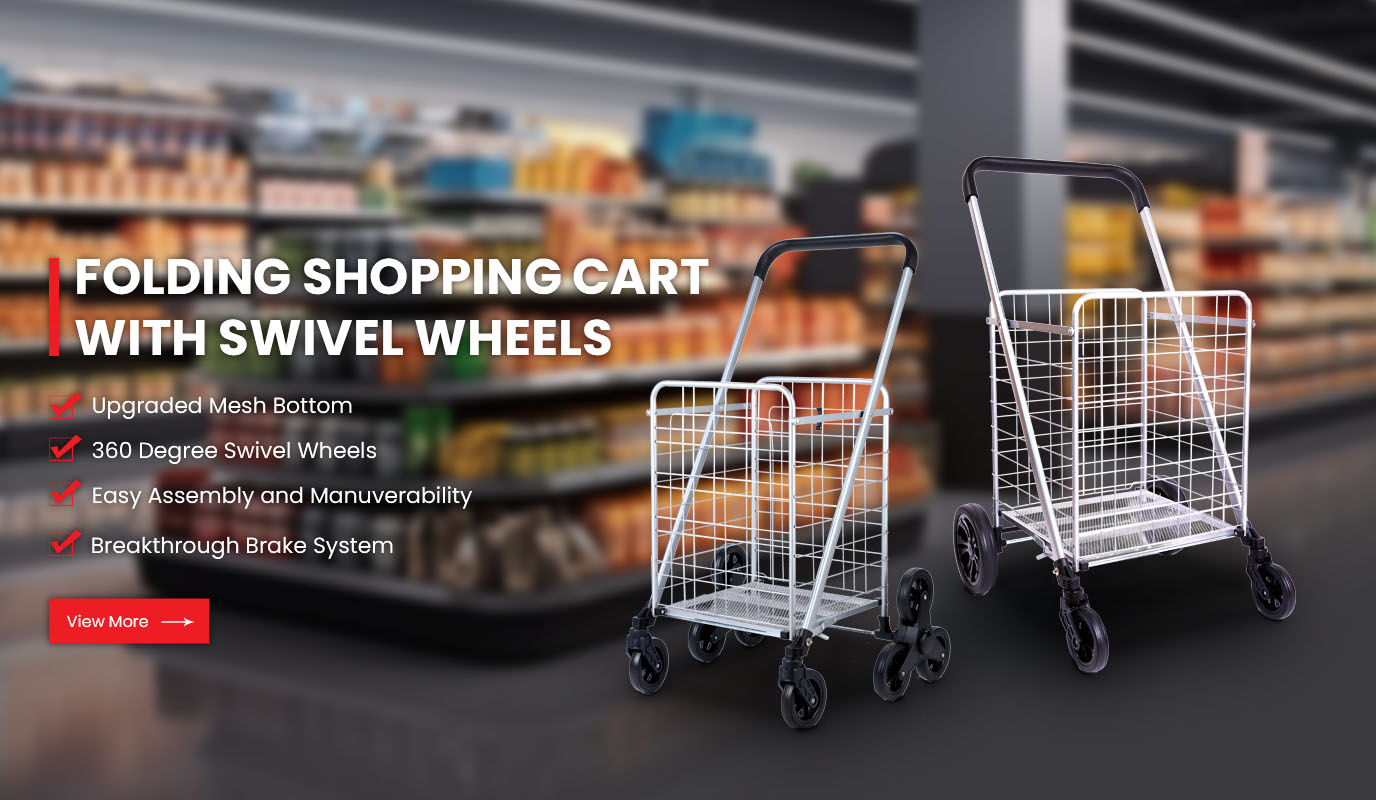
Foldable Shopping Carts are designed with collapsible features that allow easier storage and transportation.
Fixed frame shopping carts use a rigid structure designed for stability and long-term commercial use.
The design difference affects:
Storage efficiency
Product durability
Daily operation
Customer experience
Maintenance requirements
Retailers should choose based on how the carts will be used rather than selecting only based on appearance.
What Are the Advantages of Foldable Shopping Carts?
Foldable Shopping Carts are designed for flexibility and space efficiency.
Space-Saving Storage
The biggest advantage of foldable carts is their ability to reduce storage requirements.
Benefits include:
Less storage space needed
Easier warehouse organization
Convenient transportation
Flexible deployment
This makes them suitable for retail environments where storage space is limited.
Easy Transportation
Foldable designs can simplify movement between different locations.
They are practical for:
Temporary retail events
Small stores
Mobile sales environments
Businesses with limited storage areas
Flexible Usage
Foldable shopping carts provide convenience when carts need to be stored or transported frequently.
What Are the Advantages of Fixed Frame Shopping Carts?
Fixed frame shopping carts are designed for stability and intensive use.
Stronger Structural Performance
The rigid frame provides better support for daily retail operations.
Advantages include:
Higher structural strength
Better load support
Improved stability
Long service life
Suitable for High Frequency Use
Large supermarkets and retail chains often require carts that can withstand repeated customer use.
Fixed frame carts provide reliable performance in demanding environments.
Better Stability During Operation
The solid structure helps maintain balance when customers carry larger quantities of products.
How Do Foldable and Fixed Frame Shopping Carts Compare?
| Feature | Foldable Shopping Cart | Fixed Frame Shopping Cart |
|---|---|---|
| Storage Efficiency | Excellent | Standard |
| Structural Strength | Good | Higher |
| Portability | Better | Moderate |
| Heavy Duty Use | Limited | Excellent |
| Maintenance | Requires mechanism inspection | Simpler structure |
Foldable carts focus on flexibility, while fixed frame carts focus on durability.
Which Shopping Cart Is Better for Small Retail Stores?
Small retail stores often face storage limitations.
Foldable shopping carts can provide advantages because they:
Require less storage space
Are easier to organize
Support flexible store layouts
They are suitable for:
Convenience stores
Small supermarkets
Compact retail environments
For stores where space efficiency is important, foldable designs can provide practical benefits.
Which Shopping Cart Is Better for Large Supermarkets?
Large supermarkets usually prioritize durability and operational efficiency.
Fixed frame shopping carts are often preferred because they provide:
Stronger construction
Better performance under heavy use
Higher load capacity
Longer service life
Large retail environments typically need carts that can operate continuously throughout the day.
How Does Store Operation Affect Shopping Cart Selection?
The correct cart design depends on daily workflow.
Frequent Cart Movement
Fixed frame carts may provide better durability for continuous operation.
Limited Storage Space
Foldable carts provide better space management.
Multiple Store Locations
Foldable carts may be easier to transport between branches or events.
Retailers should evaluate their operational process before choosing a cart type.
How Do Maintenance Requirements Differ Between Foldable and Fixed Frame Carts?
Maintenance needs vary due to different structures.
Foldable Shopping Cart Maintenance
Additional attention may be required for:
Folding mechanisms
Connection points
Moving components
Regular inspection helps maintain smooth operation.
Fixed Frame Shopping Cart Maintenance
Fixed frame carts usually require:
Wheel inspection
Surface cleaning
Structural checks
Their simpler structure can reduce maintenance complexity.
How Do Materials Affect Shopping Cart Performance?
Material selection influences durability and usability.
Common materials include:
| Material | Characteristics |
|---|---|
| Steel | Strong and suitable for commercial use |
| Stainless Steel | Corrosion resistant and durable |
| Aluminum | Lightweight and easy to move |
| Plastic Components | Lightweight and easy maintenance |
Fixed frame carts often prioritize stronger materials, while foldable carts may balance strength with portability.
Can Foldable and Fixed Frame Shopping Carts Be Customized?
Both designs can be customized according to retail requirements.
Customization options include:
Cart dimensions
Basket capacity
Frame structure
Wheel configuration
Color selection
Logo printing
Child seat options
Professional manufacturers can recommend suitable designs based on store applications.
How Should Retailers Choose Between Foldable and Fixed Frame Shopping Carts?
Retailers should consider:
Available Storage Space
Limited storage areas may benefit from foldable designs.
Usage Frequency
High-frequency operations usually require fixed frame durability.
Customer Shopping Behavior
Larger purchases may require stronger structures.
Long-Term Operating Costs
Consider maintenance, replacement frequency, and service life.
What Should Buyers Check Before Ordering Shopping Carts?
Before purchasing, buyers should evaluate:
Cart application
Determine whether flexibility or durability is the priority.
Storage conditions
Check available space and management requirements.
Load requirements
Match cart strength with expected usage.
Component quality
Review wheels, frames, and mechanisms.
Manufacturer capability
Choose suppliers with experience in commercial shopping cart production.
Why Is Choosing the Right Shopping Cart Structure Important?
Foldable and fixed frame shopping carts provide different advantages.
Foldable carts improve storage flexibility and transportation convenience, while fixed frame carts provide stronger durability and reliable performance for demanding retail environments.
By matching cart structure with store conditions and operational needs, retailers can improve efficiency, reduce maintenance costs, and create a better shopping experience.