



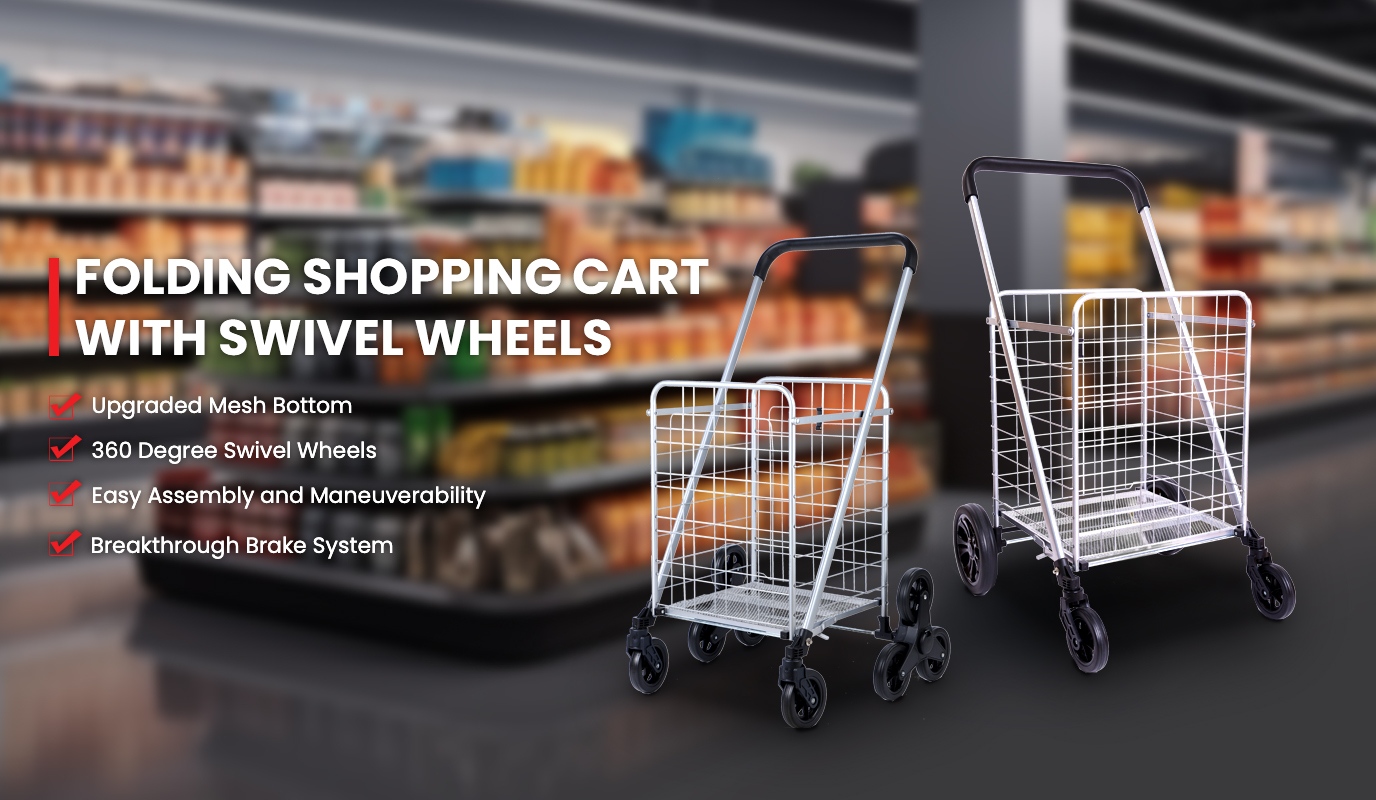
Foldable shopping carts generally save more storage space because the frame can collapse when the cart is not in use. Traditional fixed-frame shopping carts require more floor and stacking space, but they usually provide stronger structural stability for continuous high-volume retail use.
-
2026-10-26
-
2026-10-12Platform carts are generally better for commercial material handling because their open deck, stronger frame, and load-focused design support boxes, equipment, and supplies. Shopping carts are better suited to customer-facing retail transport.
-
2026-10-08Compare foldable shopping carts with fixed-frame shopping carts to help retailers choose a practical solution.
-
2026-10-07Comparing shopping carts with child seats to standard shopping carts helps retailers enhance the customer experience.
-
2026-10-06Compare heavy-duty and standard shopping carts to help high-traffic retail stores select the right product.
-
2026-10-05Compare the durability and maintenance requirements of plastic and wire shopping carts to help retailers optimize their choice.
-
2026-10-02Comparing nesting and stacking shopping carts to help retailers optimize storage space management.
-
2026-10-01Compare the mobility performance of four-wheeled and six-wheeled shopping carts to help retailers select the design best suited to their stores.
-
2026-09-28Compare plastic and metal shopping carts to help supermarkets select the product that best suits their operational needs.
-
2026-09-24This article introduces methods for mitigating risks associated with bulk procurement and shopping carts, helping enterprises enhance supply stability.
-
2026-09-23This article introduces quality control methods for imported shopping carts, helping buyers reduce risk and ensure product consistency.
-
2026-09-17By comparing utility carts and shopping carts, this helps businesses select the appropriate transport equipment based on specific application scenarios.