



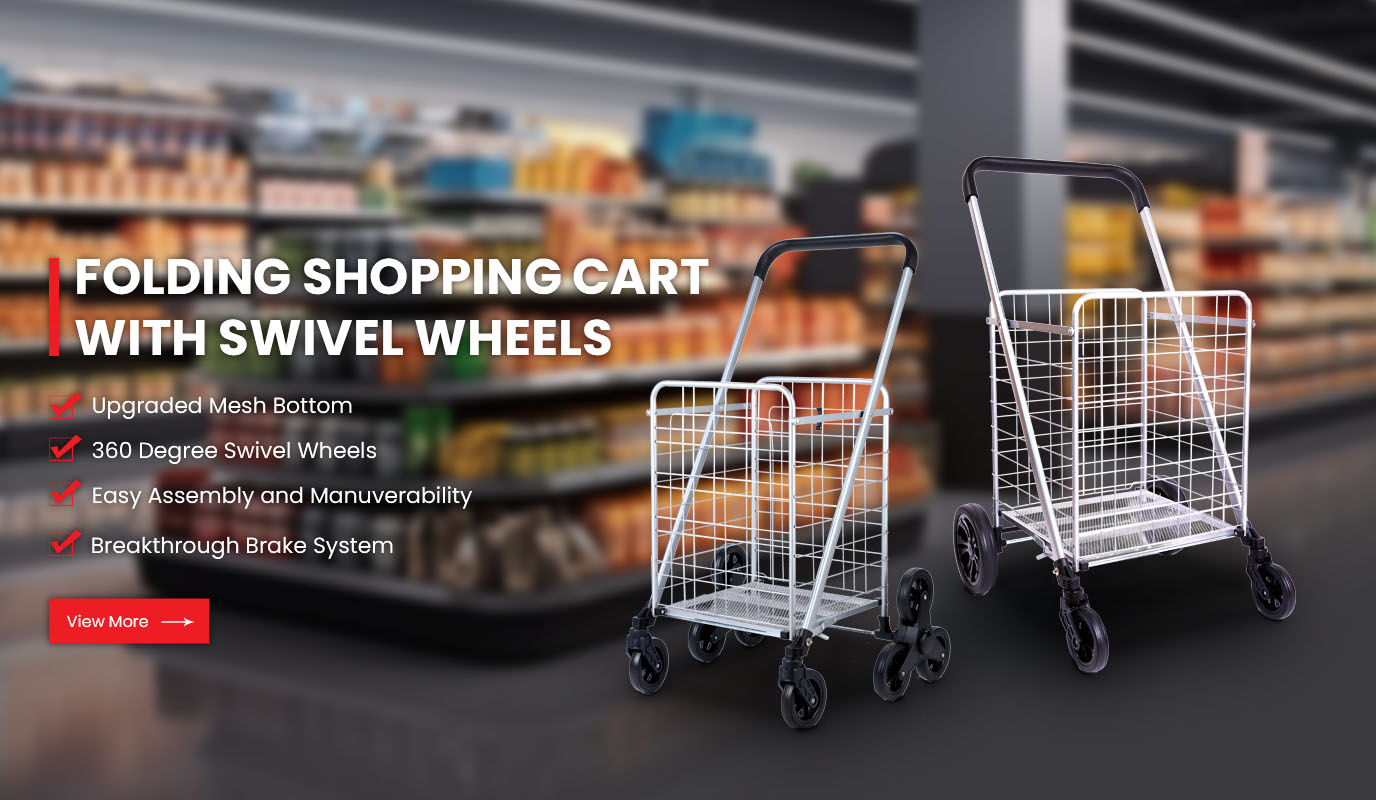
What Is the Difference Between Utility Cart and Shopping Trolley?
The main difference between a utility cart and a shopping trolley is their intended use. Shopping trolleys are designed for retail shopping, while utility carts are built for transporting goods, equipment, and materials in commercial environments.
What Is a Utility Cart?
A utility cart is a transportation tool designed to move materials, supplies, products, and equipment efficiently.
Utility carts are commonly used in:
Warehouses
Retail stores
Hotels
Factories
Offices
Outdoor facilities
Commercial service areas
Their main purpose is improving workplace transportation efficiency.
Compared with shopping trolleys, utility carts usually focus more on:
Higher load capacity
Stronger frame construction
Wider application scenarios
Better durability for repeated use
Different utility cart designs may include flat platforms, shelves, baskets, or enclosed storage structures depending on the application.
What Is a Shopping Trolley?
A shopping trolley is primarily designed for customers to collect and transport purchased products inside retail environments.
Common applications include:
Supermarkets
Grocery stores
Shopping malls
Retail stores
Shopping trolleys usually feature:
Customer-friendly handles
Basket storage areas
Easy steering systems
Compact designs for store aisles
Their main goal is improving the shopping experience rather than supporting industrial transportation tasks.
What Are the Main Differences Between Utility Carts and Shopping Trolleys?
Although both products have wheels and support transportation, their design purposes are different.
| Feature | Utility Cart | Shopping Trolley |
|---|---|---|
| Main Purpose | Commercial transportation | Customer shopping |
| Application | Warehouses, stores, facilities | Supermarkets and retail stores |
| load capacity | Usually higher | Designed for shopping goods |
| Structure | Heavy duty frame design | Customer-focused design |
| Storage Design | Platform, shelves, baskets | Shopping Basket |
| Usage Frequency | Professional operations | Customer use |
The key difference is that utility carts are working equipment, while shopping trolleys are customer service equipment.
Which Has Higher load capacity?
Utility carts generally provide higher load capacity because they are designed for professional material handling.
They are often required to transport:
Boxes
Equipment
Inventory
Tools
Commercial supplies
Shopping trolleys are designed for carrying groceries and personal shopping items.
For businesses that need frequent transportation of heavier materials, utility carts usually provide better structural performance.
How Do Their Frame Designs Differ?
The frame structure reflects the different purposes of these products.
Utility Cart Frame Design
Utility carts usually focus on:
Reinforced structures
Strong load support
Long-term durability
Commercial operation
Frames are commonly made from materials such as:
Steel
Stainless steel
Aluminum
Heavy duty plastic
Shopping Trolley Frame Design
Shopping trolleys prioritize:
Easy customer handling
Smooth movement
Compact storage
Comfortable operation
Their designs often focus on customer convenience rather than heavy transportation.
How Do Wheel Systems Differ Between Utility Carts and Shopping Trolleys?
Wheel design is another major difference.
Utility Cart Wheels
Utility carts often require stronger caster systems because they may carry heavier loads.
Important features include:
Higher load ratings
Larger wheel sizes
Better durability
Improved performance on different surfaces
Shopping Trolley Wheels
Shopping trolley wheels are optimized for:
Smooth supermarket floors
Easy customer steering
Quiet movement
Frequent direction changes
The wheel system should match the environment where the product operates.
Which Product Is Better for Retail Stores?
The choice depends on the specific retail requirement.
Shopping Trolley Applications
Shopping trolleys are suitable for:
Customer shopping
Grocery transportation
Retail convenience
They improve customer experience and store service quality.
Utility Cart Applications
Utility carts are suitable for:
Shelf replenishment
Inventory movement
Stockroom transportation
Store maintenance
Many retail businesses use both products because they support different operational needs.
Can Utility Carts Replace Shopping Trolleys?
In most cases, utility carts cannot completely replace shopping trolleys.
The reason is that they serve different functions.
Shopping trolleys are designed around customer behavior, including:
Shopping convenience
Product visibility
Easy handling
Utility carts are designed around operational efficiency, including:
Load transportation
Workplace productivity
Material movement
Selecting the correct product helps businesses achieve better performance.
How Should Buyers Choose Between Utility Carts and Shopping Trolleys?
Before purchasing, buyers should evaluate:
Application Purpose
Determine whether the cart is used for customers or internal operations.
Load Requirements
Choose based on the expected weight and transportation frequency.
Working Environment
Consider:
Indoor or outdoor use
Floor conditions
Available storage space
Movement distance
Customization Needs
Professional manufacturers can provide customized solutions including:
Dimensions
Materials
Wheel systems
Basket or platform designs
Brand customization
Why Is Understanding the Difference Important?
Choosing between a utility cart and a shopping trolley affects operational efficiency, durability, and user experience.
Shopping trolleys are optimized for retail customers, while utility carts are designed for professional transportation tasks.
For supermarkets, warehouses, hotels, and commercial facilities, selecting the right cart type ensures better workflow, improved productivity, and longer service life.