



How Do Warehouse Trolleys Differ From Pallet Jacks
material handling equipment is not interchangeable, even when both tools appear to perform similar transport functions. warehouse trolleys and pallet jacks serve different operational purposes, and selecting the right solution directly impacts efficiency, safety, and long-term cost performance. In modern logistics environments, equipment choice must match load structure, workflow design, and handling frequency rather than relying on a single universal solution.
Basic function and working principle
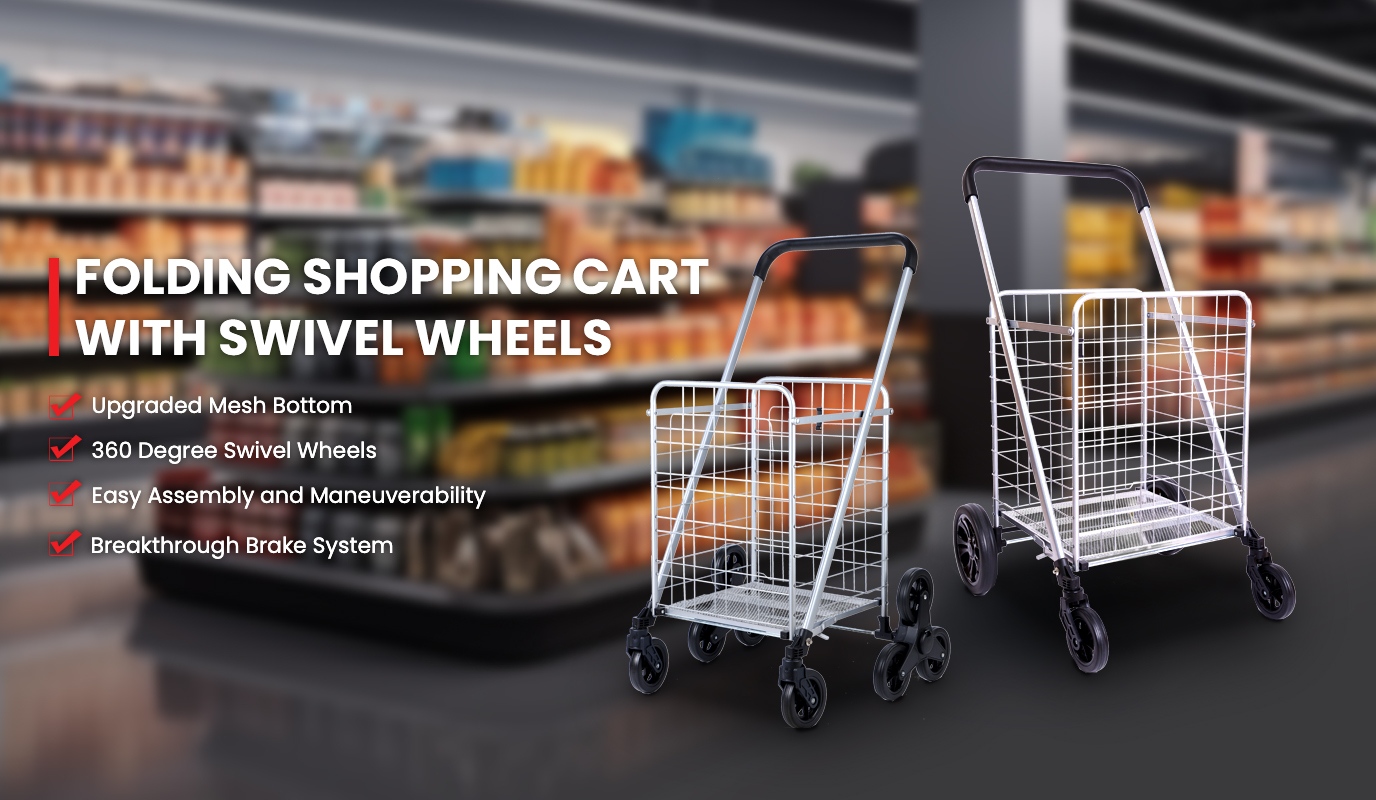
The most fundamental difference lies in how each tool handles loads. A warehouse trolley is designed to transport goods on a platform or within a basket without lifting them. It relies on manual pushing and flexible loading structures, making it suitable for mixed items and non-standard goods.
A pallet jack, also known as a pallet truck, uses a hydraulic system to lift pallets slightly off the ground and move them horizontally. It is specifically designed for palletized loads and operates through a pump mechanism connected to a handle, which raises and lowers forks for transport.
This difference defines their roles: trolleys support flexible handling, while pallet jacks focus on standardized pallet movement.
load capacity and application range
Load capacity is one of the clearest distinctions between the two.
| Equipment type | Typical load capacity | Common application |
|---|---|---|
| Warehouse trolley | 100–500 kg | Mixed goods, picking, short-distance transfer |
| Pallet jack | 1,300–2,500 kg and above | Palletized goods, bulk transport |
Standard pallet jacks can typically carry between 3,000 and 5,500 pounds, depending on model and design, which makes them suitable for heavy-duty warehouse operations.
In contrast, trolleys are more adaptable to irregular loads but are not designed for extreme weight. According to industry comparisons, pallet trucks provide higher stability and weight distribution for heavy loads, while trolleys are better suited for lighter and more flexible handling tasks.
Maneuverability and space requirements
Warehouse layouts increasingly prioritize space efficiency, which highlights another key difference.
Trolleys are typically more maneuverable, with tighter turning radius and easier navigation in narrow aisles or retail backrooms. Their compact structure allows operators to move through complex layouts with less restriction.
Pallet jacks require more clearance because of their fork length and load structure. They perform best in open aisles, loading docks, and pallet racking zones where standardized movement paths exist.
This distinction becomes critical in environments with high SKU variety or frequent picking operations.
Ergonomics and handling efficiency
Both tools aim to reduce manual lifting, but they impact ergonomics differently.
Warehouse trolleys reduce carrying effort by supporting continuous pushing movement, which aligns with ergonomic recommendations to minimize lifting strain. At the same time, improper pushing force or poor wheel design can still increase musculoskeletal risk, which remains a major concern in material handling operations.
Pallet jacks reduce lifting effort through hydraulic assistance but may increase pushing resistance when handling heavy loads, especially over long distances. Studies show that pushing and pulling forces can significantly affect operator fatigue and injury risk if equipment is not properly designed.
Manufacturer vs trader perspective
From a sourcing standpoint, manufacturer vs trader plays a major role in performance reliability.
A direct manufacturer can control frame welding, steel thickness, wheel selection, and assembly accuracy. WOCHANG positions itself as a factory with over 20 years of production experience and certifications such as BSCI and SCAN, which indicates structured production management and export compliance capability.
This matters because trolley durability depends heavily on production consistency, especially in high-frequency logistics use.
OEM and ODM process differences
Customization needs differ between the two product categories.
Warehouse trolley projects often require OEM and ODM adjustments such as platform size, basket structure, caster material, anti-static features, and load capacity tuning. These modifications are essential when adapting to specific warehouse workflows.
Pallet jacks, by comparison, follow more standardized dimensions due to pallet size requirements, with customization focusing mainly on lifting capacity, fork size, and power type.
WOCHANG’s experience in modular trolley design supports flexible customization aligned with real operational scenarios.
Manufacturing process overview and quality control checkpoints
For warehouse trolleys, the manufacturing process typically includes tube forming, welding, surface treatment, caster installation, and final assembly. Key quality control checkpoints include weld strength, dimensional accuracy, wheel alignment, and load testing.
For pallet jacks, additional focus is placed on hydraulic system reliability, fork alignment, and lifting performance.
Quality inspection is critical for both categories, as OSHA emphasizes that material handling equipment must be regularly inspected to prevent operational failure and ensure safety.
Material standards and bulk supply considerations
Material standards used in production determine long-term performance.
Warehouse trolleys rely on steel tubing, wire structures, and coating durability, while pallet jacks require reinforced forks, hydraulic components, and heavy-duty wheels.
Bulk supply considerations should include packaging stability, batch consistency, spare parts availability, and long-term replacement planning. WOCHANG’s factory-based production approach supports better control over these factors, which is essential for large-scale procurement.
Project sourcing checklist
| Key factor | Trolley focus | Pallet jack focus |
|---|---|---|
| Load type | Mixed goods | Palletized goods |
| Capacity requirement | Medium | High |
| Space limitation | Flexible layouts | Standard aisles |
| Customization | High flexibility | Limited variation |
| Maintenance | Wheels and structure | Hydraulic system and forks |
Export market compliance
Export compliance plays a larger role in equipment sourcing as global logistics operations expand.
WOCHANG’s certification profile and manufacturing background support audit requirements, documentation consistency, and stable supply capability. This becomes especially important for projects involving multiple shipments or long-term supply agreements.
Final view
Warehouse trolleys and pallet jacks differ fundamentally in structure, capacity, and application. Trolleys offer flexibility, maneuverability, and customization for mixed goods handling, while pallet jacks provide higher load capacity and standardized movement for palletized goods.
Choosing between them is not about replacing one with the other, but about aligning equipment with workflow design. With direct manufacturing capabilities, customization support, and controlled production processes, WOCHANG is positioned to deliver warehouse trolley solutions that integrate effectively into modern logistics systems.