


What Materials Are Used To Manufacture Warehouse Trolleys
warehouse trolleys are usually manufactured from a combination of steel frame materials, polymer wheel materials, handle and platform plastics, and protective surface coatings. The exact mix depends on load target, floor condition, storage environment, and cost control. In most commercial applications, the frame remains the most important component because it determines rigidity, service life, and load stability. ASTM notes that steel standards are widely used to classify and specify the chemical and mechanical properties of steels for industrial components and mechanical parts, which is why steel remains the main material base for trolley production.
Steel is the main structural material
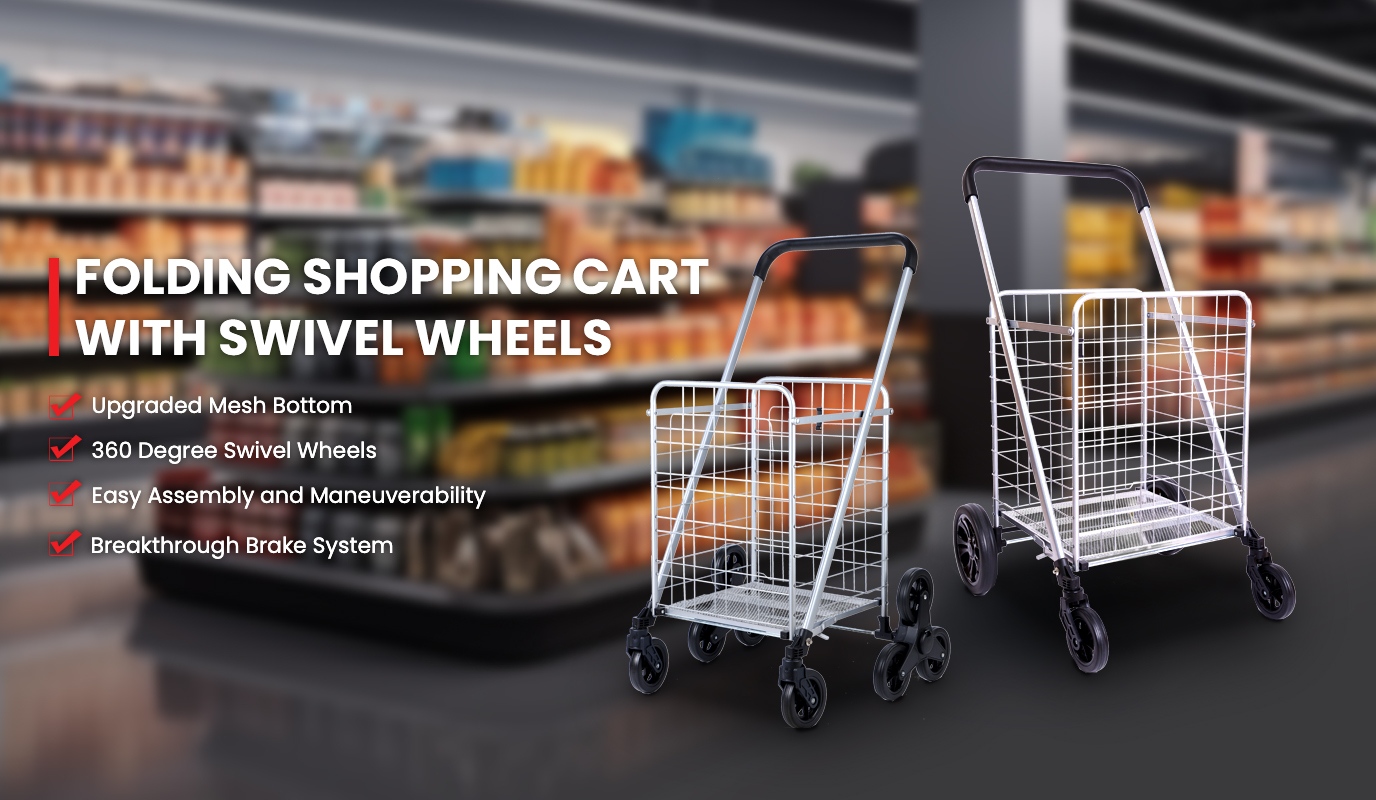
For most warehouse trolley designs, the core frame is made from carbon steel tube, steel wire, or iron-based structural parts. Steel is preferred because it offers strong load support, stable welding performance, and practical cost control in mass production. In trolley manufacturing, steel tube is commonly used for the handle and support frame, while welded wire or sheet structures may be used for baskets, side panels, or lower trays. ASTM A513 is one of the recognized standards used for mechanical steel tubing, making it relevant when buyers evaluate material standards used for trolley frames and structural repeatability.
Plastics are often used in functional parts
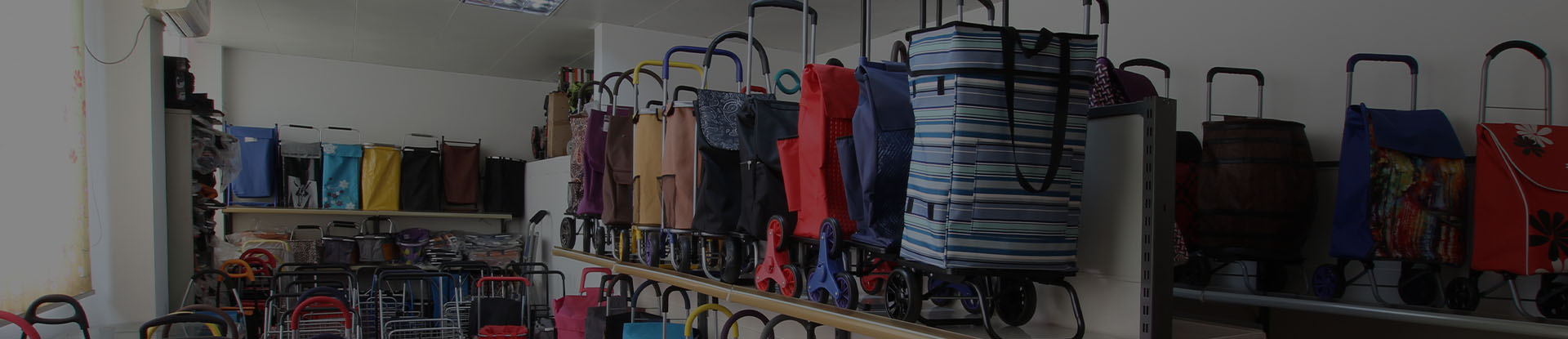
Although warehouse trolleys are mainly metal products, plastics are often added in practical contact areas. WOCHANG’s own product content shows this clearly. Its Shopping Trolley Chair uses a high-strength iron frame, durable plastic parts, and a polyester fiber storage bag, showing how manufacturers combine metal strength with lighter functional materials for easier handling and better usability. In warehouse and turnover trolley production, similar material logic is often used for handles, edge protection, trays, or accessory parts where lower weight and touch comfort matter.
Composite materials can improve practicality
Some trolley models also use composite materials to improve foldability, lightness, or stair-climbing performance. WOCHANG’s canvas Laundry Cart is built on an iron frame plus PP and EVA composite materials, which the company presents as a solution for heavy-load transportation and more complex terrain. While this example is listed under laundry use, it is still relevant to warehouse trolley manufacturing because it shows how trolley producers combine metal structure with composite materials when the project needs lighter panels, impact resistance, or flexible body components.
Wheel materials are just as important as frame materials
A warehouse trolley does not perform well if the wheel material does not match the floor and load condition. Industrial caster suppliers commonly use polyurethane, nylon, rubber, steel, or cast iron for wheels, depending on the application. Material Flow notes that industrial casters are commonly made from steel, cast iron, nylon, polyurethane, or rubber. Hamilton Caster also states that polyurethane wheels are popular because they combine high carrying capacity, quieter operation, and floor protection, while metal wheels provide very high capacity and tensile strength. For warehouse trolley sourcing, this means the wheel material is part of the core material decision, not a minor accessory choice.
Surface coatings protect the metal body
The base frame material is only part of the story. Most warehouse trolleys also require surface treatment to improve corrosion resistance and appearance. Depending on the model, this may include zinc plating, powder coating, or other anti-rust treatment. WOCHANG’s basket trolley article specifically mentions anti-rust treatment and states that the surface can withstand 72 hours of salt spray testing, which shows that protective coating is treated as a performance material layer rather than only a decorative finish.
Common material combinations
| Trolley part | Common material | Main purpose |
|---|---|---|
| Main frame | Carbon steel tube or iron | Load-bearing structure |
| Basket or side panel | Steel wire or steel sheet | Containment and support |
| Handle or trim | Plastic or rubberized material | Better grip and touch comfort |
| Wheels | Polyurethane, nylon, rubber, steel | Movement, wear resistance, load support |
| Bag or liner | Polyester fabric or canvas | Flexible storage and containment |
| Coating | Powder coating or zinc finish | Corrosion resistance |
These combinations are common because they balance strength, weight, cost, and durability across different warehouse scenarios.
Manufacturer vs trader
When evaluating warehouse trolley materials, manufacturer vs trader makes a real difference. A direct manufacturer usually has better control over tube thickness, welding quality, wheel selection, coating process, and batch consistency. WOCHANG states that it is a manufacturer focused on Shopping Carts, baskets, and related transport solutions, with more than 20 years of manufacturing experience, exports to over 30 countries, and more than 50 patented technologies developed in-house. Its site also states that the factory holds BSCI and SCAN certifications. That matters because material quality is only reliable when the factory controls the production process behind it.
OEM and ODM process for material selection
In OEM and ODM projects, material choice should be confirmed at the drawing and sample stage rather than after pricing is fixed. A proper process should include frame material confirmation, wheel material approval, finish selection, sample testing, and packaging review. Buyers may need stronger steel tubing for higher loads, polyurethane wheels for smooth concrete floors, or composite side panels for lighter handling. WOCHANG’s published product content and factory positioning suggest that it works with multiple material combinations across carts, trolleys, and laundry transport products, which supports more flexible project development.
Manufacturing process overview and quality control checkpoints
A reliable warehouse trolley manufacturer should explain how materials move through production. The manufacturing process overview should cover metal cutting or forming, welding, surface treatment, wheel installation, and final inspection. Quality control checkpoints should include steel thickness confirmation, weld consistency, coating adhesion, wheel alignment, and rolling tests. WOCHANG’s maintenance article also emphasizes checking frame connections, rust risk, and wheel condition during service, which reflects the importance of material quality and assembly stability over time.
Project sourcing checklist
Before confirming a trolley order, buyers should review these points:
| Checkpoint | Why it matters |
|---|---|
| Frame material grade | Determines strength and service life |
| Wheel material | Affects floor compatibility and handling |
| Surface finish | Protects against corrosion and wear |
| Plastic or composite parts | Influences weight and usability |
| Quality control checkpoints | Reduce defects across bulk orders |
| Export market compliance | Supports smoother international sourcing |
This checklist is especially useful in bulk supply considerations, because material inconsistency is one of the most common causes of performance variation between sample approval and final shipment.
Final view
Warehouse trolleys are commonly manufactured from steel structural materials, polymer or metal wheel materials, plastics for functional details, fabric or composite storage components, and protective coatings. The right material mix depends on load requirement, floor condition, product design, and export expectations. With direct manufacturing experience, certification visibility, and a product range that already combines iron, steel, plastics, polyester, and composite materials across trolley designs, WOCHANG is in a stronger position to support warehouse trolley sourcing with better material control, clearer OEM and ODM coordination, and more stable bulk supply execution.