


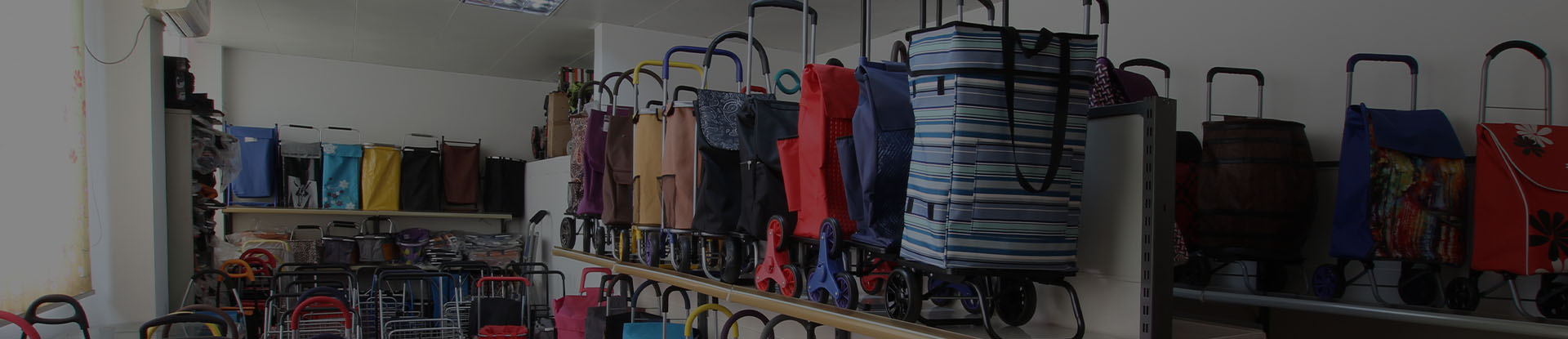
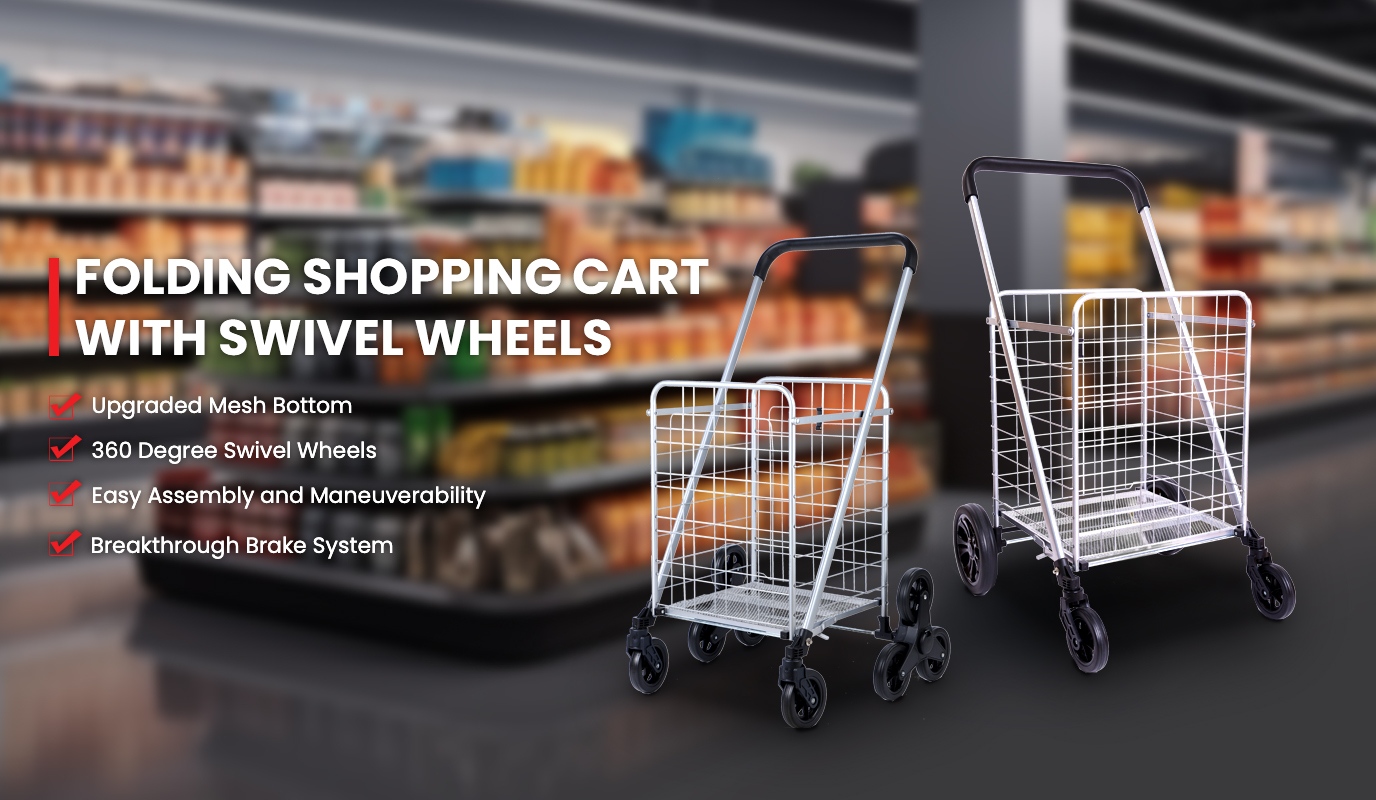
Warehouse trolleys increase productivity by helping workers move more goods in fewer trips. In warehouses, factories, retail backrooms, logistics centers, and distribution areas, a large part of daily time is spent walking between shelves, packing stations, loading docks, and storage zones.
-
2026-05-29
-
2026-05-28Trolleys reduce manual handling time because they allow workers to move multiple cartons, tools, parcels, supplies, or packaged goods in one trip. In warehouses, factories, retail backrooms, logistics centers, and distribution areas, manual handling time is often lost through repeated walking, lifting, carrying, placing, and returning to the same storage zone.
-
2026-05-27Trolleys help speed up order picking by allowing workers to collect more products in one route instead of walking back and forth for every carton, parcel, or item. In warehouses, retail backrooms, distribution centers, and e-commerce fulfillment areas, picking efficiency is often affected by travel distance, item sorting, load stability, and how quickly goods can move from shelves to packing stations.
-
2026-05-26Warehouse trolleys can help reduce labor costs by lowering the amount of repeated manual carrying inside warehouses, factories, retail stockrooms, and logistics centers. When workers move cartons, tools, parts, supplies, or packed goods by hand, each trip takes time and energy.
-
2026-05-25Warehouse trolleys improve operational efficiency by helping workers move more goods in fewer trips. In warehouses, factories, retail backrooms, logistics centers, and distribution areas, materials often move between storage shelves, picking zones, packing stations, loading docks, and production lines.
-
2026-05-22Trolleys are used in automotive workshops to move tools, spare parts, batteries, tires, lubricants, cleaning supplies, and small equipment between service bays, storage rooms, repair areas, and loading points. In a busy workshop, technicians often need quick access to the right items without walking back and forth many times.
-
2026-05-21Warehouse trolleys are useful in industries where goods, tools, cartons, supplies, or materials need to move repeatedly during daily work. They help reduce manual carrying, improve movement efficiency, and keep goods more organized between storage, production, packing, restocking, and delivery areas.
-
2026-05-19Trolleys are important in food and beverage logistics because products need to move quickly, safely, and repeatedly between receiving areas, cold storage, processing rooms, packing zones, delivery vehicles, retail backrooms, and service areas.
-
2026-05-18Warehouse trolleys are used in last-mile delivery to move parcels, cartons, grocery orders, laundry bags, office supplies, and retail goods from vehicles to final delivery points. In urban delivery routes, drivers and delivery teams often face parking limits, narrow entrances, elevators, loading docks, sidewalks, and building corridors
-
2026-05-15Trolleys play an important role in e-commerce fulfillment centers because orders move through many steps before shipment. Products need to travel from receiving areas to storage racks, then from picking zones to sorting tables, packing stations, quality checks, and dispatch areas. Without suitable trolleys, workers may spend more time carrying small parcels, walking back and forth, or handling mixed orders inefficiently.
-
2026-05-14Retail stores use warehouse trolleys for restocking because products must move quickly from storage areas to sales shelves without slowing daily operations. In supermarkets, hardware stores, home goods stores, convenience stores, and warehouse-style retail spaces, staff often need to move cartons, display goods, cleaning supplies, seasonal products, and replenishment stock across different aisles.
-
2026-05-13Manufacturing plants rely on warehouse trolleys because materials need to move constantly between storage, production lines, assembly stations, packing areas, and dispatch zones. Carrying parts by hand wastes time and increases worker fatigue, especially when the same movement is repeated many times each day.