



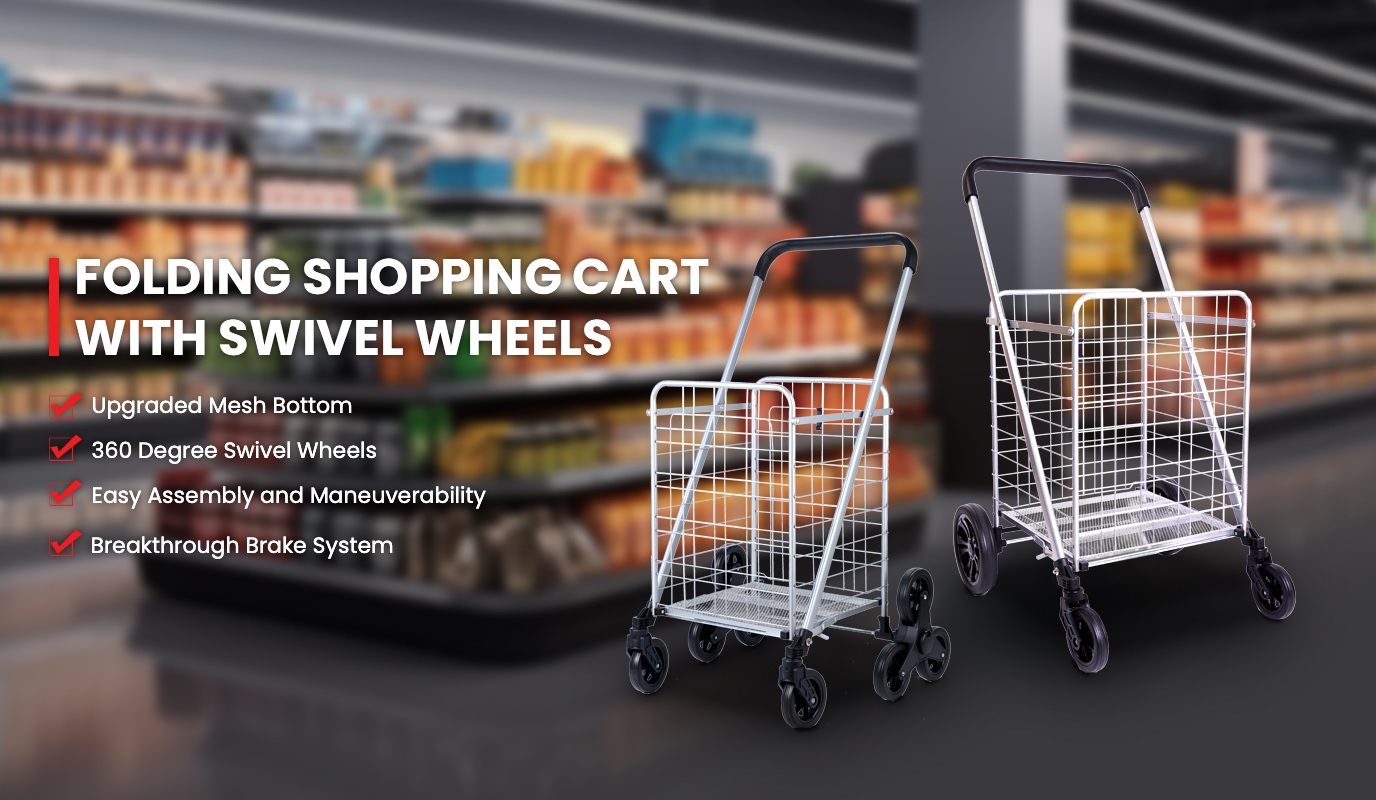
Steel Platform Cart vs Aluminum Platform Cart: Which Provides Better Performance?
Steel platform carts generally provide higher strength and better performance for heavy commercial loads, while aluminum platform carts reduce overall weight and offer strong corrosion resistance. The better material depends on load, mobility, environment, and usage frequency.
What Is the Main Difference Between Steel and Aluminum Platform Carts?
The main difference is the balance between structural strength and overall weight.
Steel platform carts are typically selected when load capacity, rigidity, and repeated heavy-duty use are the priority. Steel also performs well in mass production because it supports established forming and welding processes.
Aluminum platform carts focus more on weight reduction and corrosion resistance. They are useful when operators frequently move the cart manually or when the working environment involves humidity and outdoor exposure.
WOCHANG's own material guidance similarly identifies steel as a common structural material for commercial trolleys because of its load support and welding performance, while aluminum is positioned as a lightweight, corrosion-resistant option. :chatgpt-content-reference{index="0"}
When Is a Steel Platform Cart a Better Choice?
Steel is generally the stronger choice when the platform cart will carry heavy materials or operate continuously in commercial and industrial environments.
Typical applications include:
Warehouses
Manufacturing plants
Distribution centers
Retail stockrooms
Workshops
Heavy material handling
Steel provides high structural rigidity, which is particularly valuable when loads are concentrated on a platform rather than evenly distributed.
For industrial buyers, the advantage is not simply that steel is heavier. A properly designed steel frame can use tube dimensions, cross supports, reinforced joints, and welding locations to distribute load efficiently.
What Are the Advantages of an Aluminum Platform Cart?
Aluminum platform carts are primarily attractive when reducing trolley weight has practical value.
Key advantages include:
Lower overall weight
Easier manual handling
Natural corrosion resistance
Good suitability for humid environments
Easier lifting and repositioning
WOCHANG's aluminum trolley products demonstrate this design approach. One Aluminum Shopping Trolley uses a 6063-T5 aluminum alloy frame and is specified at 11 kg net weight with a 25 kg load capacity, while another aluminum model uses 6061-T6 alloy and combines lightweight construction with corrosion resistance. :chatgpt-content-reference{index="1"}
For a platform trolley, however, the final performance still depends on platform construction, frame geometry, wheel configuration, and connection design rather than aluminum grade alone.
Which Provides Higher Load Capacity?
For comparable designs, steel generally provides greater load-bearing potential.
This makes steel a better starting point for:
Heavy cartons
Machinery components
Metal parts
Industrial supplies
Large material loads
Aluminum can still provide useful load capacity, but the structure often needs to be carefully engineered to achieve the required rigidity without making the trolley unnecessarily heavy.
The important purchasing point is to compare the actual rated capacity of the complete platform cart, rather than assuming that the material alone determines capacity.
How Do Steel and Aluminum Compare in Weight?
Weight is where aluminum has a clear advantage.
| Performance Factor | Steel Platform Cart | Aluminum Platform Cart |
|---|---|---|
| Structural strength | Excellent | Good to excellent |
| Overall weight | Higher | Lower |
| Heavy load handling | Excellent | Good |
| Corrosion resistance | Depends on finish | Naturally strong |
| Manual repositioning | More demanding | Easier |
| Outdoor/humid use | Requires protection | Strong advantage |
| Industrial heavy duty use | Excellent | Application dependent |
| Material cost | Generally lower | Generally higher |
The right choice depends on whether the operation values maximum structural capacity or lower handling weight.
Does Aluminum Make a Platform Cart Easier to Move?
Yes, reducing cart weight can make a meaningful difference when the trolley is frequently repositioned manually.
A lighter empty cart requires less effort to:
Move from storage
Load onto vehicles
Position beside workstations
Push when lightly loaded
Carry between operating areas
However, once a cart is heavily loaded, wheel design becomes just as important as frame material. A lightweight frame with unsuitable casters will not automatically provide easy movement.
This is why platform trolley selection should consider frame weight, cargo weight, caster load rating, wheel diameter, and floor condition as one system.
Which Material Performs Better in Humid or Outdoor Environments?
Aluminum has a natural advantage because it does not rust in the same way ordinary carbon steel does.
This makes aluminum attractive for:
Outdoor facilities
Coastal environments
Humid warehouses
Food-related applications
Frequent cleaning environments
Steel can also perform well outdoors when an appropriate protective finish is applied.
Common protection methods include:
Powder coating
Zinc plating
Other corrosion-resistant surface treatments
WOCHANG's material guidance notes that steel requires appropriate protection against moisture, while aluminum provides stronger natural corrosion resistance. :chatgpt-content-reference{index="2"}
How Does Surface Treatment Affect Steel Platform Cart Performance?
For steel platform carts, surface treatment is an important part of long-term performance.
A good steel cart should not be evaluated only by the tube or sheet specification. Buyers should also consider:
Coating Consistency
Uneven coating can leave vulnerable areas that are more exposed to moisture and wear.
Welded Areas
Welds and joints require careful inspection because surface treatment and welding quality work together to protect the structure.
Operating Environment
A cart used indoors on dry floors has different coating requirements from one exposed to rain, humidity, or frequent washing.
From a manufacturing perspective, material selection and surface treatment should therefore be considered together.
How Do Steel and Aluminum Affect Cart Durability?
Steel generally offers an advantage when the trolley is subjected to repeated heavy loading and impact.
Aluminum can provide long service life when the structure is correctly designed and operated within its rated capacity.
The real durability factors include:
Frame geometry
Material thickness
Welding or joining quality
Platform reinforcement
Wheel system
Load distribution
Surface protection
Operating conditions
WOCHANG's trolley manufacturing content emphasizes that structural design, reinforced joints, crossbeams, and load distribution can be as important as material selection when improving load-bearing performance. :chatgpt-content-reference{index="3"}
Which Platform Cart Is Better for Industrial Applications?
For heavy industrial material handling, steel is usually the safer choice.
Steel platform carts are particularly appropriate when the trolley must repeatedly transport:
Heavy machinery parts
Metal components
Large cartons
Production materials
Industrial equipment
Aluminum becomes more attractive when the industrial application requires frequent manual repositioning and the load is moderate rather than extremely heavy.
The decision should therefore be based on the actual workflow instead of simply choosing the lighter or stronger material.
Which Platform Cart Is Better for Long-Distance Manual Handling?
Aluminum can have an advantage when the cart itself must be moved frequently over longer distances.
However, long-distance handling also increases the importance of:
Wheel diameter
Bearing quality
Handle height
Wheel material
Load distribution
Floor conditions
A heavier steel cart with high-quality casters may still move more efficiently under a heavy load than a lighter aluminum cart with undersized wheels.
For this reason, total rolling performance matters more than empty-cart weight alone.
Can Steel and Aluminum Platform Carts Be Customized?
Yes. Both materials can be adapted to different commercial applications.
Customization may include:
Platform dimensions
Frame geometry
Handle height
Load capacity
Wheel diameter
Caster configuration
Braking system
Surface finish
Folding or storage features
The material should be selected after the manufacturer understands the load, operating environment, and movement requirements.
WOCHANG's published trolley products demonstrate that different material combinations can be engineered around specific load, folding, wheel, and storage requirements rather than using one material for every application. :chatgpt-content-reference{index="4"}
What Should Buyers Check Before Ordering?
Before selecting a steel or aluminum platform cart, commercial buyers should confirm:
Maximum working load
Define the actual load the cart will carry rather than selecting only by appearance.
Cargo dimensions
Check whether the platform can accommodate the largest items.
Operating environment
Consider humidity, outdoor exposure, cleaning requirements, and floor conditions.
Transportation frequency
Daily heavy use may justify a stronger steel structure.
Manual handling requirements
Frequent repositioning may make aluminum more attractive.
Wheel configuration
Confirm that caster capacity and wheel size match the total working load.
Manufacturing quality
Check frame construction, welding, platform reinforcement, surface treatment, assembly, and final inspection.
Which Is Better Overall: Steel or Aluminum Platform Cart?
Steel platform carts are generally better for maximum load capacity, structural strength, and intensive industrial use. Aluminum platform carts are better when lightweight handling, corrosion resistance, and easier repositioning are more important.
Neither material is universally better. The right platform cart is the one that balances load, weight, environment, mobility, and service life for the actual application.
For commercial buyers, comparing the complete trolley design—not just steel versus aluminum—provides a more reliable basis for purchasing decisions.