


What Is The Typical MOQ For Bulk Trolley Orders
Minimum order quantity is an important factor in warehouse trolley procurement because it directly affects tooling cost distribution, production efficiency, and customization feasibility. In industrial manufacturing practice, MOQ levels are influenced by material type, structure complexity, wheel configuration, and surface finishing requirements.
Understanding MOQ In Manufacturing Context
In metal and plastic trolley production, MOQ is not a fixed global number. It is calculated based on mold setup, welding fixture preparation, coating line efficiency, and assembly line balancing. Industry production planning data shows that batch optimization typically begins at 200 to 500 units for standard models to achieve stable production efficiency.
A warehouse trolley manufacturer sets MOQ according to production line readiness and customization level rather than arbitrary sales targets.
Typical MOQ Ranges By Product Type
Different trolley structures require different production thresholds:
Standard warehouse trolleys
For fixed designs with existing molds and frames, MOQ usually ranges between 200 and 300 units. These products use established tooling and standardized components.
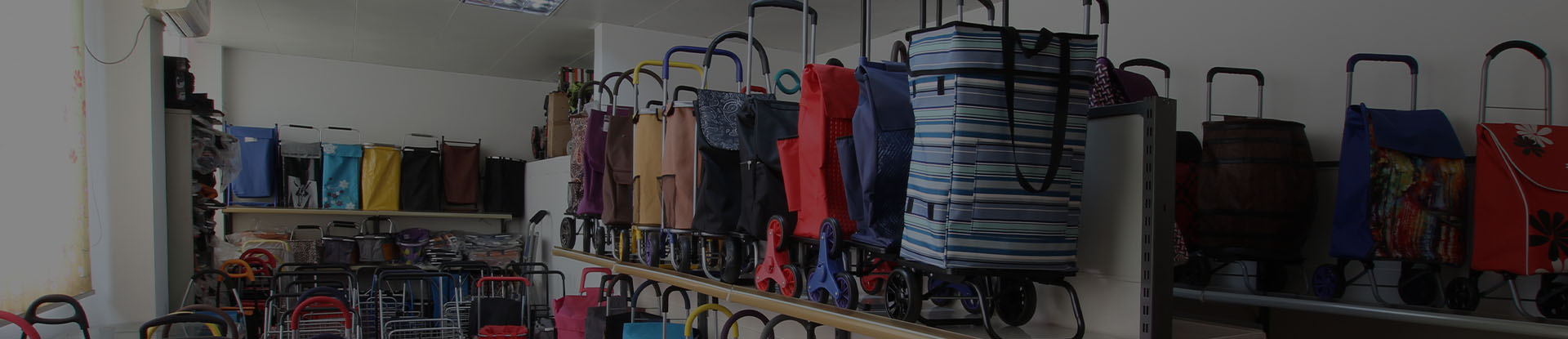
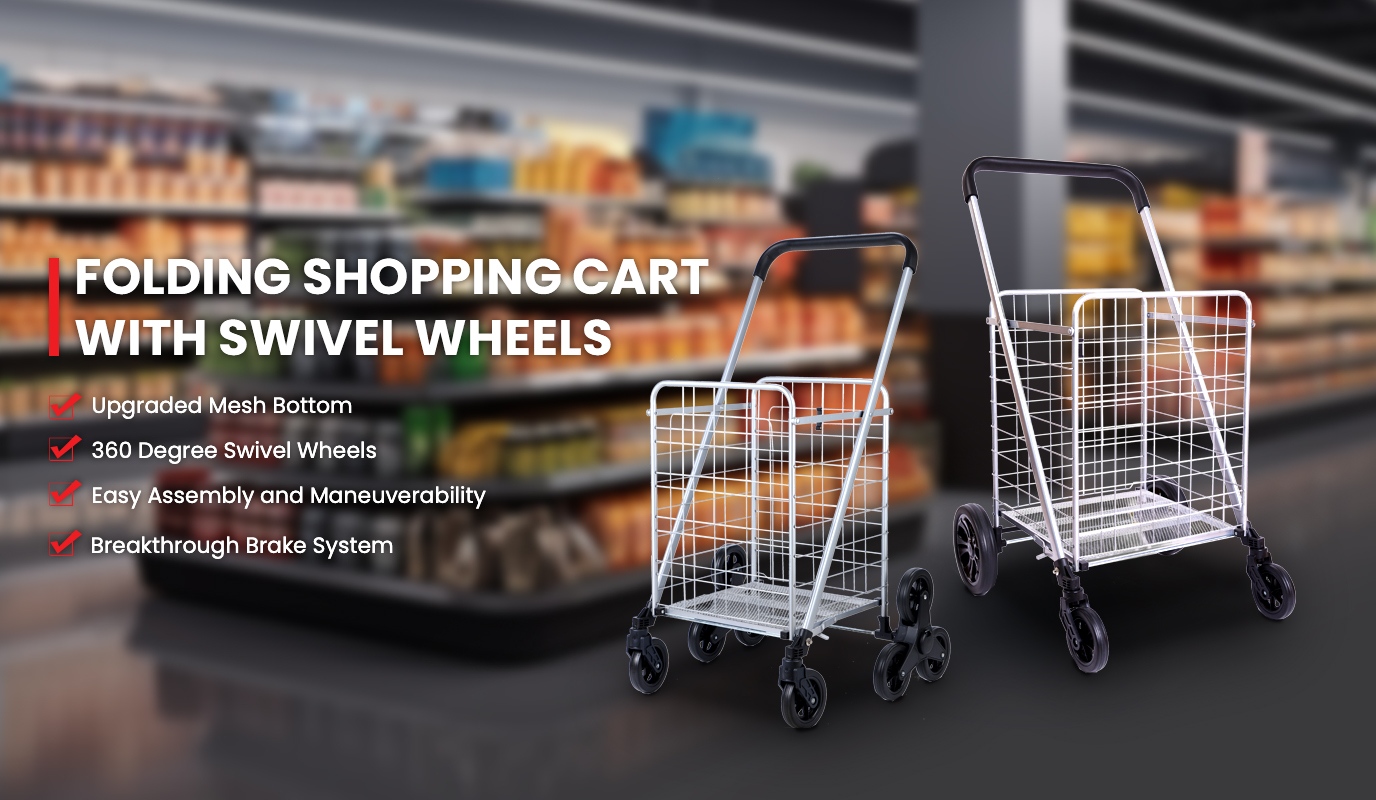
Foldable Shopping Or Utility Carts
Due to additional hinge systems and fabric or mesh components, MOQ commonly ranges between 300 and 500 units.
Fully Customized OEM ODM Trolleys
For new structural designs, MOQ can range from 500 to 1000 units depending on tooling development cost and material selection.
Manufacturing Process Overview
MOQ is closely related to production efficiency. A structured manufacturing process includes:
Product design and engineering confirmation
Mold or fixture preparation
Material cutting and forming
Welding and structural assembly
Surface coating or finishing
Wheel installation and load testing
Packaging and export preparation
Each step requires setup time, which is amortized across the MOQ batch.
Manufacturer vs Trader Production Control
A manufacturer vs trader comparison is essential in MOQ evaluation. A manufacturer can adjust production scale, tooling utilization, and assembly line configuration to optimize cost per unit.
A trader relies on external factories, which limits MOQ flexibility and may result in higher cost per unit due to fragmented sourcing.
Quality Control Checkpoints
Key inspection stages include:
Material certification verification under ASTM or EN standards
Dimensional tolerance inspection
load capacity and rolling performance testing
Welding joint strength inspection
Coating adhesion and corrosion resistance testing
Packaging drop resistance testing
These controls ensure consistency in bulk supply production.
MOQ And Cost Efficiency Table
| Product Type | Typical MOQ | Customization Level | Cost Efficiency |
|---|---|---|---|
| Standard trolley | 200–300 units | Low | High |
| Foldable cart | 300–500 units | Medium | Medium |
| OEM customized trolley | 500–1000 units | High | Project based |
OEM ODM And Export Considerations
For international procurement, MOQ decisions must consider design complexity, tooling investment, material cost, packaging requirements, certification standards, and shipping efficiency. A structured OEM and ODM process includes design confirmation, sample approval, tooling setup, mass production, and final inspection.
Wochang Trolley operates with integrated production systems covering metal fabrication, plastic component molding, assembly, and export packaging. This allows stable MOQ management across different product categories and global supply projects.