


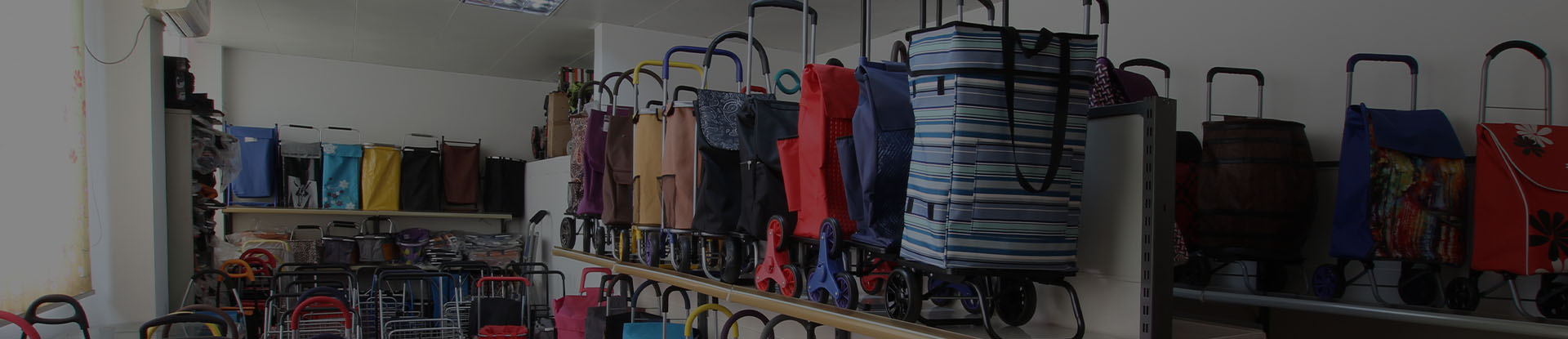
What Is A Warehouse Trolley And How Does It Work
A warehouse trolley is a wheeled manual transport tool used to move cartons, bins, parts, supplies, and packaged goods through storage and distribution areas. In practical warehouse work, it reduces repeated lifting, shortens travel time, and keeps materials moving between receiving, shelving, picking, packing, and dispatch. OSHA describes material handling as the movement, protection, storage, and control of materials, and notes that proper handling practices help reduce costly injuries in the workplace.
How a warehouse trolley works
A warehouse trolley works by combining a load platform or basket, a supporting metal frame, and a wheel system that allows operators to push materials from one point to another with less direct carrying. In most warehouse layouts, the trolley becomes a link between storage locations and workstations. NIOSH guidance on manual material handling highlights that forceful pushing and pulling of carts can be a risk factor when cart design is poor, brakes are not available when needed, or movement requires awkward posture. That is why trolley design is not only about carrying capacity. It is also about movement efficiency, control, and operator comfort.
Main parts of a warehouse trolley
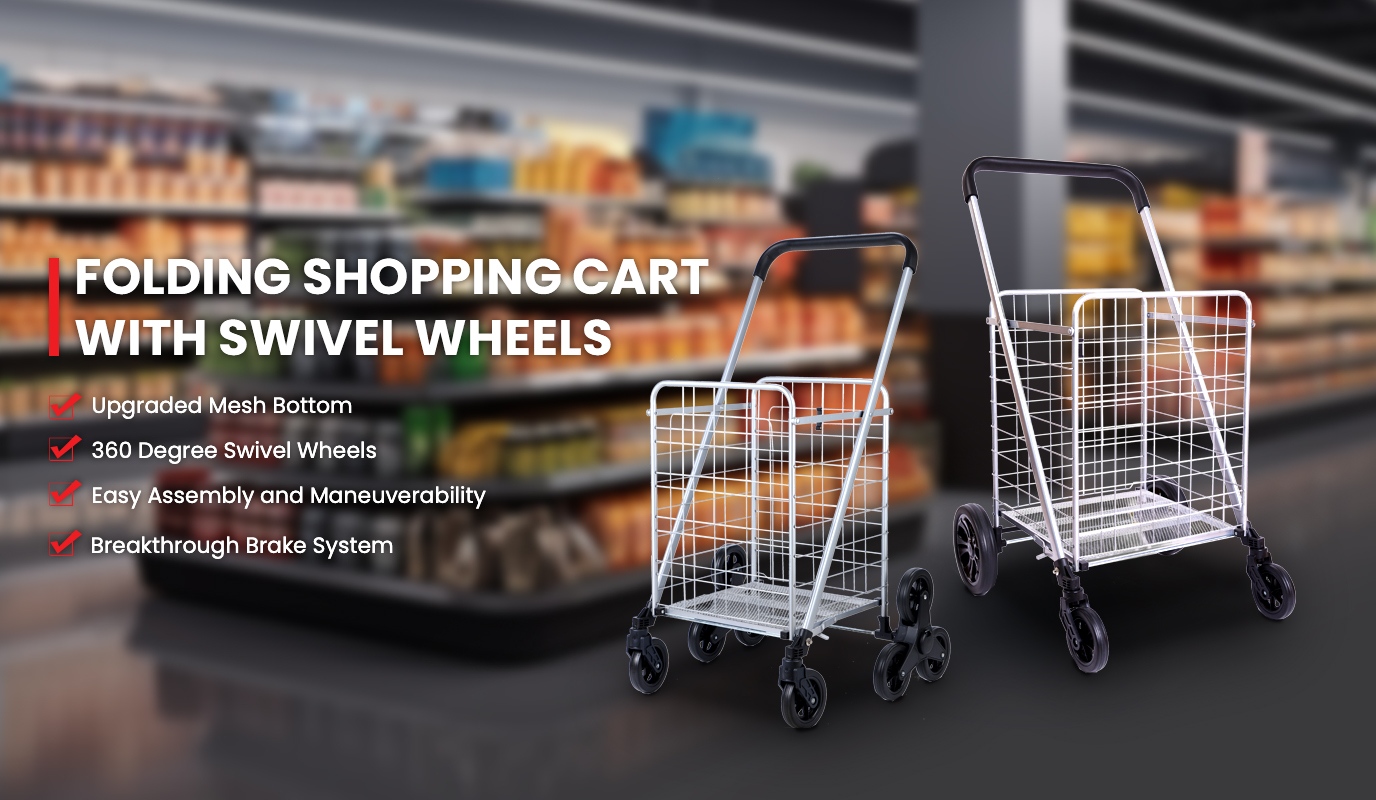
A standard warehouse trolley usually includes a steel frame, platform or basket area, handle section, caster wheels, and in some cases brakes or foldable mechanisms. The frame carries the load, the platform or basket contains the goods, and the wheel assembly allows the trolley to roll across warehouse floors with less physical effort than manual carrying. OSHA also points out that hand trucks and utility carts are common aids for moving materials around the worksite, especially from central staging zones to separate work areas.
What makes a trolley work well in a warehouse
A warehouse trolley works well when its structure matches the workflow. A trolley for carton transfer needs stable platform support and smooth wheels. A trolley for narrow aisles needs better turning control. A trolley for repeated daily handling needs stronger frame rigidity and reliable caster installation. NIOSH has noted that uneven or poorly maintained surfaces can increase the force required to push and pull carts, which means wheel quality and floor compatibility are major performance factors in real warehouse use.
Why manufacturer vs trader matters
When buyers compare a manufacturer with a trader, the difference is production control. A direct manufacturer can control steel selection, tube forming, welding, surface treatment, wheel assembly, and final inspection more directly than a trading company. WOCHANG states on its website that it is a manufacturer of Shopping Carts, Shopping Baskets, and laundry products with more than 20 years of experience, and that it has BSCI and SCAN certifications. For warehouse trolley sourcing, that matters because product consistency depends on how closely the supplier controls the real manufacturing process.
OEM and ODM process for warehouse projects
For OEM and ODM orders, a warehouse trolley should be developed around the actual handling task. A practical process starts with drawing confirmation, load target review, trolley size planning, wheel specification, handle design, sample validation, and packaging review. This helps prevent mismatch between the approved design and the goods delivered in volume. WOCHANG’s published product content on foldable carts shows that it focuses on structural details such as hinged joints, locking mechanisms, and storage efficiency, which indicates that it can support project-specific trolley development rather than only standard stock items.
Manufacturing process overview
A reliable warehouse trolley manufacturer should explain the manufacturing process overview clearly. For metal trolley production, buyers should review steel wire or tube cutting, bending, welding, surface treatment, caster installation, assembly, and final inspection. The quality of the finished trolley depends on every one of these steps. If the welding is weak, the trolley loses rigidity. If the wheel installation is unstable, movement becomes difficult. If the coating is poor, service life declines in demanding warehouse conditions. WOCHANG’s general company positioning around high-quality products and continuous design improvement supports this manufacturer-based evaluation approach.
Quality control checkpoints
Quality control checkpoints should include frame dimension checks, weld inspection, caster alignment, load testing, rolling smoothness, and packaging inspection. These checks are especially important in warehouse applications because the trolley is used repeatedly under load rather than occasionally. NIOSH has documented that manually maneuvering loaded carts can require forces beyond the capability of many workers when equipment and handling conditions are not properly controlled. That makes real testing more important than appearance alone.
Material standards used and project sourcing checklist
Material standards used in trolley production should match the target load and work environment. Buyers should confirm steel grade, tube thickness, wheel material, bearing type, and surface finish before mass production begins. A practical project sourcing checklist should include load requirement, platform size, caster capacity, handle design, coating method, spare part availability, and packing plan. OSHA’s material storage rules also emphasize that stored materials must remain stable and secure against sliding or collapse, so trolley selection should support safe handling all the way through storage and movement, not just transport speed.
| Checkpoint | Why it matters |
|---|---|
| Frame structure | Supports load stability |
| Wheel system | Affects rolling force and control |
| Surface finish | Influences durability |
| Load test | Confirms real working capacity |
| Packaging | Protects bulk shipments |
| Certification review | Supports sourcing confidence |
Bulk supply considerations and export market compliance
Bulk supply considerations should include production consistency, packaging protection, replacement part stability, and repeat quality across shipments. Export market compliance also matters because international projects often require documented factory standards and dependable manufacturing records. WOCHANG’s stated BSCI and SCAN certifications, together with its manufacturer identity, strengthen its position for buyers who need warehouse trolley supply with better audit visibility and repeat-order control.
Final answer
A warehouse trolley is a manual rolling transport tool that helps move goods more efficiently through warehouse operations, and it works through the combined performance of its frame, load area, wheel system, and handling design. The right trolley improves movement efficiency, reduces unnecessary carrying, and supports safer daily material flow. With direct manufacturing experience, OEM and ODM support, factory-based production control, and export-facing certifications, WOCHANG is better positioned to supply warehouse trolley solutions that are practical for real commercial handling environments.