


What Is A Shopping Cart Made Of
A Shopping Cart may look simple, but it’s actually a well-engineered combination of metals, plastics, and mechanical components designed to carry heavy loads, roll smoothly, and withstand years of daily use. The materials chosen for a shopping cart depend on its intended environment — supermarkets, warehouses, airports, or hospitality facilities — each requiring different levels of durability and corrosion resistance.
1. Main Materials Used in shopping carts
| Component | Common Material | Key Properties | Function |
|---|---|---|---|
| Frame / Basket | Steel wire, aluminum, or plastic (polypropylene / HDPE) | Strong, durable, impact-resistant | Main structure for holding goods |
| Handlebar | Plastic over steel tube | Comfortable grip, corrosion resistance | Pushing and maneuvering |
| Wheels / Casters | Rubber, polyurethane, or thermoplastic elastomer (TPE) | Smooth rolling, shock absorption, floor protection | Mobility and stability |
| Child Seat / Divider | Plastic (HDPE or ABS) | Lightweight, easy to clean, safe | Separates space for kids or delicate items |
| Fasteners / Joints | Zinc-plated steel or stainless steel bolts, rivets | Corrosion resistance, strength | Holds structural components together |
| Locking System (optional) | Electronic module, magnets, sensors | Anti-theft, control, automation | Used in modern “smart” carts |
2. Steel — The Traditional Core Material
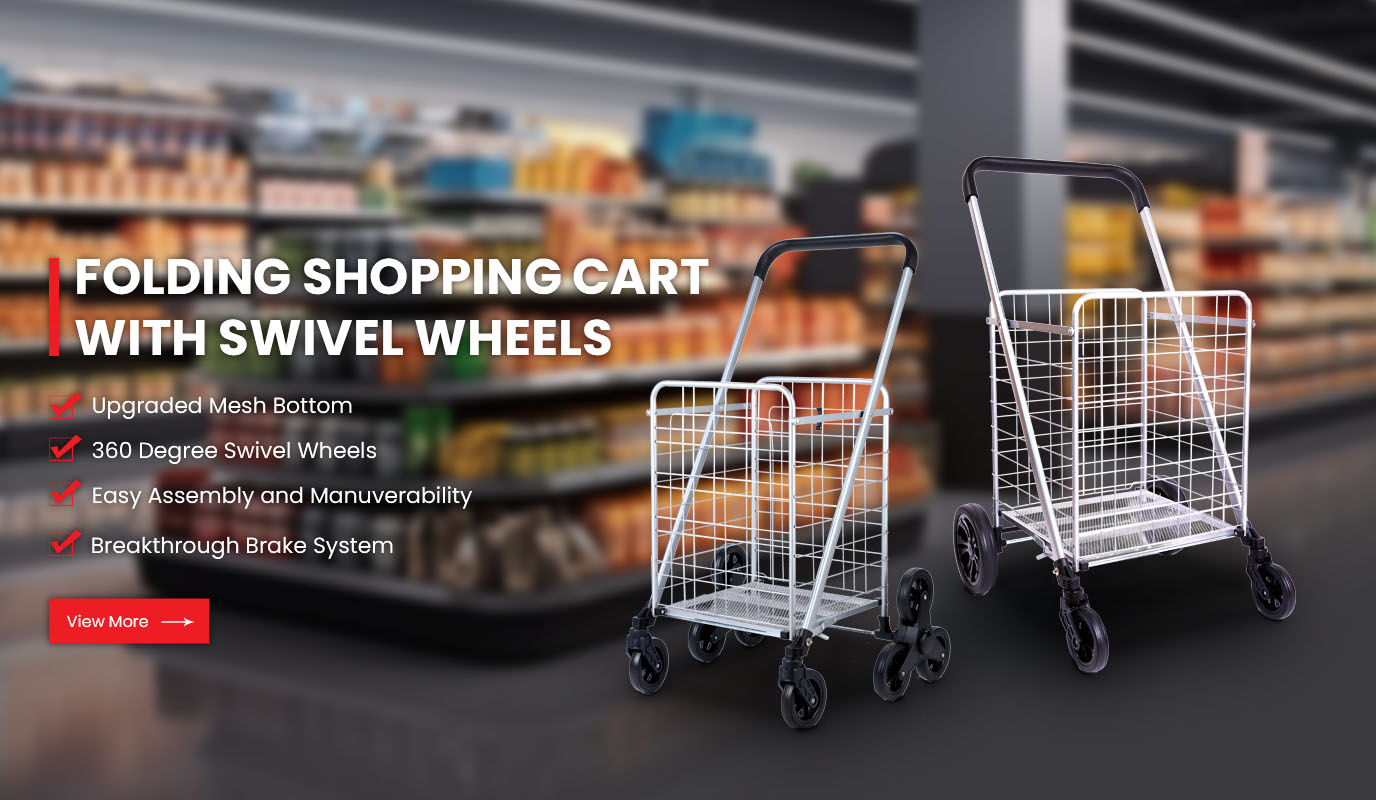
Most commercial shopping carts are built with a steel wire frame.
Advantages
High load-bearing capacity: Can support 100–200 kg of goods.
Long lifespan: Withstands daily use and stacking.
Easily repairable: Damaged parts can be re-welded.
Finishing Methods
To prevent corrosion and give a smooth finish, the steel is treated by:
Zinc electroplating: Adds rust protection and shine.
Powder coating: Adds color and weather resistance.
Chromium plating: Used for extra-durable, polished designs.
Heavy-duty steel carts, like those made by Wochang, are ideal for supermarkets, hotels, and industrial environments due to their strength and stability.
3. Aluminum — Lightweight and Corrosion-Resistant
Some modern carts use aluminum tubing instead of steel.
Features
Lightweight: Easier to push, ideal for smaller stores or elderly users.
Rustproof: Naturally resistant to moisture and chemicals.
Recyclable: Environmentally friendly manufacturing choice.
Typical Applications
Airport luggage carts
Hotel service trolleys
Coastal or humid environment use
Aluminum models are often paired with plastic baskets for even lighter operation, a design trend growing in hospitality and retail industries.
4. Plastic — Durable and Weatherproof Alternatives
Plastic shopping carts, usually made of high-density polyethylene (HDPE) or polypropylene (PP), have become increasingly popular.
Benefits
Rust-free: Perfect for humid or outdoor conditions.
Quieter operation: Reduces noise on smooth floors.
Impact-resistant: Doesn’t dent or scratch easily.
Customizable colors: Supports branding and aesthetics.
Disadvantages
Slightly lower weight capacity compared to steel.
More prone to UV fading if not properly stabilized.
Many supermarkets now prefer hybrid carts — a metal frame with a plastic basket — combining strength with quiet operation.
5. Wheels — The Key to Smooth Movement
Each shopping cart typically has four caster wheels, designed for silent and stable rolling.
| Wheel Material | Features | Common Use |
|---|---|---|
| Rubber | Excellent grip and noise reduction | Indoor surfaces |
| Polyurethane (PU) | High durability and shock absorption | Commercial trolleys |
| Thermoplastic Elastomer (TPE) | Soft rolling, non-marking | High-end carts and hotel trolleys |
Modern wheels often include sealed bearings, 360° swivel heads, and even electronic locking modules for security systems.
Wochang’s industrial carts use heavy-duty polyurethane casters, built for long-term use on hard floors or uneven surfaces.
6. Plastic Components and Accessories
Beyond the main basket, shopping carts contain several molded plastic parts:
Child seat insert with safety belt
Corner bumpers to protect walls and other carts
Advertising panels or sign holders
Handle grips made from thermoplastic rubber for comfort
These parts are typically made from ABS (Acrylonitrile Butadiene Styrene) or HDPE, both known for toughness and UV resistance.
7. Fasteners, Joints, and Finishing Details
All structural joints — such as those connecting the basket to the chassis — are secured with galvanized steel bolts, rivets, or clamps.
Zinc coating prevents corrosion.
Plastic bushings reduce friction and noise at connection points.
High-end carts may also feature stainless steel rivets and reinforced corner welds for better stability during heavy use.
8. Smart and Specialty Cart Materials
In recent years, smart shopping carts have introduced new materials and technologies:
Embedded electronics for tracking and payment.
RFID panels for store management systems.
Lightweight composites or carbon fiber frames in premium models.
Similarly, commercial trolleys by Wochang integrate anti-rust coatings, shock-absorbing casters, and modular panels, making them both durable and customizable for diverse environments.
✅ Summary
| Component | Common Material | Key Benefit |
|---|---|---|
| Frame / Basket | Steel, aluminum, or plastic | Strength and durability |
| Wheels | PU, rubber, or TPE | Smooth rolling and stability |
| Handle & Accessories | ABS, HDPE, TPR | Comfort and easy cleaning |
| Fasteners | Zinc-plated steel or stainless | Corrosion protection |
| Optional Electronics | Sensors and locks | Theft prevention, automation |
A shopping cart is more than just a container on wheels — it’s a carefully engineered product designed for performance, longevity, and safety.
From robust steel frames to lightweight plastic alternatives, Wochang Trolley’s carts showcase how material innovation enhances both user experience and operational efficiency.