



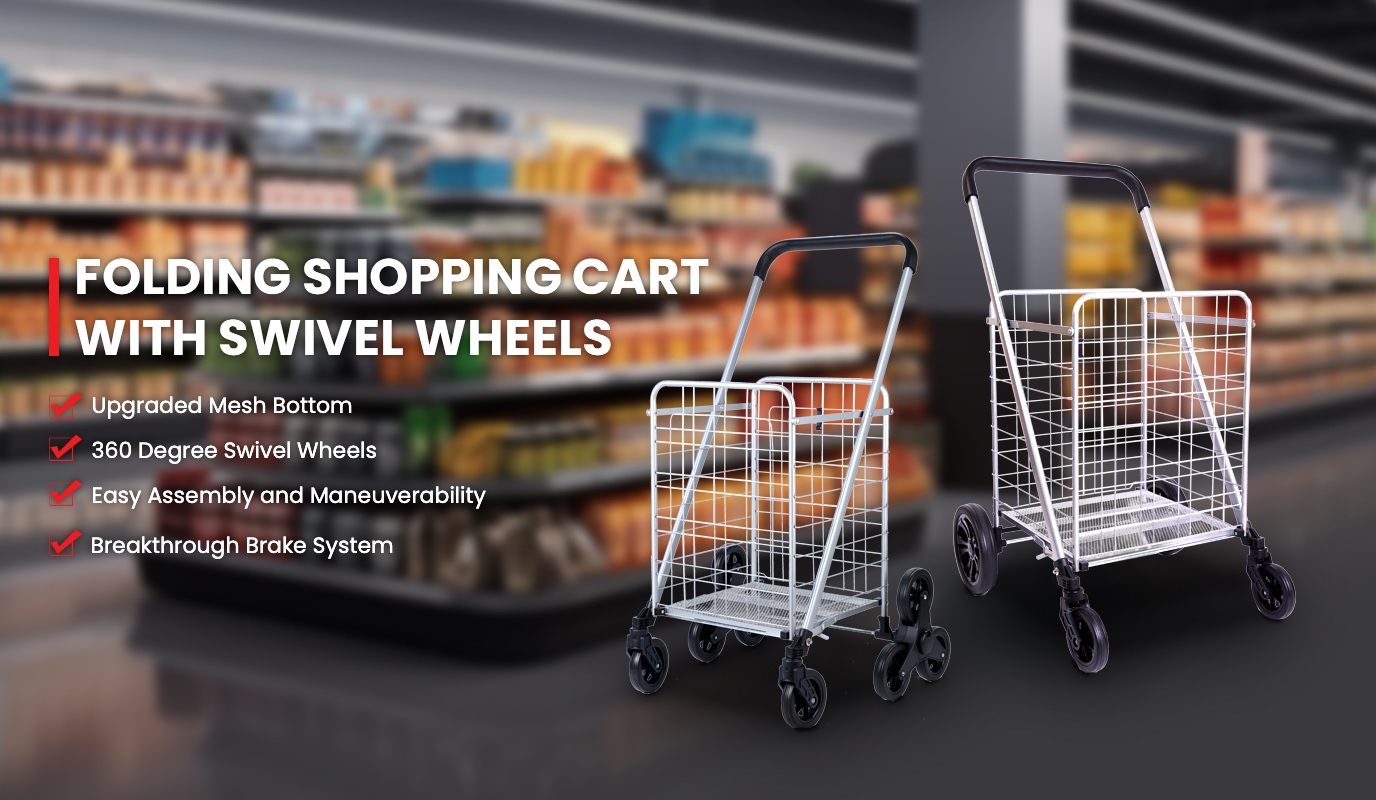
Plastic Trolley vs Stainless Steel Trolley: Which Material Performs Better?
Plastic trolleys are generally better for lightweight handling, corrosion resistance, and easy cleaning, while stainless steel trolleys offer superior rigidity, heat resistance, and long-term performance in demanding environments. The better material depends on load, hygiene, temperature, and operating conditions.
What Is the Difference Between Plastic and Stainless Steel Trolleys?
The main difference is how the trolley material responds to the working environment.
A plastic trolley normally uses molded polymers for the basket, platform, or structural components. Its low weight and resistance to moisture make it suitable for many retail, service, and light-duty applications.
A stainless steel trolley uses stainless steel tubing, sheet, or wire structures. Stainless steel provides high structural rigidity and strong resistance to corrosion, heat, and repeated mechanical stress.
The choice should therefore be based on the actual operating conditions rather than material preference alone.
What Are the Advantages of Plastic Trolleys?
Plastic trolleys provide several practical benefits.
Lightweight Construction
Plastic components can reduce the overall trolley weight, making the unit easier to:
Push
Pull
Reposition
Transport
Store
This can be valuable when employees move carts frequently.
Corrosion Resistance
Plastic does not rust, making it useful in:
Wet areas
Humid environments
Outdoor applications
Cleaning operations
Easy Cleaning
Smooth molded plastic surfaces are generally easy to wipe and maintain.
Lower Handling Effort
A lighter trolley can reduce the physical effort required during frequent movement.
What Are the Advantages of Stainless Steel Trolleys?
Stainless steel is commonly selected when structural strength and long-term durability are priorities.
Important advantages include:
High rigidity
Strong load-bearing performance
Corrosion resistance
Heat resistance
Good impact resistance
Long service potential
Stainless steel trolleys are particularly suitable for demanding commercial environments where the trolley must maintain its structural shape under repeated loading.
How Do Plastic and Stainless Steel Trolleys Compare?
| Factor | Plastic Trolley | Stainless Steel Trolley |
|---|---|---|
| Weight | Lower | Higher |
| Structural rigidity | Moderate to high | Excellent |
| Corrosion resistance | Excellent | Excellent |
| Heat resistance | Material dependent | Excellent |
| Heavy loads | Application dependent | Excellent |
| Cleaning | Easy | Easy |
| Impact performance | Material dependent | Generally strong |
| Wet environments | Excellent | Excellent |
| Long-term heavy use | Application dependent | Excellent |
| Initial handling effort | Lower | Higher |
The strongest material is not automatically the best material. The correct choice depends on which performance characteristic matters most.
Which Material Is Better for Heavy Loads?
Stainless steel generally has the advantage for heavy-load trolley applications.
Its rigid structure can support:
Heavy cartons
Industrial components
Bulk goods
Equipment
Commercial supplies
The actual load capacity still depends on:
Tube diameter
Wall thickness
Frame geometry
Weld quality
Platform design
Wheel capacity
A stainless steel trolley with an undersized frame or caster system may perform worse than a properly engineered plastic trolley designed for a lighter application.
Are Plastic Trolleys Suitable for Commercial Use?
Yes.
Plastic trolleys can be effective for commercial applications where the expected load and operating conditions match the material.
They can be used in:
Hotels
Offices
Service facilities
Cleaning operations
Light warehouse handling
Their low weight can be particularly valuable when employees repeatedly move the trolley throughout a working day.
Which Material Is Better for Wet Environments?
Both can perform well, but plastic has an inherent advantage because it does not rust.
Plastic trolleys can be useful in:
Wet storage rooms
Cleaning areas
Outdoor environments
Humid facilities
Stainless steel also provides excellent corrosion resistance, especially when the appropriate grade is selected.
However, not all stainless steels have identical corrosion resistance. The operating environment should determine the appropriate stainless steel grade.
Which Is Better for Hygiene-Critical Applications?
Stainless steel often has an advantage where hygiene, cleaning, and durability must be combined.
Its smooth surface can be cleaned and sanitized efficiently, while its resistance to heat and corrosion supports demanding cleaning routines.
This can make stainless steel suitable for:
Food processing
Commercial kitchens
Healthcare environments
Laboratories
Hospitality applications
Plastic can also be suitable when the correct food-contact or hygiene-compatible material is selected.
Material certification and cleaning requirements should be confirmed before purchasing.
How Does Temperature Affect the Choice?
Temperature can significantly influence material selection.
Plastic performance depends heavily on the specific polymer. Some plastics can soften at elevated temperatures or become more brittle under extreme cold.
Stainless steel generally maintains stable mechanical performance across a wider range of commercial temperatures.
For applications involving:
Hot equipment
Steam cleaning
Refrigeration
Freezing areas
Temperature fluctuations
the manufacturer's recommended operating range should be checked.
Which Material Is More Resistant to Chemicals?
The answer depends on the chemical.
Certain plastics can provide excellent resistance to cleaning agents and other substances that may damage metals.
Stainless steel can also resist many chemicals, but its performance depends on the stainless grade and exposure conditions.
Buyers should provide the manufacturer with information about:
Cleaning agents
Disinfectants
Acids
Salts
Oils
Other chemicals
Material selection should then be based on actual exposure rather than general assumptions.
Which Trolley Is Easier to Move?
Plastic trolleys generally have an advantage because they can be lighter.
Lower empty weight can make a noticeable difference when employees need to:
Move carts repeatedly
Push carts through narrow areas
Load carts into vehicles
Reposition equipment
However, wheel selection can be just as important as trolley material.
A stainless steel trolley with high-quality casters may move more smoothly than a lightweight plastic trolley with undersized wheels.
How Important Are Wheels and Casters?
Wheels are a critical part of overall trolley performance.
Important factors include:
Wheel Diameter
Larger wheels generally handle thresholds and uneven surfaces better.
Wheel Material
The material affects:
Grip
Noise
Floor protection
Wear resistance
Load Rating
Casters must support the combined weight of the trolley and its contents.
Caster Configuration
Swivel casters improve maneuverability, while fixed wheels can improve directional stability.
Material selection and caster selection should therefore be considered as one system.
Which Material Offers Better Impact Resistance?
Stainless steel generally provides stronger structural resistance to hard impacts.
It can tolerate contact with:
Loading equipment
Warehouse structures
Heavy cartons
Thresholds
Other handling equipment
Plastic can absorb certain impacts effectively, but its performance depends heavily on the polymer, temperature, thickness, and structural design.
In cold environments, some plastics may become more brittle.
Which Material Is Easier to Maintain?
Plastic generally requires less attention to corrosion.
Routine maintenance usually focuses on:
Wheels
Casters
Handles
Structural connections
Stainless steel is also relatively easy to maintain, especially when the correct grade and finish are used.
However, stainless steel surfaces should still be cleaned appropriately to prevent contamination, staining, or surface damage.
Which Trolley Offers Better Long-Term Value?
The answer depends on the operating environment.
A plastic trolley may provide better value when:
Loads are moderate
Low weight is important
The environment is wet
Corrosion resistance is required
Easy handling is a priority
Stainless steel may provide better value when:
Loads are high
Trolleys operate continuously
Heat exposure is expected
Structural rigidity is critical
Long-term commercial durability is a priority
The lowest purchase price does not necessarily represent the lowest total operating cost.
Can Plastic and Stainless Steel Trolleys Be Customized?
Yes. Manufacturers can customize both material types according to application requirements.
Possible customization includes:
Overall dimensions
Platform size
Basket structure
Handle design
Wheel configuration
Caster type
Brakes
Color
Surface finish
Logo
For plastic trolleys, customization may also involve polymer selection and molded component design.
For stainless steel trolleys, customization can involve tube dimensions, sheet thickness, welding structure, stainless grade, and surface finishing.
What Should Buyers Check Before Ordering?
Commercial buyers should evaluate:
Working load
Define the normal and maximum expected load.
Operating environment
Identify moisture, heat, chemicals, outdoor exposure, or refrigeration.
Hygiene requirements
Determine whether food-contact, cleaning, or sanitation requirements apply.
Material specification
Confirm the exact plastic polymer or stainless steel grade.
Frame structure
Check tube dimensions, wall thickness, weld quality, and reinforcement.
Wheel system
Evaluate wheel diameter, material, caster configuration, and load rating.
Maintenance
Consider cleaning requirements and expected inspection frequency.
Manufacturer capability
Evaluate material sourcing, structural fabrication, molding, welding, quality control, testing, customization, and production capacity.
Which Performs Better: Plastic or Stainless Steel Trolley?
Plastic trolleys perform better when low weight, corrosion resistance, and easy handling are priorities. Stainless steel trolleys generally perform better under heavy loads, high temperatures, repeated impacts, and demanding commercial use.
The material should therefore be selected according to the application's primary failure risks.
From a manufacturer's perspective, a reliable trolley is not created by material selection alone. Performance comes from the combination of material + frame structure + load capacity + caster system + surface treatment + operating environment.
For lightweight and wet applications, a properly engineered plastic trolley can deliver excellent practical performance. For heavy-duty and high-temperature applications, stainless steel usually provides the stronger long-term solution.