



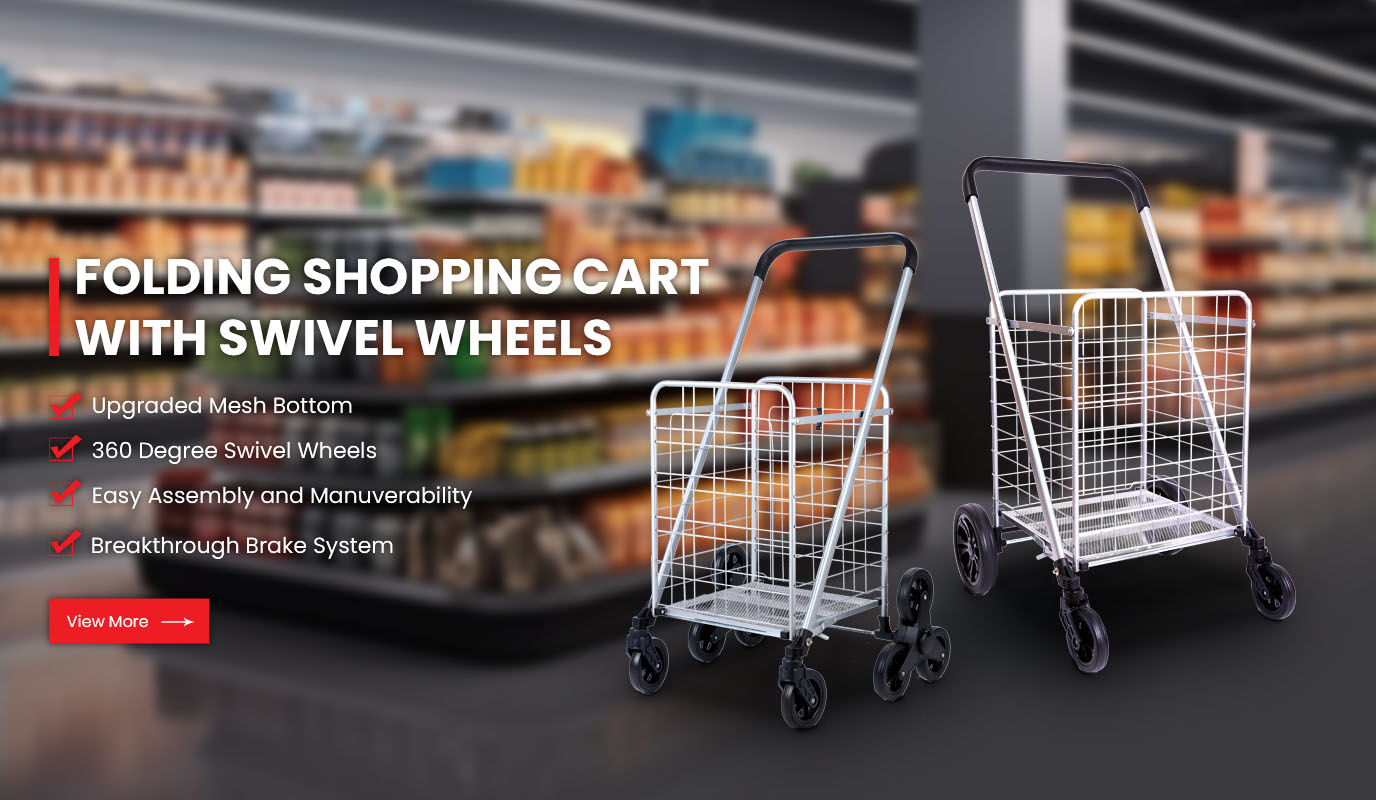
How to Choose Utility Carts for Retail and Outdoor Use?
Choosing utility carts for retail and outdoor use requires evaluating load capacity, material durability, wheel performance, and application conditions. The right cart improves transportation efficiency and supports reliable daily operations.
What Are Utility Carts Used For in Retail and Outdoor Applications?
Utility carts are designed to transport goods, tools, supplies, and equipment in environments where frequent movement is required.
In retail applications, utility carts are commonly used for:
Restocking shelves
Moving inventory
Transporting packages
Organizing store operations
Supporting warehouse-to-store transportation
Outdoor applications often require carts that can handle more challenging conditions, including uneven surfaces, weather exposure, and heavier loads.
Common outdoor uses include:
Garden and landscaping work
Event transportation
Facility maintenance
Construction support
Commercial property management
A suitable utility cart should match the working environment rather than simply focusing on appearance or basic carrying capacity.
What load capacity Should Be Considered When Choosing a Utility Cart?
load capacity is one of the most important factors when selecting a utility cart.
A cart with insufficient capacity may experience structural stress, while an oversized model may reduce maneuverability and increase operating difficulty.
Before purchasing, users should evaluate:
Average load weight
Frequency of transportation
Distance of movement
Type of materials being carried
Working surface conditions
For retail stores, medium capacity carts are often suitable for daily inventory movement. Outdoor and industrial environments usually require reinforced structures with higher load capabilities.
The ideal utility cart provides enough strength without sacrificing mobility.
Which Materials Are Suitable for Retail and Outdoor Utility Carts?
Material selection affects durability, maintenance requirements, and performance in different environments.
Common utility cart materials include:
| Material | Advantages | Suitable Applications |
|---|---|---|
| Steel | High strength and strong load support | Warehouses, outdoor heavy duty use |
| Stainless Steel | Corrosion resistance and easy cleaning | Food retail, commercial facilities |
| Aluminum | Lightweight and easy movement | Mobile outdoor applications |
| Plastic | Moisture resistance and low maintenance | Indoor retail environments |
Steel Utility Carts
Steel carts are commonly selected for heavy duty applications because of their excellent strength.
Benefits include:
Strong frame structure
High impact resistance
Suitable for frequent transportation
Long service life
With proper surface treatment, steel utility carts can maintain good performance in commercial environments.
Plastic Utility Carts
Plastic carts are suitable for applications where lightweight handling and easy maintenance are important.
Advantages include:
Resistance to moisture
Easy cleaning
Lower maintenance requirements
Flexible usage scenarios
They are often used in retail stores, supermarkets, and indoor service areas.
How Important Are Wheels When Selecting Utility Carts?
The wheel system directly affects cart mobility and user experience.
A well-designed wheel configuration helps operators move loads with less effort.
Important wheel factors include:
Wheel Size
Larger wheels generally perform better on uneven outdoor surfaces because they can overcome obstacles more easily.
Smaller wheels may provide better flexibility in compact indoor areas.
Wheel Material
Different wheel materials provide different advantages:
Rubber wheels provide quieter operation and better floor protection.
PU wheels offer wear resistance and smooth movement.
Heavy duty casters support higher loads and frequent transportation.
Swivel and Fixed Wheel Combination
Many commercial utility carts use a combination of swivel and fixed casters.
This design provides:
Better directional control
Improved straight-line stability
Easier turning in limited spaces
The right wheel configuration depends on the movement environment.
How Should Retail Businesses Choose Utility Carts?
Retail environments usually require carts that balance capacity, flexibility, and appearance.
Important considerations include:
Store Space
Small stores may require compact carts that can move through narrow aisles.
Large retail facilities often need higher-capacity models for inventory transportation.
Daily Usage Frequency
High-frequency operations require stronger frames, durable wheels, and reliable components.
Customer Environment
Carts used in customer-facing areas should provide smooth movement with minimal noise.
A well-selected utility cart improves employee efficiency while maintaining a professional store environment.
What Features Are Important for Outdoor Utility Carts?
Outdoor applications create additional challenges compared with indoor use.
Suitable outdoor utility carts should consider:
Weather Resistance
Outdoor Carts may face:
Rain
Humidity
Temperature changes
Dust exposure
Materials and surface treatments should provide appropriate protection.
Terrain Adaptability
Outdoor surfaces may include:
Concrete
Gravel
Grass
Uneven ground
Larger wheels and stronger frames can improve movement stability in these conditions.
Structural Durability
Outdoor utility carts often require reinforced construction because they may carry heavier equipment and experience more impact.
Should Buyers Choose Standard Utility Carts or Customized Solutions?
Standard utility carts can meet common transportation needs, but customized carts may provide better results for specialized applications.
Customization options may include:
Cart dimensions
Platform size
Handle design
Wheel configuration
Load capacity
Color and branding
For retailers, distributors, and commercial users, customized solutions can improve workflow efficiency by matching the cart design with actual operating requirements.
What Should Buyers Check Before Ordering Utility Carts?
Before purchasing, buyers should evaluate:
Application environment
Determine whether the cart will be used indoors, outdoors, or in mixed conditions.
Load requirements
Select a structure that matches the expected transportation weight.
Mobility needs
Consider floor conditions, transportation distance, and turning space.
Material performance
Choose materials based on durability, cleaning requirements, and weather exposure.
Manufacturer capability
Evaluate production experience, customization ability, quality control, and supply capacity.
Why Is Choosing the Right Utility Cart Important?
A utility cart is not only a transportation tool but also an important part of daily operational efficiency.
The right combination of material, structure, wheels, and capacity helps businesses reduce handling effort, improve productivity, and extend equipment service life.
For retail stores, outdoor operations, and commercial facilities, selecting a reliable utility cart manufacturer ensures stable performance and flexible solutions for different working environments.