


How to Compare Plastic Shopping Baskets and Rolling Baskets
Plastic Shopping Baskets and rolling baskets are both widely used in supermarkets, convenience stores, and retail environments. Although they share the same purpose of helping customers carry products, their structures, applications, storage methods, and user experiences are different.
Choosing the right basket solution requires understanding:
Store environment
Customer purchasing habits
Product capacity requirements
Storage space
Durability expectations
Manufacturing quality
As a professional shopping trolley and basket manufacturer, WOCHANG has more than 20 years of manufacturing experience in Shopping Carts, shopping baskets, Laundry Carts, and related retail products. The company exports products to more than 30 countries and focuses on product improvement, quality control, and customized solutions. (WOCHANG)
Basic Difference Between Plastic Shopping Baskets And Rolling Baskets
The biggest difference is the transportation method.
Plastic shopping baskets are carried by customers directly, while rolling baskets include wheels and handles to reduce carrying effort.
| Comparison | Plastic Shopping Basket | Rolling Basket |
|---|---|---|
| Carrying method | Hand carrying | Pulling or pushing |
| Best application | Small and quick purchases | Larger shopping loads |
| Storage | Easy stacking | Requires more space |
| Customer effort | Higher when fully loaded | Lower due to wheels |
| Capacity | Small to medium | Medium to large |
| Mobility | Limited | Higher flexibility |
Plastic shopping baskets are commonly used for convenience stores and supermarkets where customers purchase fewer items. Rolling baskets are suitable for stores where customers may buy more products but do not need a full-size shopping cart.
Plastic Shopping Baskets: Lightweight And Efficient
Plastic shopping baskets remain popular because of their simple structure and easy management.
Their main advantages include:
Lightweight design
Easy cleaning
Efficient stacking
Low maintenance
Flexible usage
Typical applications include:
Convenience stores
Supermarkets
Pharmacies
Small retail stores
Important design factors include:
| Feature | Benefit |
|---|---|
| Reinforced plastic structure | Improves durability |
| Comfortable handles | Reduces hand pressure |
| Stackable design | Saves storage space |
| Smooth surface | Easier cleaning |
For retail stores with limited space, stackable plastic shopping baskets help employees organize large quantities efficiently.
Rolling Baskets: Better For Larger Shopping Loads
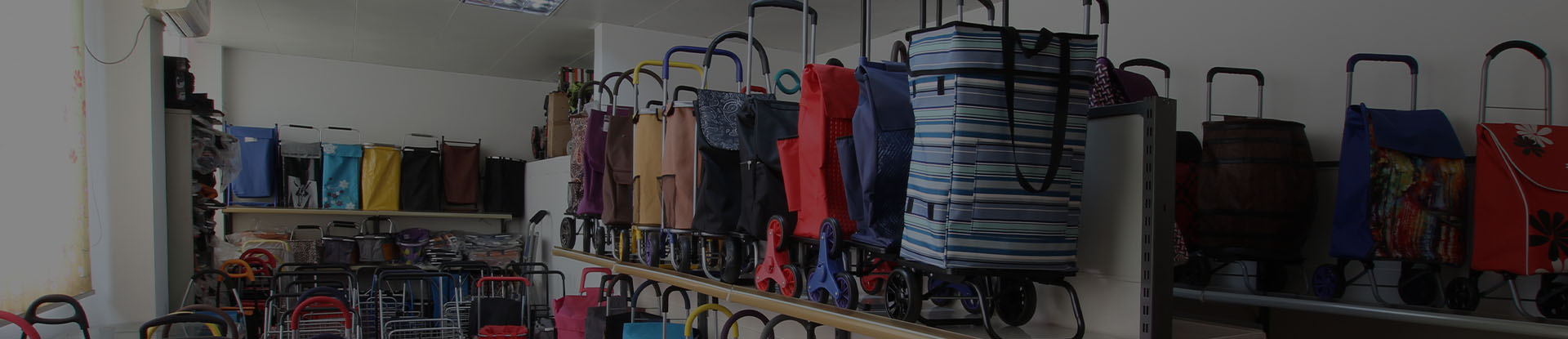
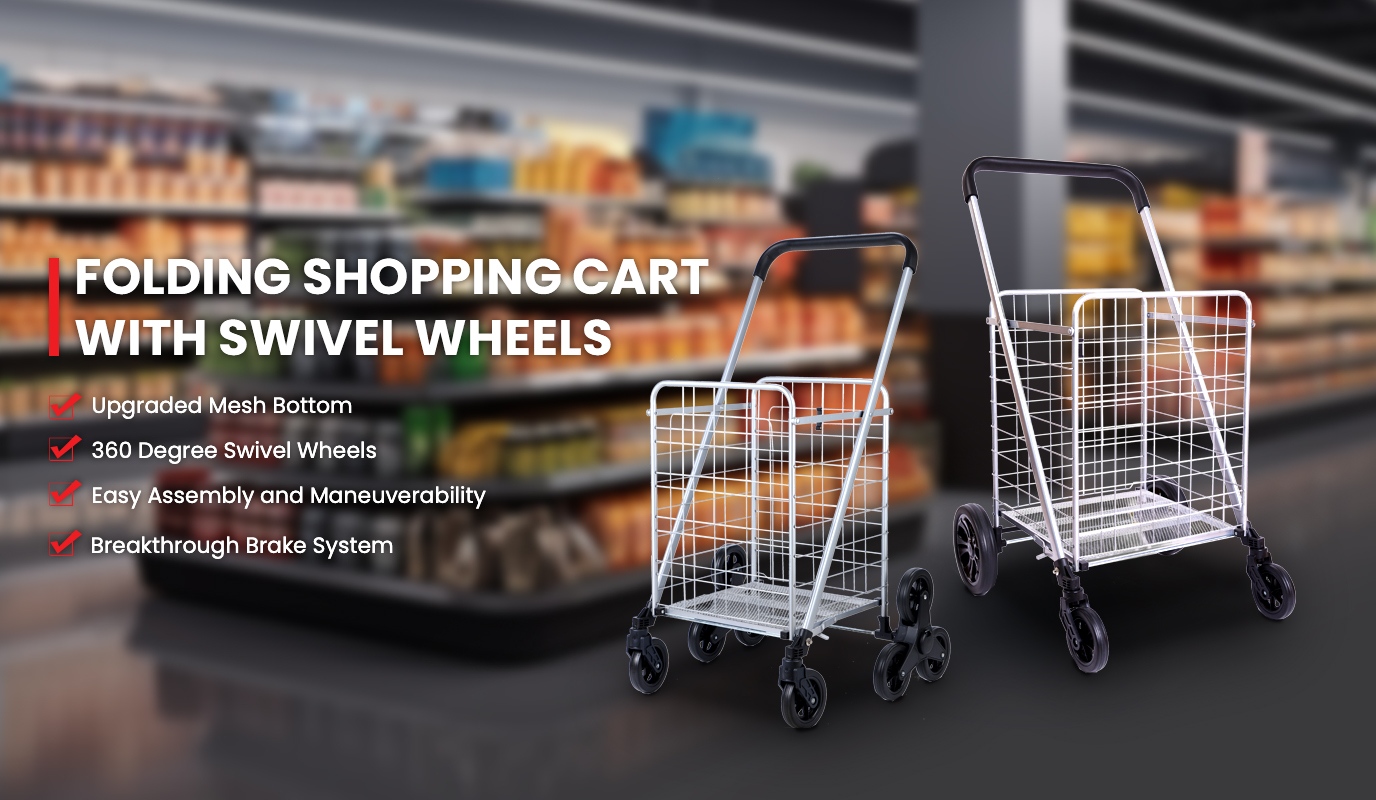
Rolling baskets combine the convenience of a basket with the mobility of wheels.
They are designed for customers who need more carrying capacity without using a traditional shopping cart.
Advantages include:
Reduced carrying effort
Larger storage capacity
Better customer convenience
Easier transportation
| Rolling Basket Feature | Customer Benefit |
|---|---|
| Wheels | Less physical effort |
| Pull handle | Easier movement |
| Larger capacity | Holds more products |
| Foldable structure | Better storage efficiency |
Rolling baskets are especially useful in supermarkets, household stores, and retail environments where customers may purchase multiple products.
WOCHANG provides different shopping basket solutions, including rolling baskets, foldable baskets, and Insulated Shopping Baskets for different retail applications. (WOCHANG)
Material Comparison Between Two Basket Types
Material selection affects product lifespan, appearance, and daily performance.
| Product Type | Common Materials | Main Advantages |
|---|---|---|
| Plastic shopping basket | PP plastic | Lightweight and impact resistant |
| Rolling basket frame | Steel or aluminum alloy | Stronger structural support |
| Rolling basket bag | Polyester and composite materials | Flexible and practical |
Polypropylene is commonly used for shopping baskets because it offers a balance of impact resistance, chemical stability, and lightweight performance.
For rolling baskets, manufacturers need to consider both frame strength and basket material because the product experiences additional pressure from wheels, handles, and heavier loads.
Compare Capacity And Usage Scenarios
The right choice depends on customer purchasing behavior.
| Usage Scenario | Recommended Product |
|---|---|
| Quick daily shopping | Plastic shopping basket |
| Convenience store purchases | Plastic basket |
| Large household shopping | Rolling basket |
| Outdoor market shopping | Rolling basket |
| Elderly customer use | Rolling basket |
A professional manufacturer should analyze the target application before recommending a product design.
Choosing a basket that matches customer needs improves shopping efficiency and user satisfaction.
Manufacturing Process Overview
Both plastic shopping baskets and rolling baskets require strict manufacturing control.
Plastic Shopping Basket Production
The process usually includes:
Raw material preparation
Injection molding
Surface inspection
Handle checking
Final quality inspection
Important quality points include:
Plastic strength
Basket thickness
Surface smoothness
Handle durability
Rolling Basket Production
Rolling basket manufacturing requires additional processes:
Frame production
Wheel installation
Basket assembly
Handle adjustment
Load testing
Quality checks include:
| Inspection Item | Purpose |
|---|---|
| Frame strength | Prevent deformation |
| Wheel performance | Ensure smooth movement |
| Handle connection | Improve safety |
| Load testing | Verify carrying ability |
| Appearance inspection | Maintain consistency |
OEM And ODM Process For Shopping Basket Solutions
Different retail markets may require different basket designs.
A professional OEM and ODM process includes:
Requirement Analysis
Manufacturers evaluate:
Store type
Customer usage
Capacity requirements
Material preferences
Product Development
Customization may include:
Basket size
Color options
Logo printing
Wheel system
Handle design
Sample Testing
Samples should be tested for:
Strength
Appearance
Function
Customer convenience
Mass Production
The factory controls:
Material consistency
Production efficiency
Quality standards
Delivery schedule
WOCHANG supports customized shopping basket solutions by combining manufacturing experience with product development capability. (WOCHANG)
Manufacturer Vs Trader: Why Factory Capability Matters
When comparing plastic shopping baskets and rolling baskets, supplier capability directly affects product quality.
A manufacturer can directly control:
Material selection
Production processes
Product improvements
Quality inspection
Custom development
A trader usually depends on external factories, which may reduce control over:
Material changes
Production adjustments
Quality consistency
Design optimization
Direct cooperation with a manufacturer provides better support for customized retail projects.
Quality Control Checkpoints For Bulk Supply
For large-volume orders, consistency is essential.
Important inspection points include:
| Quality Check | Purpose |
|---|---|
| Material testing | Confirm durability |
| Dimension checking | Maintain consistency |
| Handle testing | Ensure safety |
| Wheel testing | Verify movement |
| Load testing | Confirm performance |
A reliable manufacturer should control quality from raw materials to finished products.
Export Market Compliance And Material Standards
International retail markets may have different requirements for:
Material quality
Product durability
Packaging
Documentation
Manufacturing standards
WOCHANG holds BSCI and SCAN certifications and supplies products to global markets including North America, Europe, and Southeast Asia. (WOCHANG)
A professional export supplier should understand different market expectations and provide stable production support.
Project Sourcing Checklist
Before selecting plastic shopping baskets or rolling baskets, consider:
| Evaluation Item | Key Question |
|---|---|
| Application | Which retail environment will use the product? |
| Capacity | Does it match customer needs? |
| Material | Is durability sufficient? |
| Storage | Is stacking or folding required? |
| Mobility | Are wheels necessary? |
| Quality control | Are testing procedures available? |
| Customization | Can OEM requirements be supported? |