



How To Choose Shopping Cart Wheels for Smooth Store Operation
Shopping Cart wheels directly affect store movement, customer comfort, floor protection, and maintenance cost. A cart with poor wheels may shake, make noise, damage floors, or become difficult to push in crowded aisles. For supermarket projects, wheel selection should be reviewed together with cart size, load capacity, store flooring, and expected daily use.
Manufacturer vs Trader: Why Wheel Details Matter
A direct shopping cart manufacturer can match wheel material, diameter, axle structure, and frame design during product development. Compared with a trader, a manufacturer can adjust OEM and ODM details before bulk production, including wheel size, tire material, color, bearing type, front swivel design, rear fixed design, and spare parts packing.
WOCHANG has more than 20 years of manufacturing experience in shopping carts, Shopping Baskets, Laundry Carts, and related trolley products. With BSCI and SCAN certification, our factory supports stable production management, supplier audit needs, and export order consistency.
How to Compare Shopping Cart Wheel Options
Different wheel materials perform differently in retail environments:
| Wheel Focus | Practical Use |
|---|---|
| Rubber wheel | Quieter movement and better floor protection |
| PP wheel | Light structure and cost control |
| EVA wheel | Soft rolling feeling for lighter carts |
| Larger diameter | Better passing ability on uneven surfaces |
| Swivel wheel | Easier turning in narrow aisles |
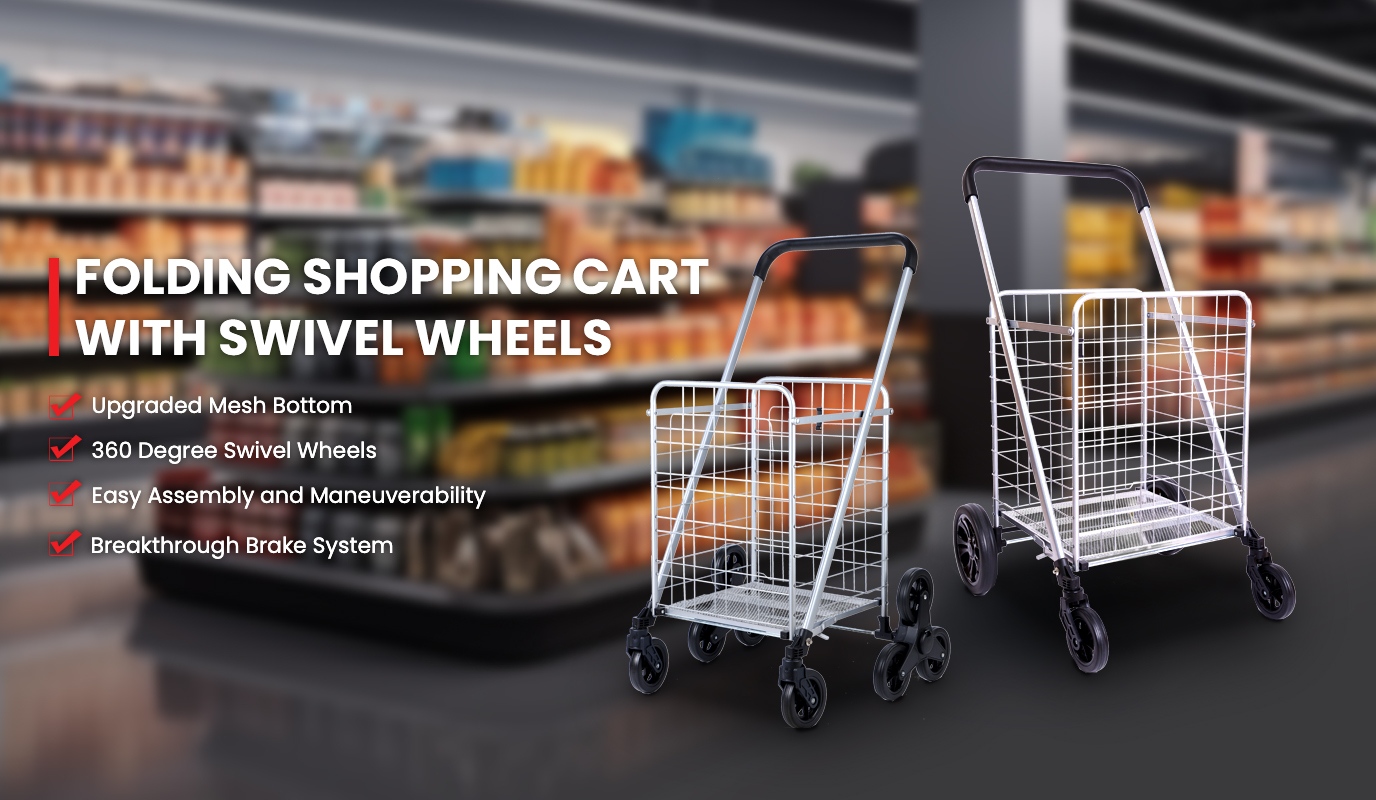
For reference, this Shopping Trolley Chair uses 6.5-inch widened rubber tires and a structure designed for supermarket, outdoor, kitchen, and picnic use. It is a useful product page for discussing wheel size, load requirement, folding structure, material selection, MOQ, and packing details.
Manufacturing Process Overview
The wheel-related production process includes wheel material selection, bracket matching, axle fitting, frame assembly, wheel installation, rotation checking, load checking, cleaning, and packing. For foldable carts, the wheel position must also match the folding hinge and storage direction to avoid interference during use.
Quality Control Checkpoints
Before bulk purchase, buyers should check wheel rotation, turning flexibility, noise level, axle tightness, bracket strength, ground contact, load stability, and carton protection. A practical project sourcing checklist should also include sample approval, spare wheel availability, MOQ, lead time, logo requirements, packing method, and export documents.
Material Standards and Export Compliance
Shopping cart wheels should be selected according to store flooring and product load. For export markets, EN 1929 is often referenced for shopping trolley construction, performance, testing, and safety requirements. This helps make wheel performance, cart balance, and daily use safety easier to evaluate before shipment.
Key Takeaways
The right shopping cart wheels should make the cart easy to push, quiet to use, stable under load, and suitable for the target retail environment. Working with a direct manufacturer helps control wheel design, OEM and ODM customization, quality inspection, spare parts, and bulk delivery from sample confirmation to repeat orders.