


How Much Is A Metal Shopping Cart
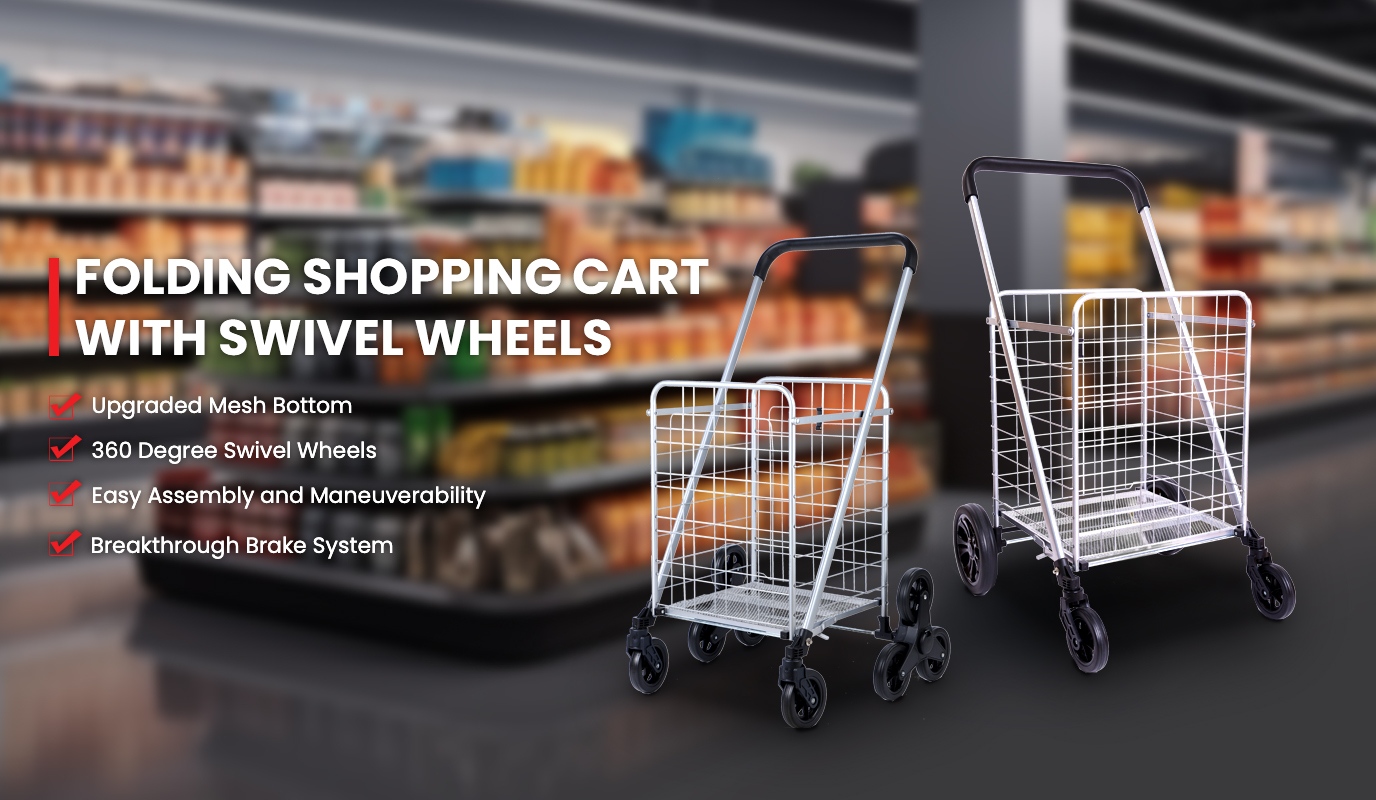
A metal Shopping Cart does not have one fixed price. Its value changes with steel cost, basket size, wheel quality, surface finish, nesting structure, packaging method, and order quantity. Based on WOCHANG’s own published industry guide, a standard steel shopping cart in bulk is commonly priced at 70 to 120 US dollars per unit. Plastic or hybrid models usually cost more when molded parts, color matching, or mixed-material structures are added.
What affects the price most
Raw material is one of the biggest pricing factors. Since most standard shopping trolleys use welded steel wire and steel tubing, price movement in the steel market directly influences quotations. The OECD Steel Outlook 2025 reports that flat steel and rebar prices continued their downward trend from earlier peaks and had stabilized in early 2025. In February 2025, rebar and flat steel prices were 12 percent and 17 percent lower than a year earlier. That helps explain why a trolley quotation can shift even when the design stays the same.
Surface treatment also matters. Zinc plating and powder coating both improve corrosion resistance, but they create different cost structures and appearance results. Wheel systems are another key driver because smoother casters improve handling, reduce maintenance issues, and support longer service life. A lower quote may look attractive at first, but weaker wheels or unstable finish quality often increase replacement cost later.
Typical bulk cost range
| Shopping cart type | Typical bulk range | Main cost driver |
|---|---|---|
| Standard metal shopping cart | 70 to 120 USD | Steel, finish, caster quality |
| Plastic cart with metal frame | 80 to 150 USD | Molded parts and color options |
| Hybrid shopping cart | 90 to 160 USD | Mixed materials and customization |
These ranges are useful as a starting point for project budgeting, but real sourcing decisions should still be based on structure, quality checkpoints, and production consistency.
Manufacturer vs trader
When asking how much a metal shopping cart is, buyers are also asking who controls the product behind the quote. A manufacturer can manage wire forming, frame welding, surface treatment, caster installation, and packaging more directly than a trader. WOCHANG presents itself as a manufacturer with more than 20 years of experience, exports to more than 30 countries, over 50 patented technologies, and certifications including BSCI and SCAN. That gives buyers a clearer basis for comparing price with actual factory capability.
OEM and ODM cost considerations
For OEM and ODM projects, price increases when the trolley includes custom handle colors, logo parts, child seat structures, lock systems, larger basket capacity, or upgraded packaging. A stable OEM and ODM process should include drawing confirmation, sample approval, finish review, wheel specification check, and final inspection. This is especially important in bulk supply because one approved sample is not enough if later production changes material thickness, caster grade, or coating quality.
Project sourcing checklist
| Checkpoint | Why it matters |
|---|---|
| Steel material standard | Affects strength and price stability |
| Surface finish | Influences corrosion resistance and appearance |
| Wheel specification | Changes usability and maintenance cost |
| Nesting design | Impacts shipping efficiency |
| Quality control checkpoints | Reduces defects in repeat orders |
| Export compliance | Lowers sourcing risk in international supply |
Manufacturing process overview
A reliable shopping cart manufacturer should explain the manufacturing process clearly. For metal carts, buyers should review steel wire forming, tube bending, welding, coating, caster assembly, rolling tests, and packaging inspection. WOCHANG’s own quality article highlights common import risks such as weak welds, wheel misalignment, coating defects, dimensional inconsistency, structural instability, and packaging damage. These issues directly affect the real cost of the trolley after delivery.
Final answer
So How Much Is A Metal Shopping Cart. In practical sourcing terms, a standard model is usually about 70 to 120 US dollars per unit in bulk, but the true answer depends on steel market timing, finish choice, wheel quality, customization depth, and factory control. With direct manufacturing experience, established certifications, export-facing compliance, and stable production capability, WOCHANG is better positioned to offer both competitive pricing and dependable product quality.