


How To Improve Load-Bearing Capacity Of A Trolley
Start with structure, not only material
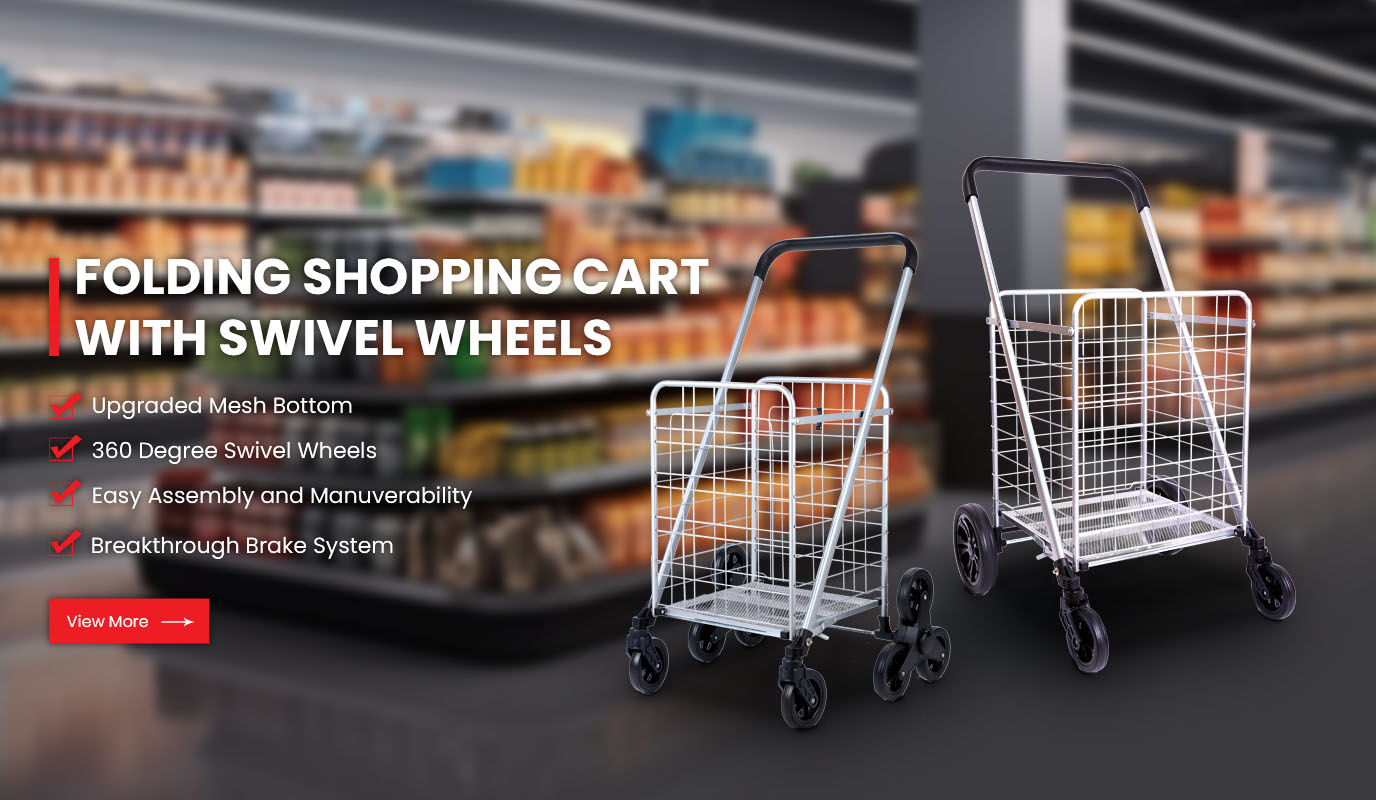
Load-bearing capacity is improved first through structural design. A trolley can carry more weight when the frame geometry distributes force evenly across the base, side supports, and wheel connection points. Reinforced joints, bottom crossbeams, and triangular braces are especially effective because they reduce local stress and help prevent frame twisting under repeated use. WOCHANG’s own product content shows this clearly. Its foldable Shopping Cart uses bottom beams and triangular braces to distribute concentrated loads, reaching a static load capacity of 90 kg and a dynamic load capacity of 60 kg.
Choose the right steel specification
Material standards used have a direct effect on trolley strength. For many metal trolleys, electric-resistance-welded mechanical tubing is a practical choice because it offers stable dimensional control for frame production. ASTM A513 covers round, square, rectangular, and special-shape carbon and alloy steel mechanical tubing, making it relevant for trolley frames that require both forming accuracy and structural consistency. In real production, the value is not only in steel grade itself, but in whether the tubing wall thickness, bending quality, and weld area are matched to the target load.
Reinforce the basket and stress points
The basket section is often the first place where overload problems appear. To improve capacity, the wire diameter, mesh spacing, and weld density must all be matched to the product application. WOCHANG’s basket trolley example uses 5 mm high-carbon steel wire in a staggered welded grid structure, with a static capacity of 40 kg per layer and 80 kg in total. This shows that stronger basket design is not only about thicker metal, but also about how the wire pattern and welding method work together.
Upgrade caster capacity and wheel assembly
A trolley can only carry as much as its wheel system can safely support. Caster selection should be based on the total trolley weight plus the expected load, then divided across the wheel set with a safety margin. Industry guidance commonly recommends calculating capacity with extra allowance because real use includes uneven floors, turning, and dynamic shock during movement. WOCHANG also emphasizes wheel alignment control, torque checks, and swivel rotation checks as quality control checkpoints, which matters because poor wheel assembly reduces both load stability and user confidence.
Improve handling to protect real working capacity
A trolley that is technically strong but difficult to move will not perform well in daily use. OSHA states that pushing generally takes less effort than pulling, and it recommends handles that are easy to grasp in an upright posture. This matters because poor ergonomics increase misuse, side loading, and impact stress, all of which shorten trolley life. Better handle position, smoother bearings, and stable wheel travel help preserve the designed load-bearing capacity during actual operation.
Manufacturer vs trader matters in capacity control
When load-bearing performance is a key requirement, manufacturer vs trader becomes an important sourcing issue. A manufacturer can control tube forming, frame welding, surface treatment, wheel installation, and final inspection more directly. WOCHANG identifies itself as a manufacturer with more than 20 years of experience, exports to more than 30 countries, and holds BSCI and SCAN certifications. Its published production content also highlights metal frame forming, welding, surface treatment, wheel assembly, and final inspection as core manufacturing steps. That production control is essential for stable load capacity across repeat orders.
Project sourcing checklist
| Checkpoint | Why it matters |
|---|---|
| Tube specification | Supports frame rigidity and repeatability |
| Reinforced joints | Reduces bending and fatigue risk |
| Basket wire design | Improves distributed load support |
| Caster load rating | Prevents wheel failure under dynamic use |
| Welding consistency | Keeps stress points stable |
| Final rolling test | Confirms real working performance |
Use OEM and ODM process to match the load target
For OEM and ODM projects, improving load-bearing capacity should begin at the drawing stage. Buyers should confirm static and dynamic load targets, frame size, tubing thickness, basket wire diameter, caster rating, and packaging method before sample approval. Bulk supply considerations should also include repeatability across batches, because one strong sample is not enough if later production changes the tubing, wheels, or weld depth. With direct factory control, clear manufacturing process overview, defined quality control checkpoints, and export market compliance support, WOCHANG is in a stronger position to supply trolleys that carry higher loads with greater long-term stability.
Previous: