


What Should Buyers Consider When Selecting Lightweight Shopping Trolleys For Urban Use?
Practical Selection Criteria and Strategic Sourcing Factors
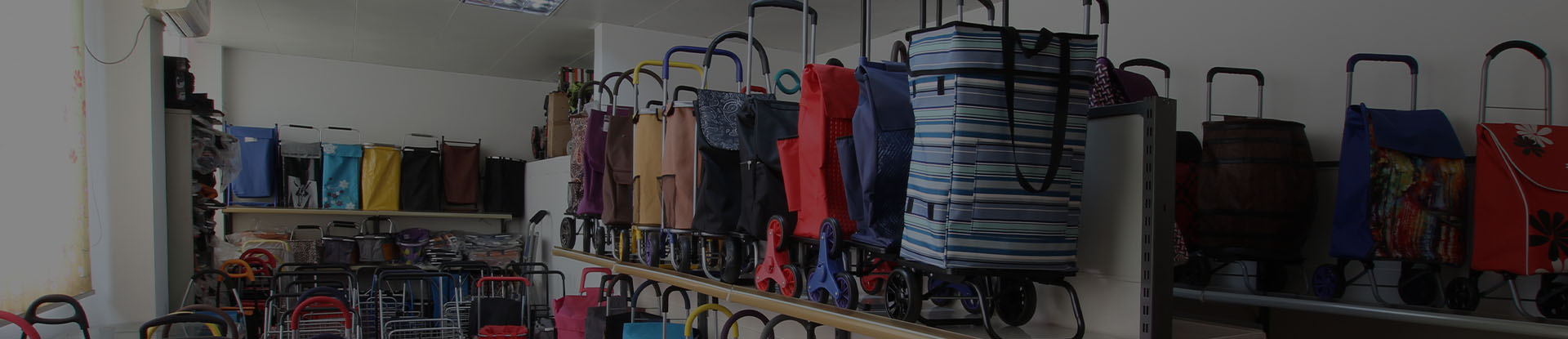
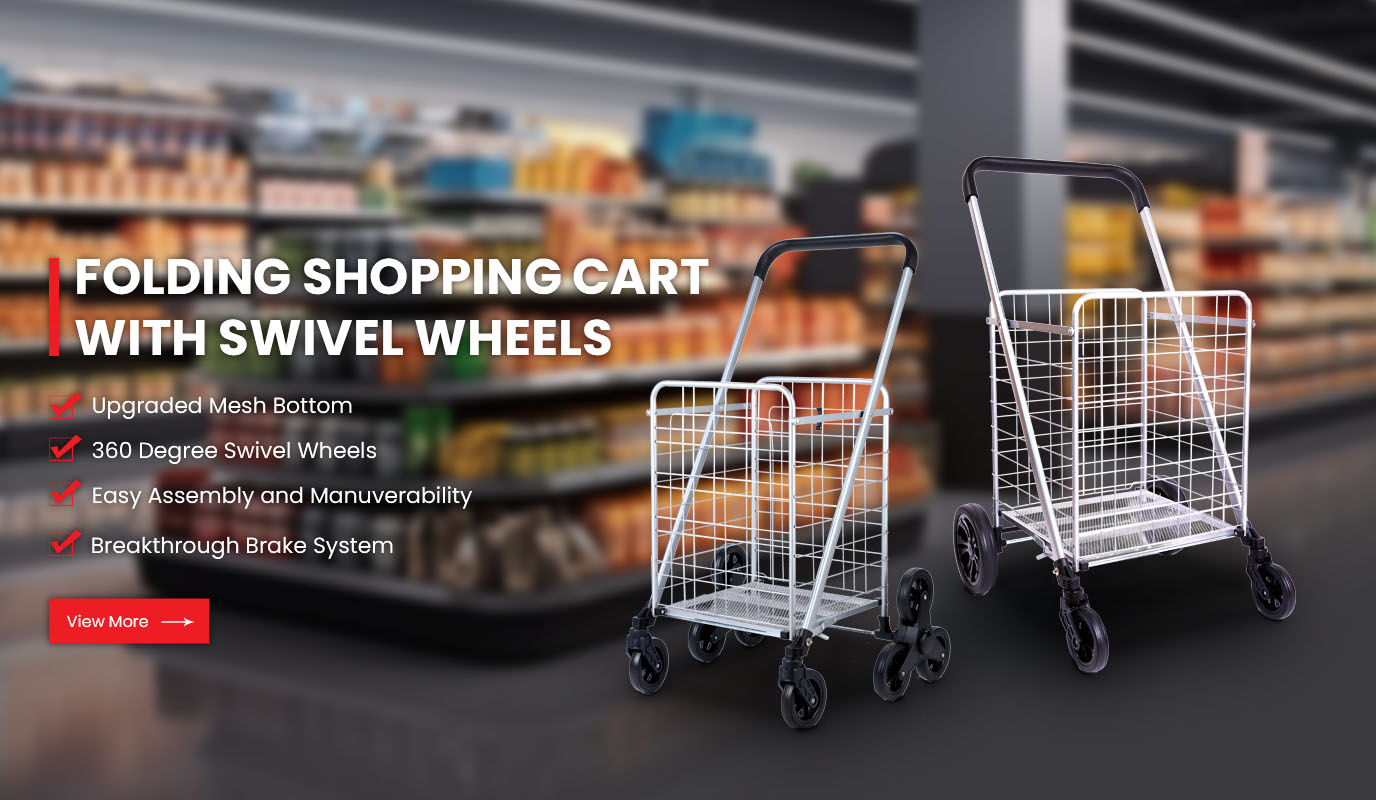
In urban retail environments—especially supermarkets, convenience stores, small-format shops, and high-turnover outlets—Lightweight Shopping Trolleys have become essential. They offer ease of movement in tight aisles, reduce customer fatigue, and improve turnover in high-traffic locations. Yet “lightweight” should not be chosen solely by weight; a trolley must balance portability, durability, and system compatibility.
As a manufacturer specializing in Shopping Carts, baskets, trolleys, and retail support equipment, WOCHANG supports buyers who need products engineered for frequent use, long service life, and repeatable quality across bulk orders.
Below are the key factors smart buyers should evaluate before purchasing lightweight shopping trolleys for urban retail applications.
1. Structural Integrity and Load Performance
Lightweight should not mean weak.
Urban shopping patterns often involve:
Frequent turns and stops
Rapid acceleration and deceleration
Contact with shelving or checkout fixtures
A good lightweight trolley must distribute load without frame deformation. Consider:
Steel tubing thickness and geometry
Weld quality at high-stress joints
Reinforced corner and handle intersections
Slat or mesh base support design
As a manufacturer, WOCHANG controls material selection and welding specifications to ensure urban trolleys remain stable under real-world usage.
2. Wheel Design and Manoeuvrability
In cities, flooring varies—from polished tiles to textured concrete. Wheel performance is a major convenience driver.
Look for:
Smooth swivel rotation
Anti-noise materials
Rollers suited to local floor type
Shock-absorption features
Resistance to debris entanglement
Wheel performance significantly impacts user satisfaction and operator fatigue in high-rotation urban settings.
3. Nesting and Storage Efficiency
Urban retail spaces often have limited backroom or entrance space. Lightweight trolleys should nest compactly without binding or “stacking friction.”
Key considerations:
Precise dimensional control for nesting tolerance
Uniform handle and frame alignment
No deformation after continuous stacking cycles
Batch consistency and dimensional precision are enabled only through controlled factory production, not spot sourcing.
4. Material Standards and Surface Durability
Lightweight trolleys are exposed to abrasion, wet cleaning agents, and continuous handling. Material quality and finish affect long-term appearance and corrosion resistance.
Recommended features:
High-tensile steel wire and tubing
Market-appropriate surface coatings (not simply “painted”)
Plastic components rated for impact and UV exposure
Weld reinforcements at high-stress zones
WOCHANG’s export models are engineered with material standards selected for urban retail service conditions.
5. User Comfort and Ergonomics
Urban shoppers increasingly expect:
Comfortable handgrip design
Easy steerability
Low push force at full load
Ergonomic considerations should be systemic—not add-ons. They must be part of frame design and confirmed through trial, not assumed from visuals.
6. Manufacturer vs Trader: Consistency of Supply and Specifications
When sourcing lightweight trolleys, the choice between a manufacturer and a trader is strategic.
A manufacturer can provide:
Stable dimensional tolerances batch-to-batch
Traceable material specifications
Defined weld and coating processes
OEM adjustments based on project needs
Quality documentation for audits
A trader may offer good samples but often cannot guarantee the same structural and tolerancing control across volume orders.
WOCHANG operates as a manufacturer with controlled production processes, allowing buyers to lock specifications and maintain consistent performance across serial deliveries.
7. OEM / ODM Customization Options
Lightweight trolleys are often part of a larger retail service strategy. Good OEM/ODM processes should include:
Custom handle colors and branded grips
Accessories such as bag hooks, cup holders, and smartphone mounts
Wheel upgrades or floor-type-matched caster sets
Packaging aligned with store rollout strategy
Spare parts kits for ongoing service
A well-structured OEM workflow includes specification locking, sample approval, tooling confirmation, and batch traceability.
8. Quality Control Checkpoints
Reliable supply requires systematic checks at key checkpoints:
Incoming material verification: steel grade, tube dimensions
Mid-process checks: weld penetration, alignment, frame symmetry
Pre-finish inspection: surface prep, coating adhesion
Functional testing: rolling, stacking, handle torque
Final inspection: packaging integrity and labeling accuracy
A manufacturer-driven QC system is far more consistent than ad-hoc inspection from resellers.
9. Export Documentation and Compliance
For international orders, compliance readiness reduces delays:
Packing lists aligned with customs requirements
Consistent SKU labeling and HS codes
Audit-ready production records and certificates
Packaging and labeling suited to destination logistics
Buyers sourcing global urban retail chains benefit from suppliers with export process experience and compliance documentation practices.
10. Bulk Supply Considerations
Urban retail rollouts often require multiple stores with phased deliveries. In these scenarios, confirm:
Stable lead times and capacity planning
Protective packaging to avoid frame deformation in transit
Spare parts strategy for wheels and wear components
Consistency lock on dimensional and material specs
Contingency planning for rush replenishment orders
WOCHANG’s production capacity and export experience support bulk supply continuity and phased regional deliveries.
Project Sourcing Checklist
Before finalizing a procurement decision, use this checklist:
Confirm recommended load capacity and structural specs
Verify wheel type matches expected flooring conditions
Confirm nesting tolerances for storage efficiency
Lock dimensional tolerances and handle design
Define surface coating and plastic material standards
Align OEM customization requirements
Confirm QC checkpoints and documentation
Review packaging design for export stability
Ensure export compliance and labeling readiness
Plan for spare parts and ongoing service
Conclusion
Selecting lightweight shopping trolleys for urban use demands a balance between portability, structural reliability, user comfort, and operational durability. Beyond basic weight figures, smart procurement ties trolley design to wheel performance, nesting efficiency, material quality, and consistent manufacturing standards.
Working with a manufacturer like WOCHANG enables buyers to secure products engineered for urban retail service patterns, backed by OEM flexibility, controlled quality checkpoints, and export-ready compliance—ensuring long-term satisfaction and operational efficiency in every store rollout.