


What Are The Advantages And Limitations Of Different Shopping Trolley Materials?
The material used in a shopping trolley plays a decisive role in its strength, weight, durability, cost, and suitability for different usage scenarios. Overseas buyers do not evaluate materials in isolation; instead, they consider how each material performs under real conditions such as daily loading, outdoor use, folding frequency, and long-term maintenance. Understanding the advantages and limitations of common shopping trolley materials helps buyers select products that match their target market and application needs.
As a manufacturer of foldable Shopping Carts and trolley systems, WOCHANG designs products using different material combinations to balance performance, usability, and cost across various international markets.
Metal Frame Shopping Trolleys
Metal frames are one of the most widely used structures in shopping trolley manufacturing.
Advantages Of Metal Frames
Metal-based trolleys offer several clear benefits:
High structural strength and load-bearing capacity
Good resistance to deformation under heavy loads
Long service life when properly maintained
Stable performance for repeated daily use
Metal frames are especially suitable for markets that require higher load capacity, frequent use, or semi-commercial applications.
WOCHANG commonly applies metal frames in designs where stability and durability are priority factors.
Limitations Of Metal Frames
Despite their strength, metal frames also have limitations:
Heavier overall weight compared to other materials
Potential for rust if exposed to moisture without proper care
Higher material and processing cost in some markets
For elderly users or markets prioritizing ultra-lightweight handling, metal frames must be carefully optimized to avoid excessive weight.
Aluminum Alloy Shopping Trolleys
Aluminum alloy is often chosen for lightweight trolley designs.
Advantages Of Aluminum Alloy
Key advantages include:
Significantly lighter than traditional steel
Good corrosion resistance in humid environments
Easier handling and lifting for household users
Clean appearance suitable for residential use
Aluminum trolleys are popular in urban household markets where portability and ease of movement are critical.
Limitations Of Aluminum Alloy
However, aluminum alloy also presents trade-offs:
Lower load capacity compared to reinforced steel
Higher material cost
Reduced tolerance for impact or overload
Designers must carefully control frame geometry to maintain stability under typical loads.
Plastic Components In Shopping Trolleys
Plastic is widely used for baskets, panels, and certain structural parts.
Advantages Of Plastic Materials
Plastic components provide:
Lightweight construction
Resistance to rust and moisture
Easy cleaning and maintenance
Flexibility in shape and design
Plastic baskets are especially suitable for household grocery transport and environments where hygiene and ease of cleaning are important.
Limitations Of Plastic Materials
Plastic also has clear limitations:
Lower structural strength than metal
Potential cracking under heavy or repeated stress
Deformation under excessive load or heat
For this reason, plastic is rarely used alone for load-bearing frames and is instead combined with metal structures.
Fabric And Textile Shopping Trolleys
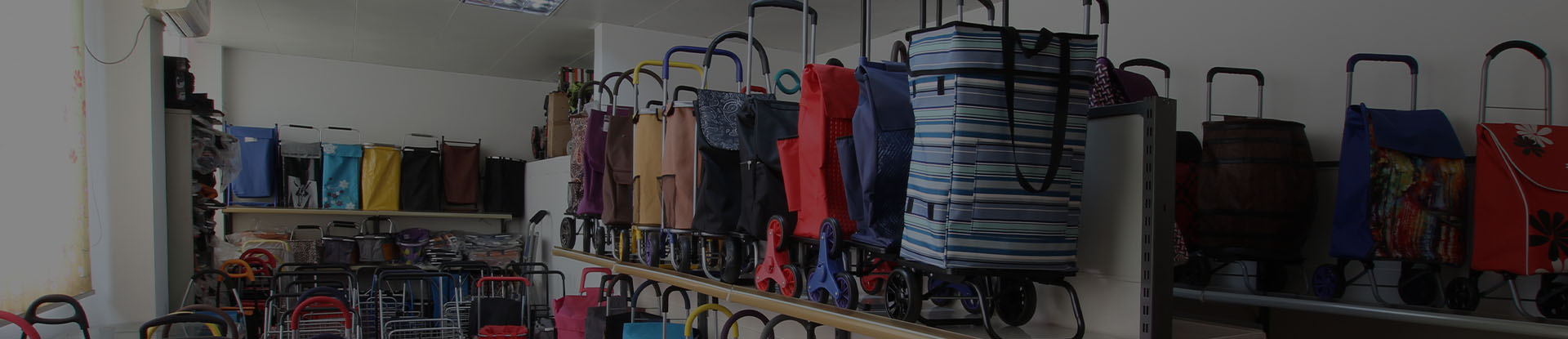
Fabric-based shopping trolleys are common in lightweight, foldable designs.
Advantages Of Fabric Materials
Fabric baskets offer:
Very low weight
Flexible folding and compact storage
Comfortable handling for light loads
Suitability for personal shopping use
These trolleys are popular among elderly users and urban consumers with light, frequent shopping habits.
Limitations Of Fabric Materials
Fabric materials also present challenges:
Limited load capacity
Susceptibility to wear, tearing, or sagging
Less suitable for sharp or heavy items
Shorter lifespan under frequent heavy use
Fabric trolleys are best suited for moderate loads rather than bulk transport.
Mesh And Wire Basket Structures
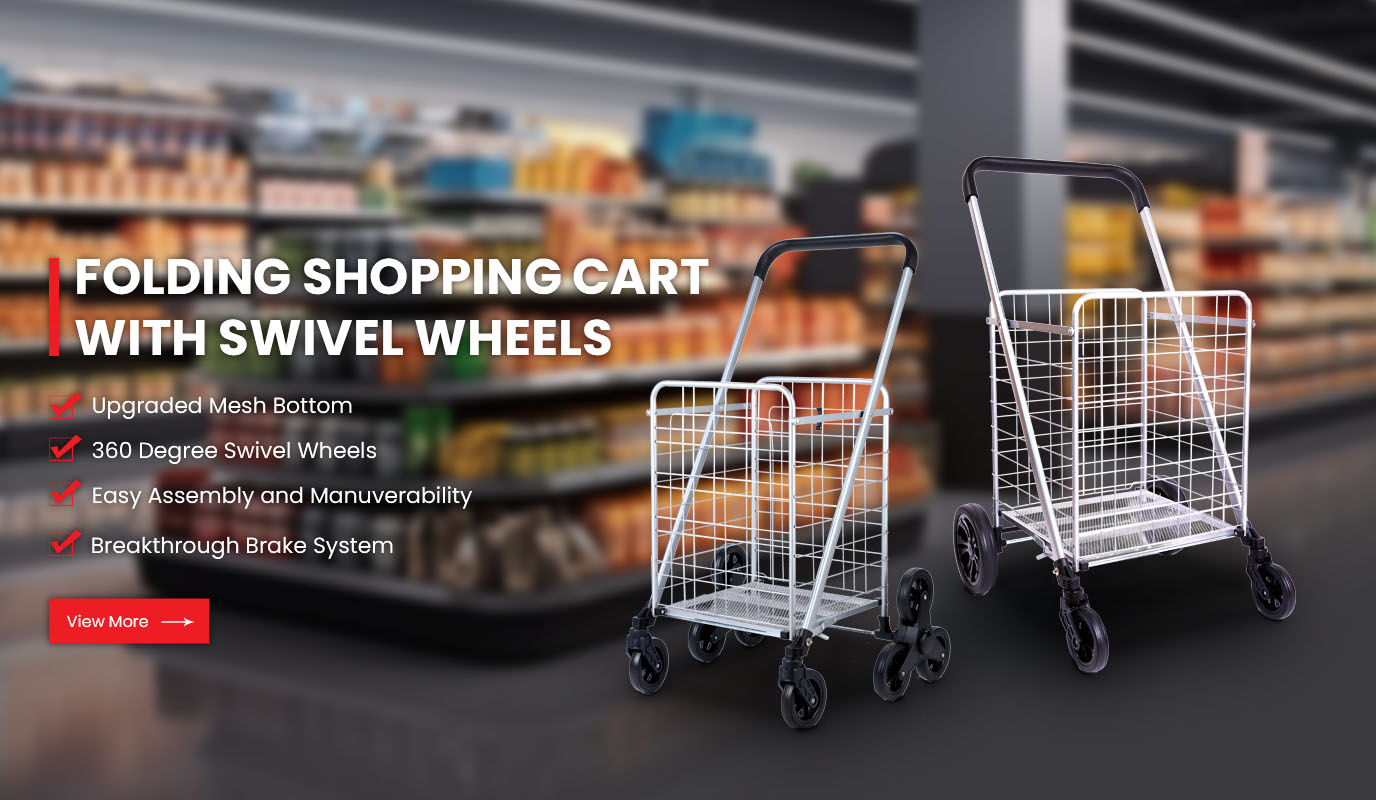
Metal mesh baskets are commonly used in reinforced trolley designs.
Advantages Of Mesh And Wire Baskets
Mesh baskets provide:
High load capacity
Good airflow and visibility of contents
Strong resistance to deformation
Long-term durability
They are often used in retail, community, or semi-commercial environments.
Limitations Of Mesh And Wire Baskets
Their disadvantages include:
Higher weight compared to fabric or plastic
Potential noise when items shift inside
Less suitable for small loose items without liners
Design adjustments are often needed to improve user comfort.
Composite Material Approaches
Many modern shopping trolleys use a combination of materials rather than relying on a single type.
Advantages Of Composite Designs
Composite structures allow manufacturers to:
Use metal frames for strength
Apply plastic or fabric for weight reduction
Optimize performance for specific use scenarios
Balance cost and durability
WOCHANG frequently applies composite material strategies to create foldable shopping trolleys that remain strong yet manageable for everyday use.
Limitations Of Composite Designs
Composite designs require:
More complex manufacturing processes
Precise connection between different materials
Consistent quality control to avoid weak points
When executed properly, these limitations can be effectively managed.
How Material Choice Affects Market Suitability
Different overseas markets favor different material combinations.
Examples include:
Household and elderly-focused markets preferring lightweight aluminum or fabric designs
Bulk shopping and retail markets requiring metal frames and reinforced baskets
Urban apartment markets valuing foldable composite structures
Material selection directly affects acceptance, pricing, and long-term satisfaction.
Durability And Maintenance Considerations By Material
Material choice also influences maintenance needs.
Metal frames require drying and corrosion prevention
Aluminum requires impact protection
Plastic requires load control to avoid cracking
Fabric requires regular cleaning and careful loading
Buyers often evaluate total ownership cost rather than material price alone.
How WOCHANG Approaches Material Selection
WOCHANG treats material selection as a performance decision rather than a cost-only choice.
Key principles include:
Matching material strength to load capacity requirements
Balancing weight and durability for target users
Designing structures that support folding and storage
Ensuring consistent quality across production batches
This approach allows products to perform reliably in diverse overseas markets.
Conclusion
Different shopping trolley materials each offer distinct advantages and limitations. Metal frames provide strength and durability, aluminum offers lightweight portability, plastic and fabric reduce weight and improve convenience, while mesh structures support heavy loads. No single material is ideal for all applications; the best choice depends on load requirements, user habits, environment, and maintenance expectations.
Shopping trolleys designed with appropriate material combinations and performance-focused structures—such as those produced by WOCHANG—are better equipped to meet the diverse needs of overseas markets. By understanding material trade-offs, buyers can select trolley solutions that deliver long-term value, safety, and usability.