



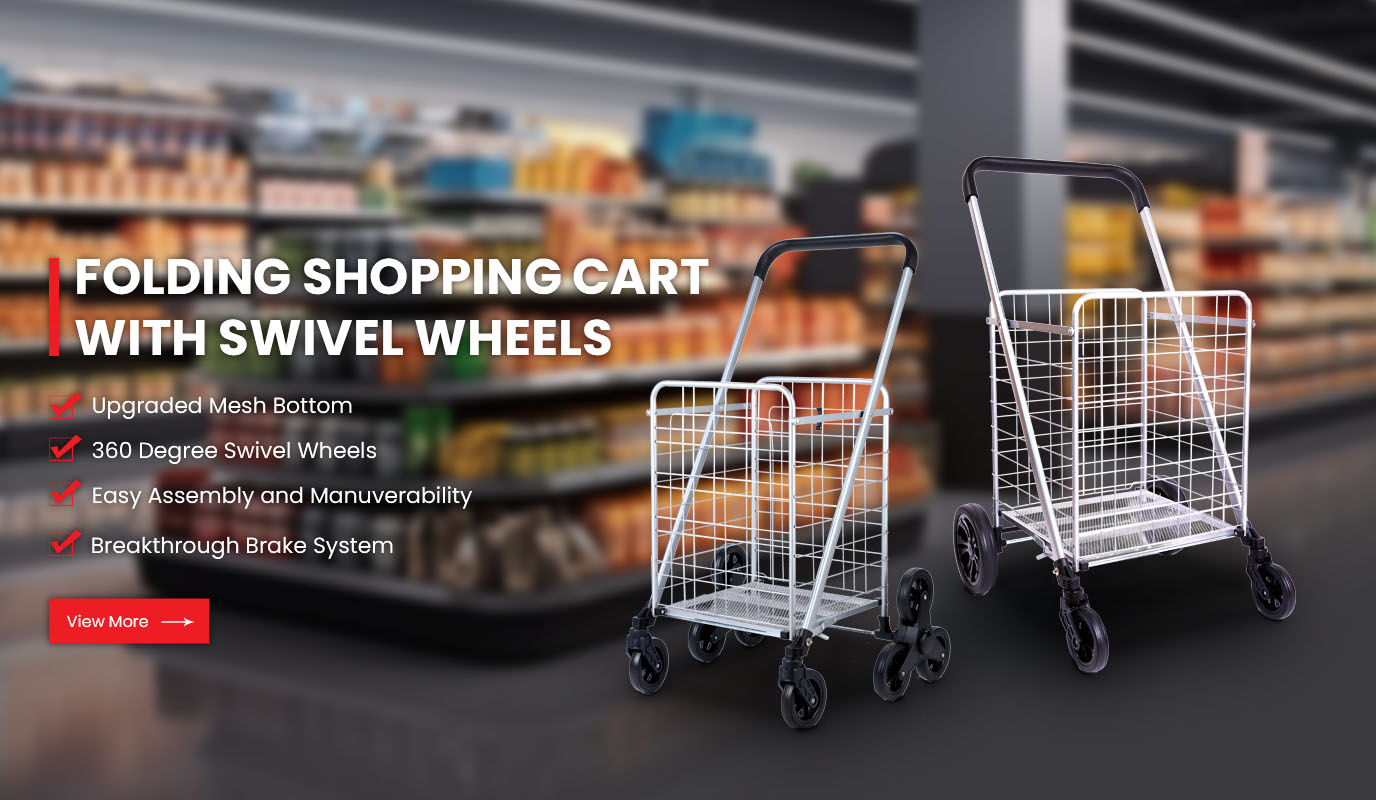
How Can You Judge The Quality Of A Foldable Shopping Cart before Buying?
A foldable Shopping Cart must be strong, stable, and easy to handle. Whether used for groceries, markets, or daily errands, its quality directly affects safety, durability, and overall user experience. Evaluating the cart before purchasing helps ensure it can support real-world use without unexpected failures.
Check the Frame Material and Build Quality
Strong Structure
A high-quality cart uses a sturdy metal frame, typically made from steel tubing or reinforced alloy. Thicker tubes, proper welding, and rigid joints indicate reliability. A weak frame bends easily under load and reduces long-term durability.
Smooth and Even Surface Treatment
The surface should have uniform coating to resist rust, moisture, and scratches. Poor finishes flake or chip quickly, exposing the metal to corrosion and weakening the frame.
Evaluate Weight Capacity and Stability
Load Rating
A durable foldable cart should safely support 30–50 kg or more, depending on the intended use. Stronger carts use reinforced bases and crossbars to prevent bending.
Balance and Anti-Tip Design
The cart should remain stable when loaded. A wide base, properly positioned wheels, and a low center of gravity prevent tipping when turning or crossing uneven surfaces.
Inspect the Wheels and Mobility
Wheel Material and Size
High-quality carts use rubberized or wear-resistant wheels. Larger wheels handle curbs, uneven sidewalks, and market terrain more effectively. Small, low-quality wheels wear out quickly and make movement difficult under load.
Smooth Rolling
Test rolling motion. A good cart should move smoothly without grinding, wobbling, or excessive friction. Strong axles and good bearings ensure long-term mobility.
Test the Folding Mechanism
Safe and Smooth Operation
The folding mechanism should operate easily without sticking or requiring excessive force. It should lock securely in both open and folded positions.
Compact Folded Size
Smaller fold dimensions make storage easier in car trunks, closets, or small living spaces. A well-engineered mechanism folds without creating sharp edges or unstable sections.
Assess Handle Comfort and Ergonomics
Grip Comfort
Handles should be comfortable for extended use, with rounded or cushioned surfaces. Poor handles strain the hands, especially when carrying heavy loads.
Proper Height
The handle height should be suitable for the user. An ergonomic height reduces back strain and improves maneuverability.
Review Base and Basket Construction
Reinforced Bottom Panel
A strong base prevents sagging or bending when carrying groceries or bulky items. Reinforced bottoms use thicker metal plates or crossbars.
Secure Side Structure
The cart should have firmly connected sides that prevent cargo from spilling. Weak side frames deform easily.
Test Real-World Usability
Maneuvering Under Load
When weight is added, the cart should still steer smoothly and remain stable. A high-quality cart does not sway or twist.
Noise Level
Good wheels produce minimal noise. Loud rattling often indicates loose parts, poor bearings, or unstable construction.
Inspect All Joints and Connections
Welding and Fasteners
Welds must be even and smooth. Screws and bolts should be tight and corrosion-resistant. Uneven welds or loose hardware are signs of low build quality.
Durability Over Time
Repeated folding should not weaken the joints. Test the mechanism several times if possible.
Conclusion
A high-quality Foldable Shopping Cart features a strong frame, smooth folding mechanism, durable wheels, and stable construction. By checking material strength, load capacity, wheel quality, and ergonomic design, you can quickly identify which cart will perform reliably during daily shopping or market trips. A well-built cart not only lasts longer but also provides safer and more comfortable use.