



How Does Weight Capacity Affect Cart Performance And Durability?
When choosing a Shopping Cart or trolley, weight capacity is one of the most important specifications to consider. It determines how much load the cart can safely carry without compromising stability, mobility, or lifespan. Understanding how weight capacity influences cart performance and durability helps buyers select models suited to their operational needs.
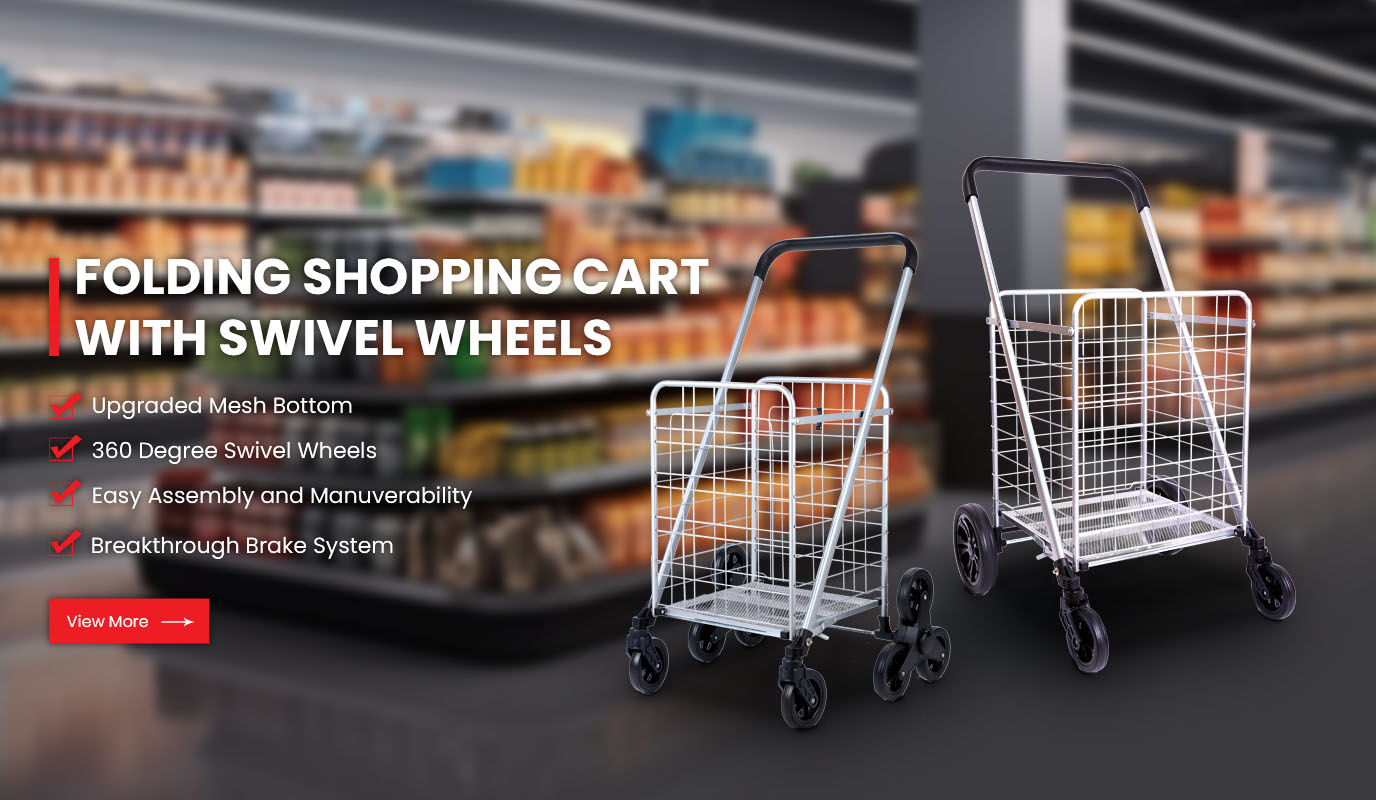
As a professional manufacturer, WOCHANG engineers every cart to achieve the ideal balance between strength, maneuverability, and long-term reliability.
1. What Is Weight Capacity?
Weight capacity refers to the maximum load a shopping cart can carry while maintaining safe and stable performance. It is usually measured in kilograms or pounds and depends on the cart’s frame structure, material strength, wheel design, and assembly quality.
For example, a light-duty household cart may support around 50–80 kg, while a heavy-duty industrial cart can handle 200 kg or more. Exceeding the rated limit can lead to structural deformation, wheel failure, or reduced control during operation.
2. Relationship Between Weight Capacity and Performance
A cart’s performance is closely tied to how well it handles its rated load. Four major performance factors are directly affected:
a) Mobility
Heavier loads increase rolling resistance and reduce maneuverability. If the cart’s weight capacity is exceeded, the wheels may wobble or jam, making it difficult to steer smoothly. Carts with properly rated capacity maintain balance and easy movement, even when fully loaded.
b) Stability
When a cart is overloaded, its center of gravity shifts upward, increasing the risk of tipping. A correctly rated capacity ensures that the load is evenly distributed across the frame and wheels, keeping the cart steady on uneven floors or ramps.
c) Braking Efficiency
For carts equipped with stoppers or brakes, excessive load reduces braking effectiveness. A cart designed for its intended capacity ensures consistent and safe stopping power, preventing accidents.
d) Ease of Handling
Carts with appropriate load limits are easier to push, pull, and control. This reduces strain on the user and minimizes mechanical stress on the handle joints and wheel axles.
3. How Weight Capacity Influences Durability
Overloading not only affects performance but also shortens a cart’s service life. The main components that experience accelerated wear include:
Frame Structure: Continuous overloading can cause bending, cracking, or weld fatigue.
Wheels and Axles: Excessive pressure damages bearings and deforms rubber or polyurethane tires.
Joints and Fasteners: Hinges and bolts may loosen or break due to repetitive stress beyond their design limits.
Surface Coating: Overload-induced vibration can cause coating layers to peel, exposing metal surfaces to corrosion.
Carts operated within their rated capacity maintain mechanical integrity for years, resulting in better cost efficiency and fewer repairs.
4. Factors Determining Cart Weight Capacity
Several engineering and material aspects define a cart’s load limit:
| Factor | Description | Influence |
|---|---|---|
| Material Strength | Steel or aluminum alloy composition | Determines resistance to bending and fatigue |
| Frame Design | Crossbars, reinforcements, and welding quality | Improves structural stability |
| Wheel Type and Size | Rubber, PU, or nylon casters with sealed bearings | Affects smoothness and durability under load |
| Axle and Bearing Quality | Precision engineering ensures even weight distribution | Extends service life and mobility |
| Assembly Precision | Tight joints and balanced structure | Prevents early wear and misalignment |
WOCHANG applies precise load testing to ensure every product meets its designed capacity under real-world conditions.
5. Importance of Choosing the Right Capacity
Selecting a cart with the correct load rating is crucial for both efficiency and safety:
For Light-Duty Applications: Home users and small shops benefit from lightweight carts with moderate capacity, offering easy maneuverability and quick storage.
For Medium-Duty Operations: Supermarkets or offices need carts that balance load strength and portability.
For Heavy-Duty Use: Warehouses and logistics centers require reinforced frames and industrial-grade wheels for continuous, high-load transport.
Matching capacity to the task ensures optimal performance and reduces maintenance costs.
6. WOCHANG’s Engineering Standards for Load Capacity
At WOCHANG, every shopping cart undergoes structural simulation and physical testing to verify load performance. Our design standards include:
Reinforced tubular frames that support consistent high-load operation.
High-precision welds and corrosion-resistant coatings for long-term durability.
Industrial-grade bearings and axles for smooth mobility under full load.
Balanced weight distribution to prevent tipping and reduce wear.
By combining high-strength materials with precise engineering, WOCHANG ensures that each cart maintains its rated load capacity safely and reliably over extended use.
7. Maintenance Tips for Preserving Load Capacity
Proper maintenance keeps your cart performing at its best:
Avoid overloading beyond the specified limit.
Inspect wheels, axles, and fasteners regularly for signs of wear.
Lubricate bearings and joints to reduce friction.
Store the cart in a dry, level environment when not in use.
Replace damaged or deformed parts promptly to maintain structural integrity.
Consistent care extends the lifespan and ensures that the cart continues to perform at its rated capacity.
Conclusion
Weight capacity is the foundation of shopping cart performance and durability. Exceeding the limit can cause mechanical stress, instability, and premature damage, while operating within the designed range guarantees efficiency, safety, and long service life.
With years of experience in cart manufacturing, WOCHANG designs and tests every product to deliver reliable load-bearing performance—ensuring that each cart remains strong, stable, and easy to maneuver, no matter the workload.