



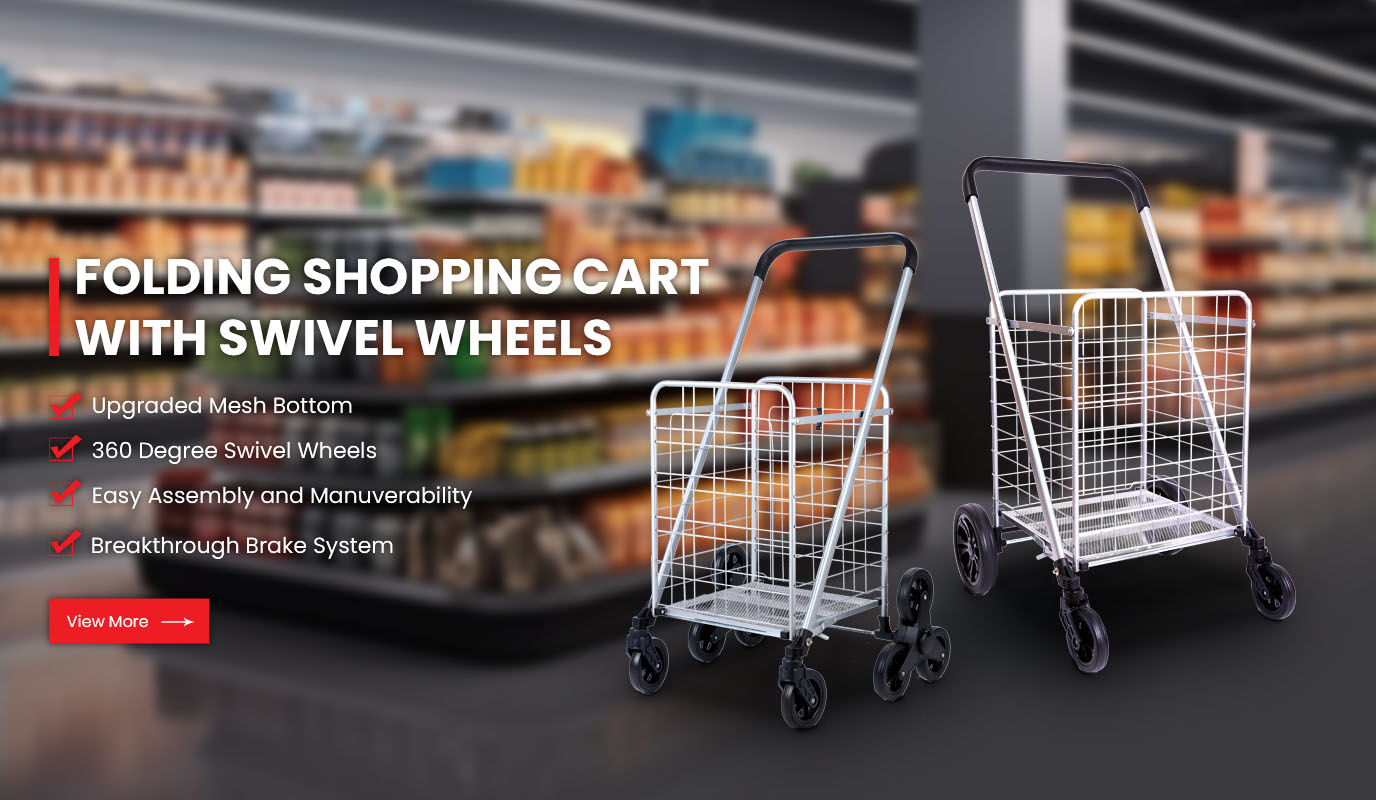
What Are The Main Components Of A Foldable Shopping Cart?
Foldable Shopping Carts have become essential tools for modern life, combining convenience, durability, and space efficiency. Whether used in supermarkets, households, or delivery services, their performance depends on the quality and engineering of each component. Understanding the main parts of a Foldable Shopping Cart helps buyers evaluate durability, load capacity, and maintenance requirements before purchase.
As a trusted manufacturer, WOCHANG produces foldable carts built with precision-engineered parts designed for smooth operation, stability, and long service life.
1. Frame Structure
The frame is the backbone of the cart. It provides shape, strength, and support for the entire load.
Material: Most frames are made from lightweight but strong materials such as steel, stainless steel, or aluminum alloy.
Design: Foldable frames use hinges and crossbars that allow the structure to collapse smoothly while retaining stability when unfolded.
Surface Treatment: The metal is often coated with zinc plating or powder coating to resist corrosion and enhance appearance.
WOCHANG’s frames are carefully designed to balance weight reduction with structural integrity, ensuring the cart remains steady even under heavy loads.
2. Folding Mechanism
At the heart of every Foldable Shopping Cart is its folding mechanism, which enables quick conversion between open and closed positions.
Hinges and Joints: These pivoting points connect different sections of the frame, allowing them to move in coordination.
Locking System: A latch or locking clip holds the cart firmly in the unfolded position during use, preventing accidental collapse.
Release Handle: Some designs include an easy-access lever that unlocks the mechanism when the user wants to fold the cart.
A well-designed folding mechanism determines the convenience, safety, and lifespan of the cart.
3. Basket or Container Section
The basket is where goods are carried. Depending on the model and purpose, this section can vary in design and material.
Metal Wire Basket: Common in supermarket carts, providing visibility and strength for heavy loads.
Plastic or Fabric Basket: Lightweight and flexible, suitable for home or office use.
Base Platform: Some foldable carts use a flat base plate instead of a deep basket to accommodate boxes or bags.
WOCHANG offers various basket configurations tailored to commercial and residential needs, each designed to handle daily wear and tear efficiently.
4. Handle System
The handle serves as the main control point for pushing, pulling, or steering the cart.
Ergonomic Design: Handles are shaped to fit the user’s grip comfortably, reducing strain during prolonged use.
Telescopic Adjustment: Many foldable models include adjustable handles that can extend or retract to match different user heights.
Material Composition: Typically covered with soft rubber or plastic coating for anti-slip comfort.
A stable handle system improves control, balance, and maneuverability, especially when navigating tight spaces or uneven surfaces.
5. Wheels and Axles
The wheels are among the most critical components determining how smoothly the cart moves.
Wheel Type: Most carts use rubber, plastic, or polyurethane wheels for durability and noise reduction.
Wheel Size: Larger wheels enhance movement on rough surfaces, while smaller ones are ideal for indoor use.
Swivel Casters: Front wheels often swivel 360 degrees for easy turning.
Axle Assembly: The axles connect the wheels to the frame and distribute weight evenly.
WOCHANG’s foldable carts feature precision bearings that reduce friction, ensuring silent and stable movement even when fully loaded.
6. Locking and Safety Devices
To ensure safe use, foldable carts are equipped with various locking and safety features:
Wheel Locks: Prevent carts from rolling when parked or stationary.
Frame Locks: Secure the frame during both folded and unfolded states.
Safety Pins and Clips: Reinforce joints to prevent accidental folding during operation.
These small yet essential components ensure user safety and protect the structure from unnecessary strain.
7. Accessories and Optional Features
Depending on the model, additional accessories enhance usability and efficiency:
Bottom Tray or Rack: Provides extra space for large items or boxes.
Protective Bumpers: Prevent damage to walls or shelves during movement.
Removable Liners or Bags: Simplify cleaning and maintenance.
Label Holders or Branding Panels: Useful for commercial customization.
These features make WOCHANG foldable carts versatile solutions for both retail and household applications.
8. Fasteners and Connectors
Every part of a foldable cart is held together by screws, bolts, rivets, and clips. Though often overlooked, these small components are critical for structural reliability.
High-quality fasteners prevent loosening during folding cycles and extend product life. WOCHANG uses corrosion-resistant hardware that endures frequent operation without loss of performance.
Conclusion
The main components of a Foldable Shopping Cart include the frame structure, folding mechanism, basket section, handle system, wheels, locking devices, and connectors. Each plays a vital role in delivering strength, mobility, and convenience.
By combining high-quality materials with precise engineering, WOCHANG ensures that every foldable shopping cart offers smooth operation, reliable safety, and long-lasting durability—making everyday transport easier for users around the world.