



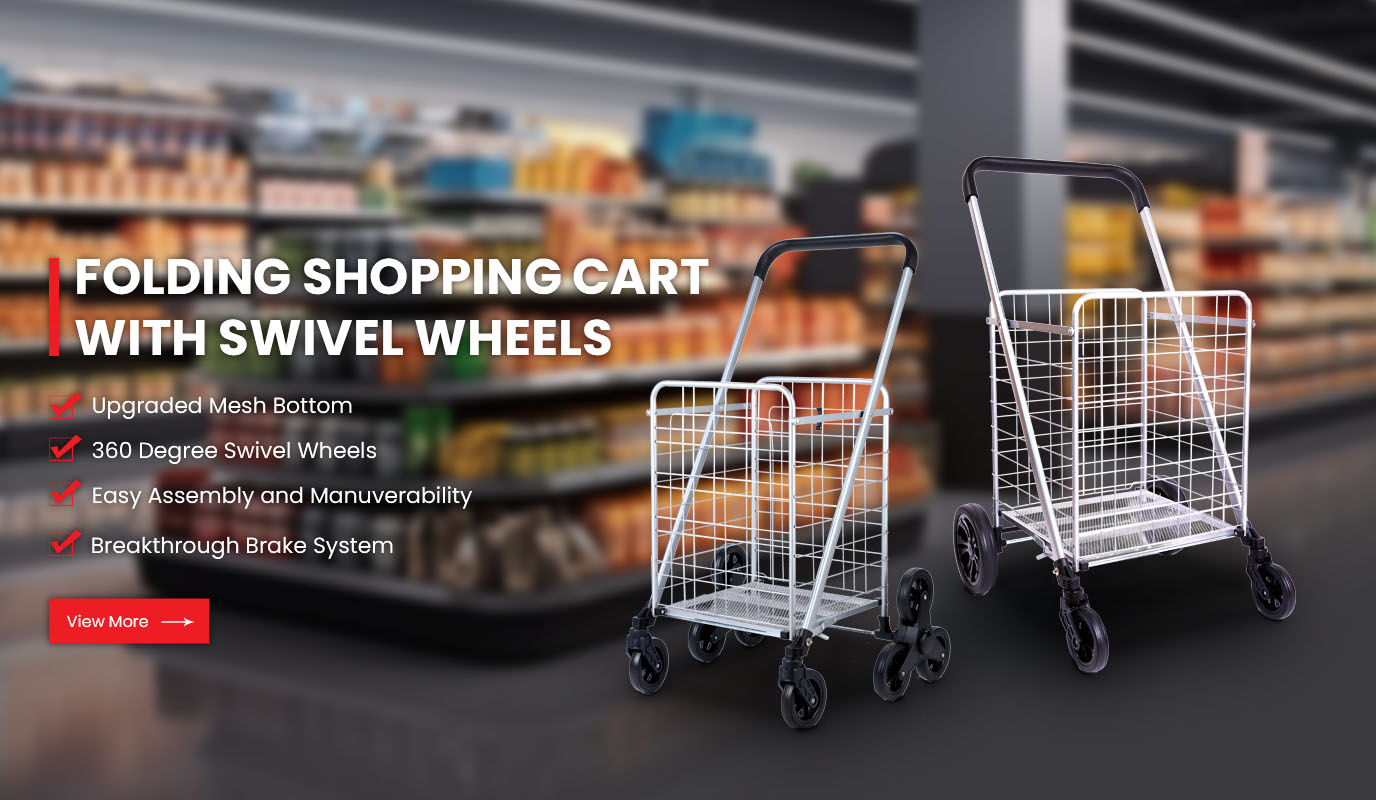
How Do Shopping Cart Stoppers Work
Shopping Carts are essential for modern retail and logistics operations, but they can easily become safety or security concerns when left unattended or rolled into restricted areas. To prevent accidents and protect property, many facilities now use shopping cart stoppers—mechanisms that automatically lock or restrict wheel movement under specific conditions.
Understanding how these systems work helps retailers choose the right solutions and maintain safer, more organized environments. As a professional manufacturer, WOCHANG designs carts that integrate seamlessly with advanced stopper technologies to ensure stability and user safety.
1. What Is a Shopping Cart Stopper?
A shopping cart stopper is a mechanical or electronic device designed to prevent a cart from moving beyond a certain point. It functions as a brake or lock that engages automatically when the cart crosses a boundary, such as the exit of a store or parking area.
Common types include:
Wheel locks or brakes that stop the cart’s rotation.
Magnetic or radio-frequency systems that trigger wheel immobilization.
Physical stoppers such as floor-mounted barriers or locking rails.
These systems are vital in supermarkets, hospitals, airports, and warehouses where carts must remain in designated areas for safety and management efficiency.
2. Mechanical Stopper Systems
Mechanical systems rely on physical engagement between the cart and an external fixture. These are typically simple, low-cost, and require minimal maintenance.
Parking Lot Barriers: Metal or rubber barriers installed at exits prevent carts from rolling beyond the boundary.
Wheel Locks: Spring-loaded pins or levers inside the wheel engage when the cart reaches a stop line, preventing further rotation.
Foot-Activated Brakes: Found on some industrial carts, these allow users to manually lock the wheels when stationary.
While mechanical stoppers are durable, they require manual placement or user awareness. They are best suited for indoor or semi-controlled environments.
3. Electronic Stopper Systems
Modern retail stores often use electronic shopping cart stopper systems for automatic control and theft prevention. These rely on sensors or radio frequency identification (RFID) signals.
How It Works:
Each cart has a receiver or magnetic sensor installed in one of its wheels.
The store’s perimeter or parking boundary contains a buried signal wire that emits a specific frequency.
When the cart crosses the signal field, the wheel lock engages instantly—stopping rotation and immobilizing the cart.
Authorized staff can reset or unlock the wheel using a handheld transmitter or magnet key.
This technology ensures carts remain within the property, reducing both losses and accidents.
4. Benefits of Shopping Cart Stoppers
Implementing cart stopper systems brings several operational advantages:
Enhanced Safety: Prevents carts from rolling into roads, slopes, or vehicles.
Loss Prevention: Reduces theft and damage by keeping carts within designated areas.
Improved Organization: Keeps store entrances and parking lots orderly and clutter-free.
Customer Convenience: Ensures carts are always available where they’re needed.
Lower Maintenance Costs: Reduces replacement expenses for lost or damaged carts.
These benefits make cart stoppers a vital investment for modern retail environments.
5. WOCHANG’s Integration of Stopper-Compatible Designs
At WOCHANG, safety and innovation go hand in hand. Our shopping carts are engineered to be compatible with both mechanical and electronic stopper systems, ensuring reliable operation in various commercial settings.
Key design features include:
Reinforced wheel housings for secure integration of stopper mechanisms.
Precision-aligned axles that maintain stability when the wheel locks engage.
Durable metal frames resistant to deformation under sudden braking.
Standardized wheel dimensions compatible with global stopper suppliers.
These design principles ensure that WOCHANG carts not only perform smoothly but also comply with modern safety management systems.
6. Maintenance and Inspection Guidelines
To keep stopper systems functioning effectively, routine checks are essential:
Inspect wheel locks for debris or corrosion that may block engagement.
Test electronic systems monthly to confirm proper signal transmission.
Replace worn components immediately to prevent malfunction.
Train staff to recognize locked-wheel signals and reset procedures.
Consistent maintenance ensures both customer safety and long-term performance reliability.
Conclusion
Shopping cart stoppers work through either mechanical barriers or electronic signal-based locking systems that automatically restrict wheel movement. These technologies improve safety, reduce theft, and maintain an orderly shopping environment.
With over two decades of manufacturing experience, WOCHANG provides durable carts designed for compatibility with modern stopper systems. Through careful engineering and sustainable design, we help businesses achieve safer, smarter, and more efficient operations—every cart, every day.